


As a generation closely connected to education and innovation, university students play a vital role in supporting the achievement of the Sustainable Development Goals (SDGs), particularly Goal 4 on Quality Education. One tangible step is presenting learning media that are innovative, contextual, and scientifically tested for feasibility. The geometric thinking skills of students in Indonesia remain a distinct challenge, considering that geometry concepts are often taught abstractly without media capable of bridging students’ understanding in a concrete and enjoyable manner.
Responding to this challenge, Mathematics Education students from the Faculty of Mathematics and Natural Sciences (FMIPA), Universitas Negeri Semarang (UNNES), developed an ethnomathematics-themed educational game called “Fortpoli”, which integrates the concept of Game-Based Learning with the local wisdom of Fort Willem I. The development team consists of Rizka, Nizhamuddin Aulia Ahmad, Sheilla Indriana Safira, Sandy Yuniar Pratama, and Faticha Nurul Izza, under the guidance of their supervising lecturer, Adi Satrio Ardiansyah, S.Pd., M.Pd.
Systematic Development Process The development of Fortpoli was not done instantaneously. The team designed every element of the game, ranging from the board and challenge cards to the rules of play, by referring to geometry concepts adapted from the architectural elements of Fort Willem I. Each stage of development was systematically structured so that the material delivered remains aligned with geometry learning outcomes at the junior high school level, while maintaining interactive and fun gaming elements for students.
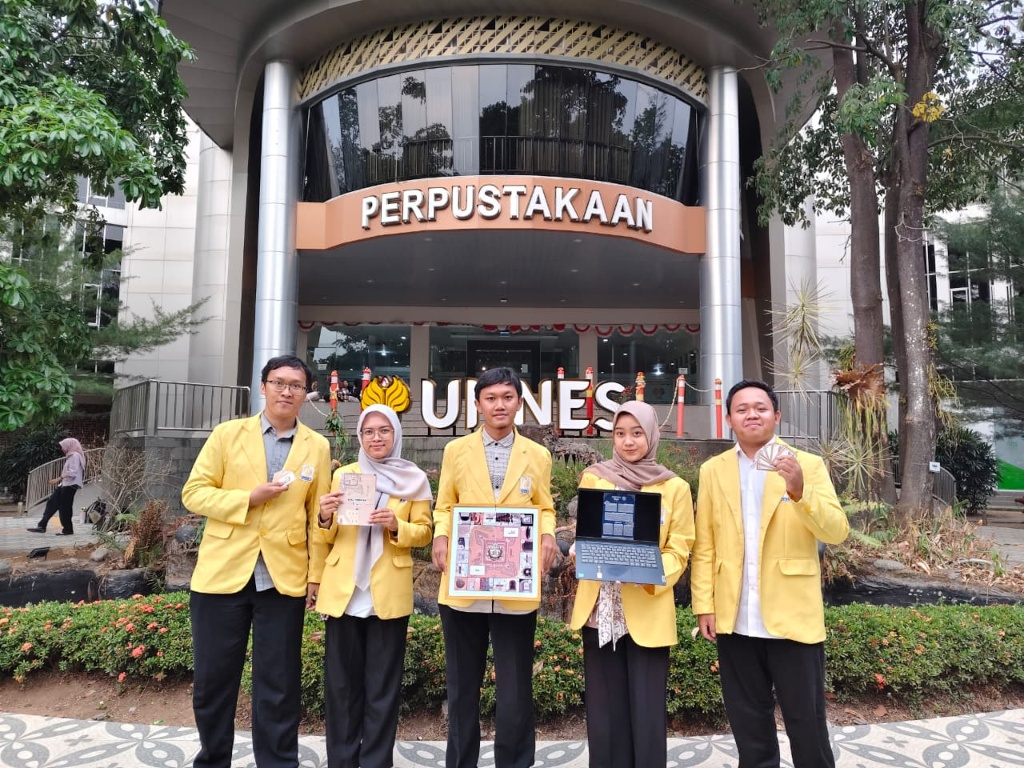
FMIPA UNNES students present their ethnomathematics innovation, Fortpoli, featuring a board game and digital interface inspired by Fort Willem I.
After the initial design was completed, this learning medium underwent a validation stage by expert lecturers and education practitioners before being tested on students, ensuring that Fortpoli is truly feasible for use as a classroom learning medium.
Expert-Validated, Proven Highly Feasible for Use The feasibility test conducted by expert lecturers and practitioners yielded a score of 88.7% in the “Highly Feasible” category. This validation covered assessments of material aspects, design, and the suitability of the medium to student characteristics, declaring Fortpoli to have met the feasibility standards as a geometry learning medium.
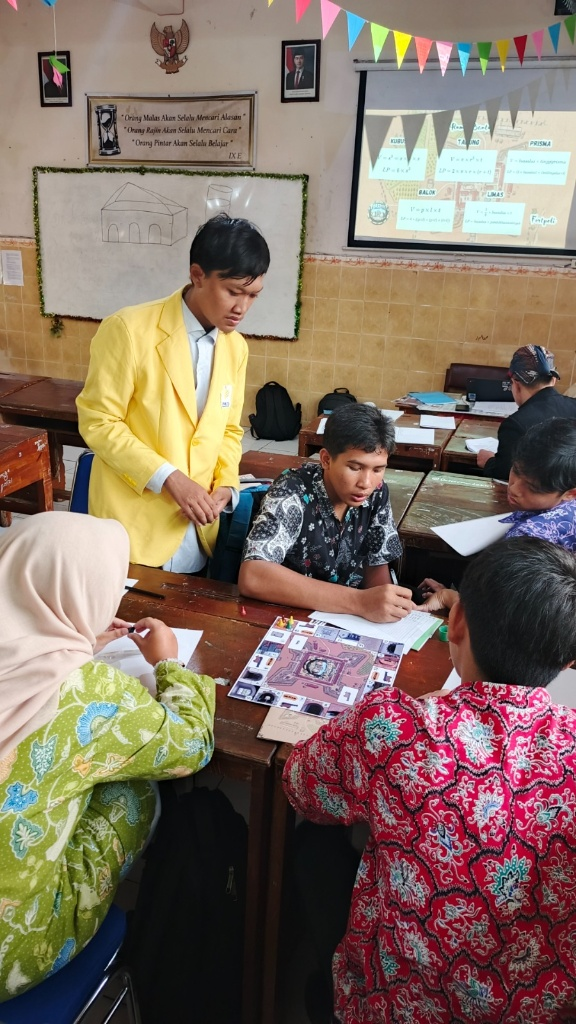
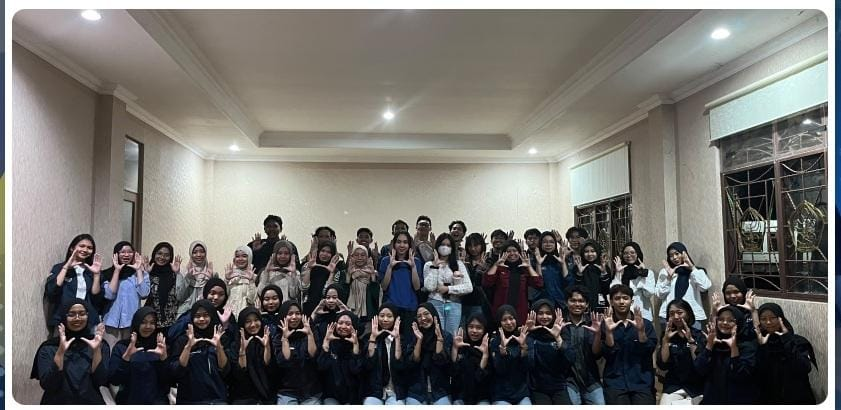
Students at SMP Negeri 1 Ungaran enthusiastically solve geometry challenges using the interactive Fortpoli board game.
After being declared feasible, Fortpoli was directly tested at SMP Negeri 1 Ungaran to measure student response and its effectiveness. The student response questionnaire recorded a score of 96% in the “Excellent” category, indicating high student enthusiasm for this learning medium. In the effectiveness test, the average student learning outcome reached 70.67. The One-Sample Wilcoxon Signed-Rank Test analysis showed a significance value of 0.904 (>0.05), proving that student achievement met the Minimum Mastery Criteria (KKM) standard of 70.
Tangible Proof of Student Contribution to Education Through a mature development process and expert validation, Fortpoli has proven to be highly feasible, practical, and effective in facilitating students’ geometry learning mastery. This innovation is expected to serve as a reference for developing ethnomathematics-based learning media across various regions, while serving as tangible proof of UNNES students’ contribution to improving the quality of mathematics education in Indonesia. The systematic development process and scientific validation underscore the students’ commitment to supporting SDG 4 on Quality Education by providing tested, practical, and effective learning media for students.
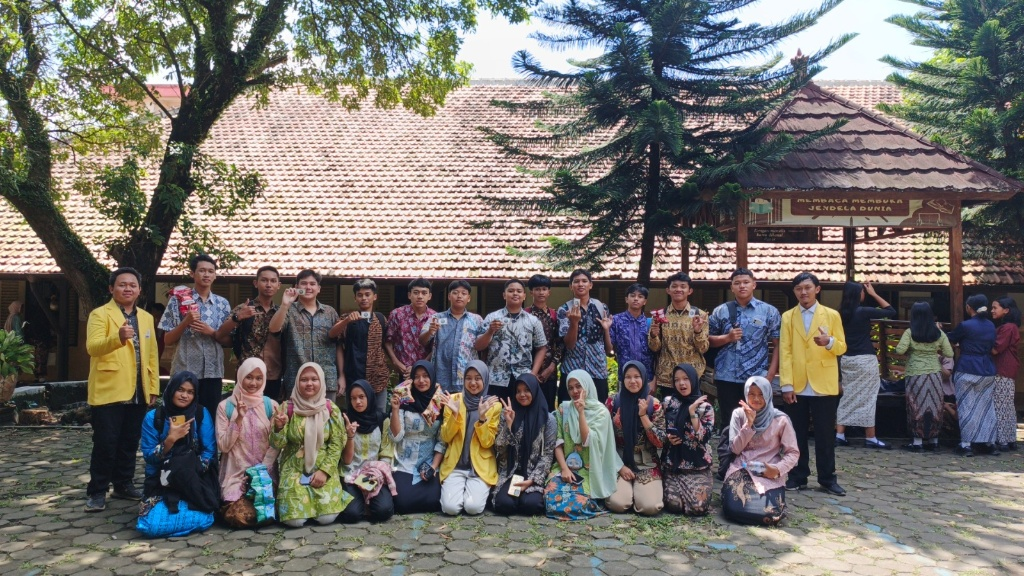
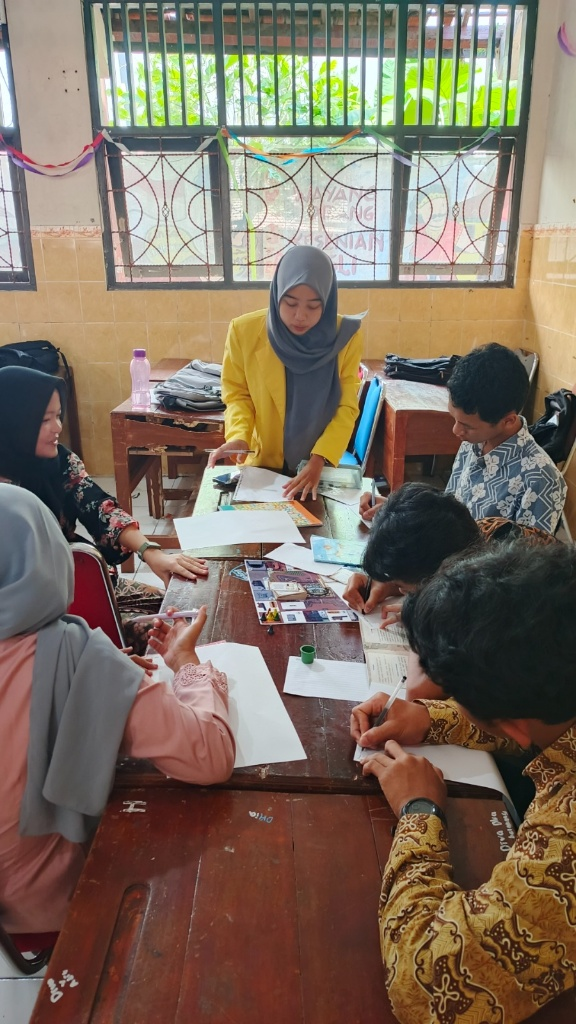
FMIPA UNNES students and SMP Negeri 1 Ungaran students celebrate the successful trial of the Fortpoli learning medium.