Answers Become Easy due to Artificial Intelligence, Is Reasoning Maintained? The PKM-RSH Aillusion Team of UNNES Uncovers It

Universitas Negeri Semarang/Faculty of Mathematics and Natural Sciences/Berita/Answers Become Easy due to Artificial Intelligence, Is Reasoning Maintained? The PKM-RSH Aillusion Team of UNNES Uncovers It
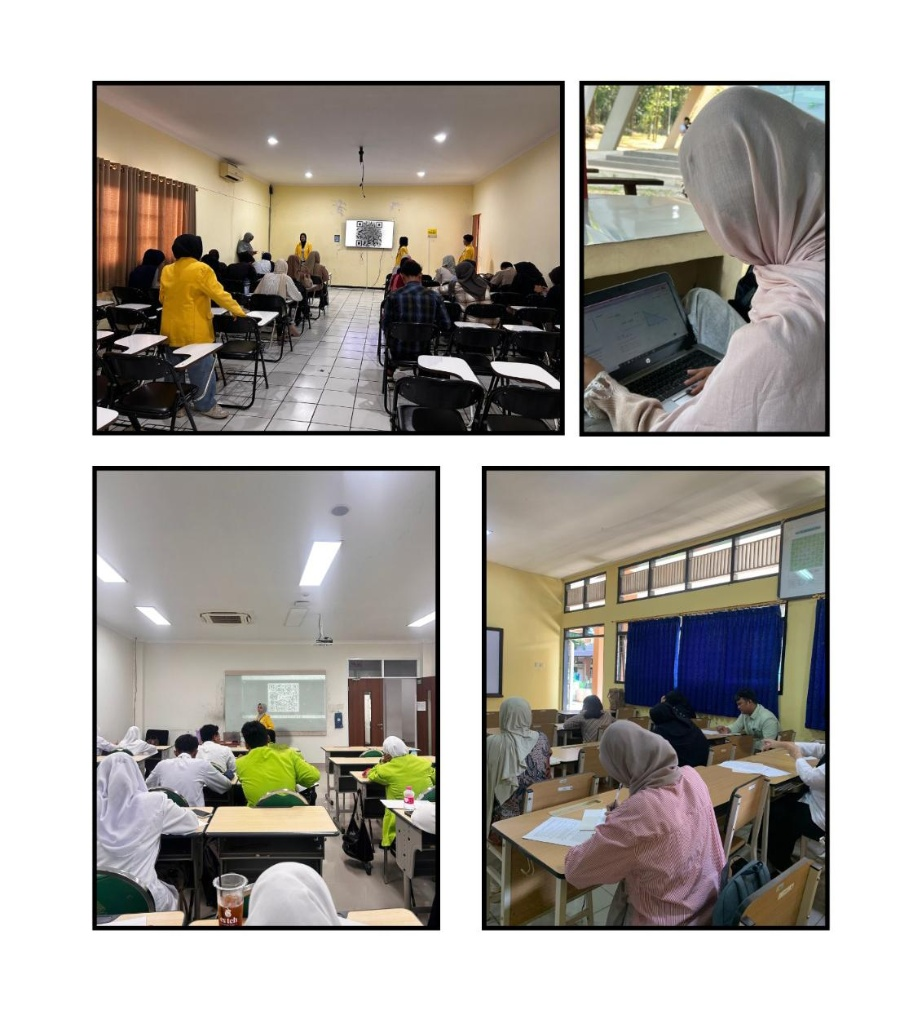
A collage of four photos showing students sitting at classroom desks working on tests or filling out surveys, alongside one student using a laptop.

A single math problem can now be solved in a very short time. Simply by entering the problem into artificial intelligence, students can obtain the solution steps up to the final answer. This convenience raises a new question: when answers are available in a matter of seconds, do students still understand the steps to get them?

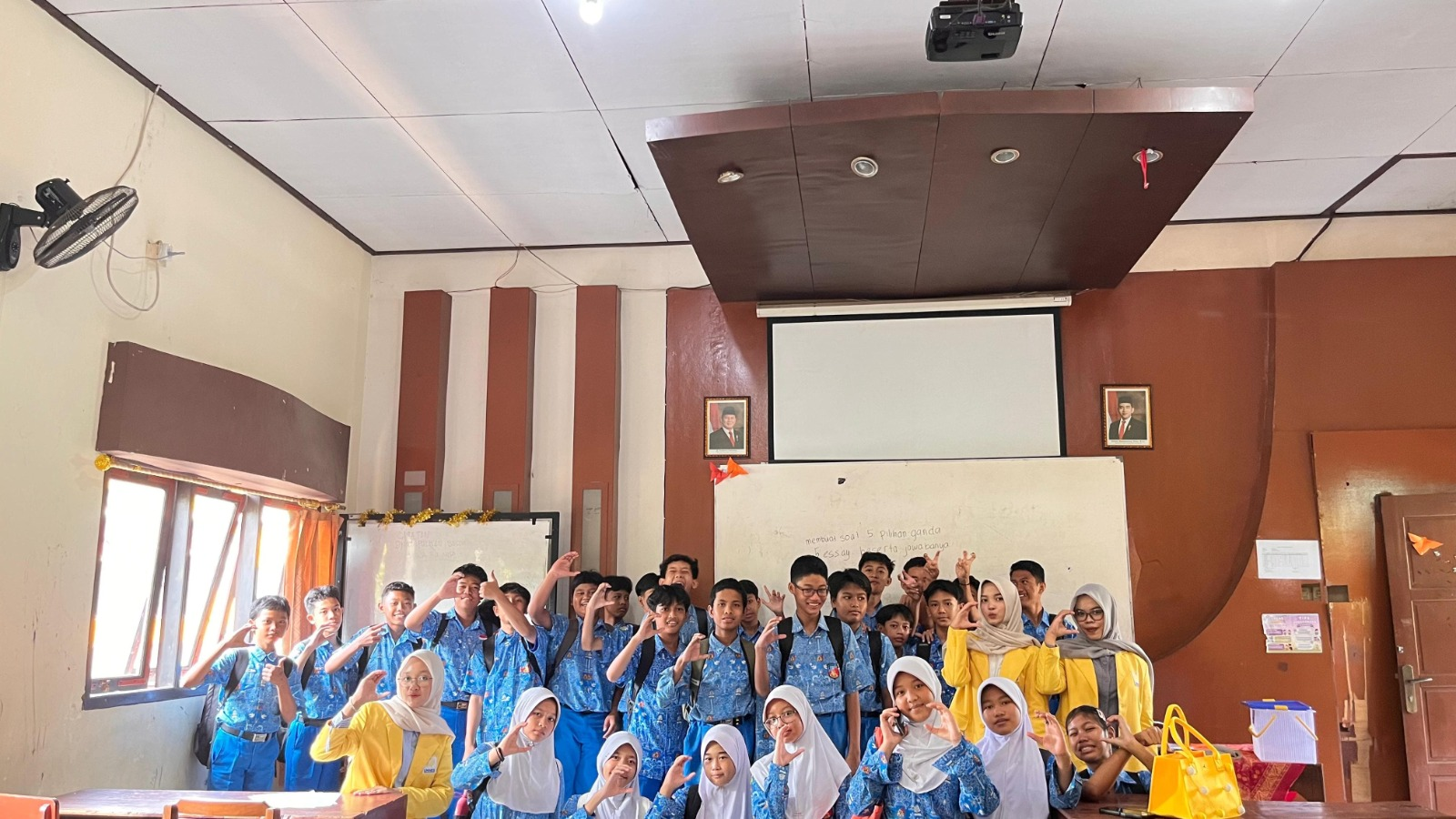
This question motivated the Student Creativity Program for Social Humanities Research (PKM-RSH) Aillusion Team of Universitas Negeri Semarang (UNNES) to examine the use of artificial intelligence among pre-service mathematics teacher students. This research focuses on the relationship between the level of dependence on artificial intelligence and students’ mathematical reasoning abilities.

In mathematics, reasoning ability does not stop at obtaining the final answer. Students are required to be able to understand problems, determine strategies, connect concepts, arrange solution steps, and provide reasons that support their answers. Therefore, the existence of artificial intelligence is interesting to study, especially in seeing the connection between the ease of obtaining solutions and students’ reasoning processes.

Artificial intelligence itself can be used as part of the learning process, such as to check working steps or help find parts of the material that have not been understood. However, the answers provided by technology still require human ability to understand the process behind them. This becomes increasingly important for pre-service mathematics teacher students who are required to be able to explain the process to their students.

To see this relationship, the UNNES PKM-RSH Team conducted research on Mathematics Education Study Program students from three universities, namely Universitas Negeri Semarang (UNNES), Universitas PGRI Semarang (UPGRIS), and UIN Walisongo. The research team itself is a multidisciplinary collaboration that brings together students from different scientific fields. The research process was also carried out under the guidance of the supervising lecturer Dr. Nuriana Rachmani Dewi (Nino Adhi), M.Pd., so that the study regarding the use of artificial intelligence can be seen from more than one perspective. The data obtained was then used to examine the relationship between the two aspects.

This study is in line with the effort to educate the life of the nation. Technological advancement needs to go hand in hand with the development of human reasoning abilities. In mathematics learning, technology can help obtain solutions more easily, but the ability to understand the solution remains an important part of the educational process.

The use of technology in education is also in line with the 4th Sustainable Development Goal (SDG) on Quality Education and the fourth Asta Cita, which emphasizes human resource development through the strengthening of education, science, and technology. Through this research, the UNNES PKM-RSH Team attempts to study technological developments in education scientifically. Because, amidst the ease of obtaining answers through artificial intelligence, mathematics learning still leaves an important question: do students truly understand and are they able to explain the process behind the answers they get?

Related Posts

Leave a Reply

* Kode Akses Komentar:

* Tuliskan kode akses komentar diatas:

GDPR

  • Privacy Policy

Privacy Policy

At unnes.ac.id, the privacy of our visitors is of extreme importance to us. This privacy policy document outlines the types of personal information that is received and collected by unnes.ac.id and how it is used.

Log Files

Like many other Web sites, unnes.ac.id makes use of log files. The information inside the log files includes internet protocol (IP) addresses, type of browser, Internet Service Provider (ISP), date/time stamp, referring/exit pages, and number of clicks to analyze trends, administer the site, track user’s movement around the site, and gather demographic information. IP addresses and other such information are not linked to any information that is personally identifiable.

Cookies

unnes.ac.id uses cookies to store information about visitors’ preferences, to record user-specific information on which pages the site visitor accesses or visits, and to personalize or customize our web page content based upon visitors’ browser type or other information that the visitor sends via their browser.

Third-party ad servers or ad networks use technology in their respective advertisements and links that appear on unnes.ac.id and which are sent directly to your browser. They automatically receive your IP address when this occurs. Other technologies (such as cookies, JavaScript, or Web Beacons) may also be used by our site’s third-party ad networks to measure the effectiveness of their advertising campaigns and/or to personalize the advertising content that you see on the site.

unnes.ac.id has no access to or control over these cookies that are used by third-party advertisers.

You should consult the respective privacy policies of these third-party ad servers for more detailed information on their practices as well as for instructions about how to opt-out of certain practices. unnes.ac.id’s privacy policy does not apply to, and we cannot control the activities of, such other advertisers or web sites.

If you wish to disable cookies, you may do so through your individual browser options. More detailed information about cookie management with specific web browsers can be found at the browsers’ respective websites.

Consent

By using our website, you hereby consent to our privacy policy and agree to its terms.

Update

This Privacy Policy was last updated on: 2023-02-14. Should we update, amend or make any changes to our privacy policy, those changes will be posted here.

Contact Us

If you have any questions, comments, or concerns about our Privacy Policy or our practices with regards to your personal information, please feel free to contact us through the contact form on our website or by emailing us at humas[at]mail.unnes.ac.id.

This Privacy Policy is intended as a general guide to our practices in collecting and using information. If there is any inconsistency between this Privacy Policy and the terms of the Service Agreement or any other terms that may apply to specific services you use, then those specific service terms shall apply.

Terms of Use

By using our website, you agree to abide by this Privacy Policy. If you do not agree with this Privacy Policy, please do not use our website. We reserve the right to update this Privacy Policy from time to time without prior notice. Please review our Privacy Policy periodically to check for changes. Your continued use of our website following the posting of changes to this Privacy Policy means that you accept the changes.

Thank you for reading our Privacy Policy. We are committed to protecting the privacy of our website visitors and will continue to update our Privacy Policy to ensure optimal protection.