



SEMARANG – Waste banks represent a form of Community-Based Waste Management (CBWM) growing across Indonesia. Through a waste savings system, residents can sort and deposit economically valuable waste for recycling. In Semarang City, waste bank management also actively involves women, particularly through Family Welfare Empowerment (PKK) activities.
A research team from the Faculty of Mathematics and Natural Sciences, Universitas Negeri Semarang (FMIPA UNNES), consisting of Abdul Jabbar, Trida Ridho Fariz, and Murbangun Nuswowati, alongside international collaborator Sergi Fernandez Alejandro, examined waste bank strengthening through an article entitled “Community-Based Waste Management in the Global South: Capacity Building and Institutional Strengthening with Legal Reflections from Semarang”, published in a Scopus Q4-indexed international journal.
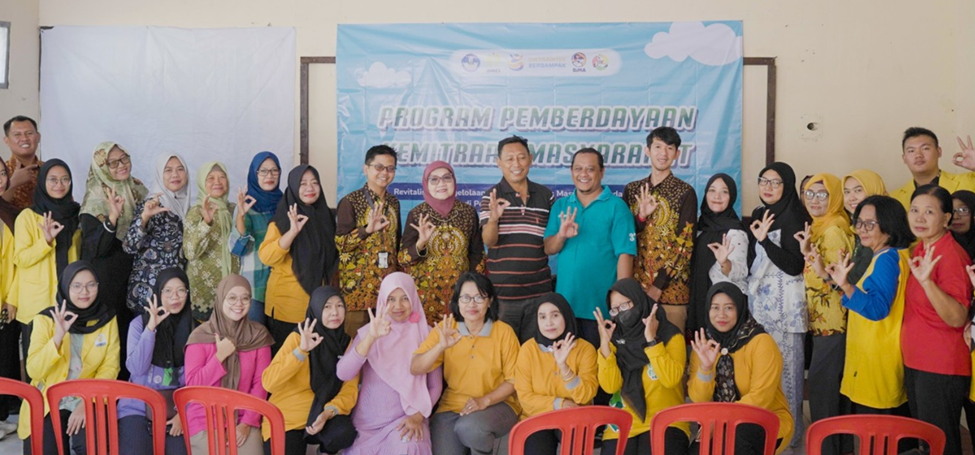
The study highlights empowerment activities at the Mugi Berkah Sari Waste Bank in Tegalsari Sub-district, Candisari District, Semarang City. The activities included training on waste sorting and processing, creating value-added products such as aromatherapy candles from used cooking oil (minyak jelantah) and handicrafts from textile waste, as well as strengthening administration through a waste bank information system. All training participants were women from the waste bank management team and PKK members.
This study is also reinforced by research entitled “Analisis Keberlanjutan Bank Sampah pada Sebuah Permukiman Sekitar Kawasan Industri di Kota Semarang” (Sustainability Analysis of a Waste Bank in a Settlement Surrounding an Industrial Area in Semarang City), which took the Wijaya Makmur Waste Bank in Karanganyar Sub-district, Tugu District, as a case study. The findings indicate that waste banks play a role in encouraging household waste sorting, raising environmental awareness, and providing economic benefits through waste savings and processing organic waste into biowash products. However, their sustainability still faces challenges regarding facilities, dependence on waste collectors (pengepul), and the consistency of community participation.
Both studies demonstrate that the sustainability of waste banks depends not only on waste processing technology, but also on community participation, women’s empowerment, economic benefits, and institutional governance. Capacity building for managers and transparent administration serve as vital steps to support program continuity.
This initiative is relevant to Sustainable Development Goals (SDGs) 5, 8, 10, 11, 12, 16, and 17. Its contributions primarily encompass SDG 5 (Gender Equality) by enhancing women’s capacity and role in environmental management, as well as SDG 11 (Sustainable Cities and Communities) and SDG 12 (Responsible Consumption and Production) through community-based waste management. Meanwhile, the potential economic benefits, opportunities for community participation, strengthening of accountable governance, and partnerships with the government and various stakeholders are also relevant to SDGs 8, 10, 16, and 17.
Through these research and empowerment activities, FMIPA UNNES contributes to strengthening inclusive community-based waste management by placing women and local institutions as essential parts of the effort to realize a more sustainable urban environment.