

FMIPA UNNES Lecturer Contributes to Regional Climate Change Adaptation Policy Studies and Planning

Universitas Negeri Semarang/Faculty of Mathematics and Natural Sciences/Berita/FMIPA UNNES Lecturer Contributes to Regional Climate Change Adaptation Policy Studies and Planning
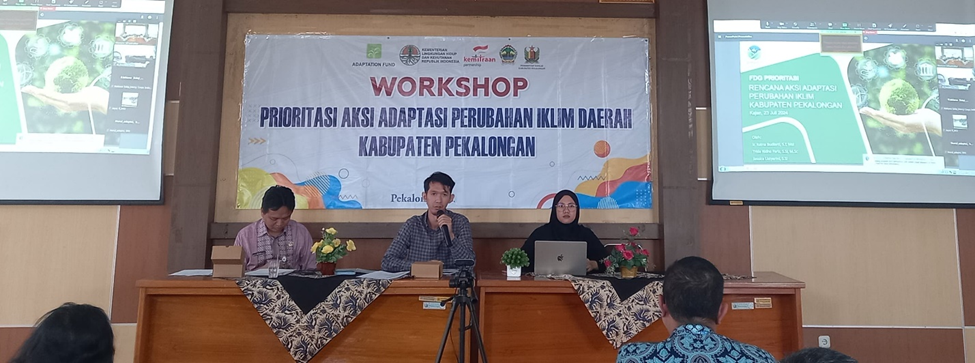
Three panelists seated behind a wooden table in front of a banner reading Workshop Prioritasi Aksi Adaptasi Perubahan Iklim Daerah Kabupaten Pekalongan, with a man in a plaid shirt in the center speaking into a microphone between two projector screens.

SEMARANG – Trida Ridho Fariz, M.Sc., a lecturer at the Faculty of Mathematics and Natural Sciences, Universitas Negeri Semarang (FMIPA UNNES), has contributed as an expert in several local government climate change adaptation studies and planning initiatives. This involvement encompasses disaster risk analysis, regional vulnerability mapping, and the provision of scientific information as a key consideration in formulating climate change adaptation policies.

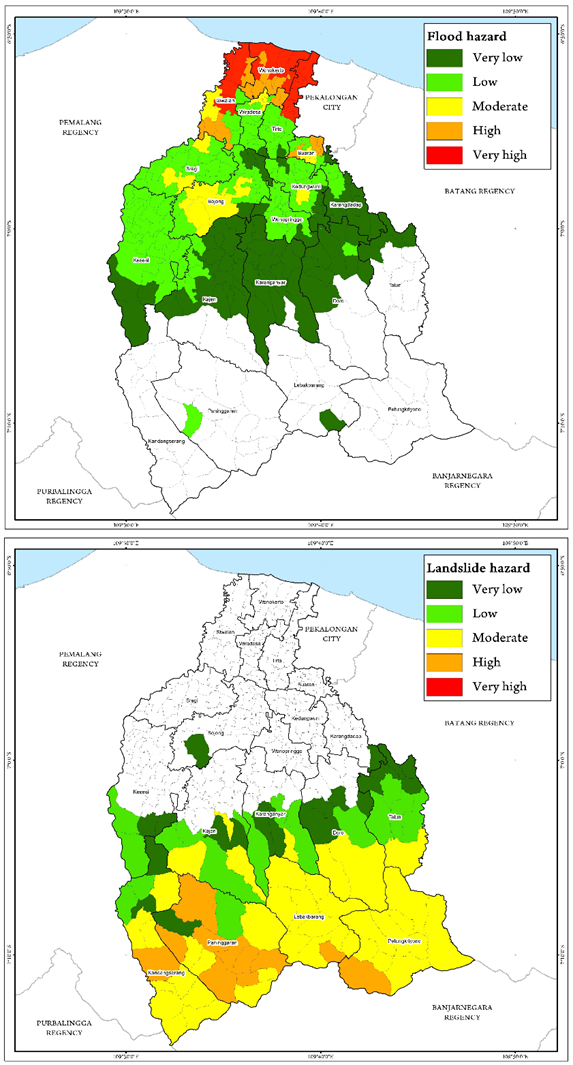
This field experience also served as the foundation for a research article entitled “A Participatory GIS Framework for Multi-Hazard Climate Risk Mapping in Indonesia”, published in January 2026 in the Scopus-indexed international journal Advance Sustainable Science, Engineering and Technology (ASSET). The study utilized a Public Participation GIS (PPGIS) approach to map flood and landslide risks in Pekalongan Regency by integrating spatial data, socioeconomic conditions, and input from government agencies through Focus Group Discussions (FGDs).
The research findings identified areas with very high flood risk across several villages in Tirto, Wiradesa, and Wonokerto Districts, as well as high landslide risk in the hilly areas of Lebakbarang and Petungkriyono. This information serves as a reference for identifying challenges and determining priority areas in climate change adaptation planning. Another study, entitled “Spatiotemporal Climate Trends, Future Projections, and Implications for Rice Agriculture in Demak Regency, Indonesia”, published in IOP Conference Series: Earth and Environmental Science, revealed a potential temperature increase of 2–4°C, drier dry seasons, and increased extreme rainfall that could affect rice production and regional food security.

Beyond scientific publications, Trida has served as a technical expert in climate change adaptation study and planning activities in Central Java Province alongside the Regional Development Planning Agency (BAPPEDA) in 2023, in Demak Regency, Pekalongan Regency, and Tegal City in 2024, as well as in Surakarta City in 2025. Involvement in the climate change vulnerability assessment for Purworejo Regency is also scheduled for late 2026.

The positive impact of these contributions lies in the availability of spatial analyses, identification of vulnerable areas, and climate risk projections that can be utilized as technical inputs for local governments in formulating climate change adaptation strategies. Thus, research findings and expert experience help strengthen the scientific basis of policy planning processes, although final decisions and implementation remain under the authority of local governments.

These contributions are relevant to the Sustainable Development Goals (SDGs), particularly SDG 13 (Climate Action) through climate risk and adaptation studies, SDG 11 (Sustainable Cities and Communities) through regional vulnerability mapping, and SDG 2 (Zero Hunger) through assessments of climate change impacts on agriculture. The engagement of academics as experts also supports SDG 16 (Peace, Justice and Strong Institutions) and SDG 17 (Partnerships for the Goals) by providing scientific input into local government policy planning processes.

Through these initiatives, FMIPA UNNES lecturers play an active role in bridging academic research outcomes with regional planning needs, particularly in identifying climate change challenges and providing a scientific foundation for developing adaptation strategies tailored to regional characteristics.
Related Posts

Leave a Reply

* Kode Akses Komentar:

* Tuliskan kode akses komentar diatas:

GDPR

  • Privacy Policy

Privacy Policy

At unnes.ac.id, the privacy of our visitors is of extreme importance to us. This privacy policy document outlines the types of personal information that is received and collected by unnes.ac.id and how it is used.

Log Files

Like many other Web sites, unnes.ac.id makes use of log files. The information inside the log files includes internet protocol (IP) addresses, type of browser, Internet Service Provider (ISP), date/time stamp, referring/exit pages, and number of clicks to analyze trends, administer the site, track user’s movement around the site, and gather demographic information. IP addresses and other such information are not linked to any information that is personally identifiable.

Cookies

unnes.ac.id uses cookies to store information about visitors’ preferences, to record user-specific information on which pages the site visitor accesses or visits, and to personalize or customize our web page content based upon visitors’ browser type or other information that the visitor sends via their browser.

Third-party ad servers or ad networks use technology in their respective advertisements and links that appear on unnes.ac.id and which are sent directly to your browser. They automatically receive your IP address when this occurs. Other technologies (such as cookies, JavaScript, or Web Beacons) may also be used by our site’s third-party ad networks to measure the effectiveness of their advertising campaigns and/or to personalize the advertising content that you see on the site.

unnes.ac.id has no access to or control over these cookies that are used by third-party advertisers.

You should consult the respective privacy policies of these third-party ad servers for more detailed information on their practices as well as for instructions about how to opt-out of certain practices. unnes.ac.id’s privacy policy does not apply to, and we cannot control the activities of, such other advertisers or web sites.

If you wish to disable cookies, you may do so through your individual browser options. More detailed information about cookie management with specific web browsers can be found at the browsers’ respective websites.

Consent

By using our website, you hereby consent to our privacy policy and agree to its terms.

Update

This Privacy Policy was last updated on: 2023-02-14. Should we update, amend or make any changes to our privacy policy, those changes will be posted here.

Contact Us

If you have any questions, comments, or concerns about our Privacy Policy or our practices with regards to your personal information, please feel free to contact us through the contact form on our website or by emailing us at humas[at]mail.unnes.ac.id.

This Privacy Policy is intended as a general guide to our practices in collecting and using information. If there is any inconsistency between this Privacy Policy and the terms of the Service Agreement or any other terms that may apply to specific services you use, then those specific service terms shall apply.

Terms of Use

By using our website, you agree to abide by this Privacy Policy. If you do not agree with this Privacy Policy, please do not use our website. We reserve the right to update this Privacy Policy from time to time without prior notice. Please review our Privacy Policy periodically to check for changes. Your continued use of our website following the posting of changes to this Privacy Policy means that you accept the changes.

Thank you for reading our Privacy Policy. We are committed to protecting the privacy of our website visitors and will continue to update our Privacy Policy to ensure optimal protection.