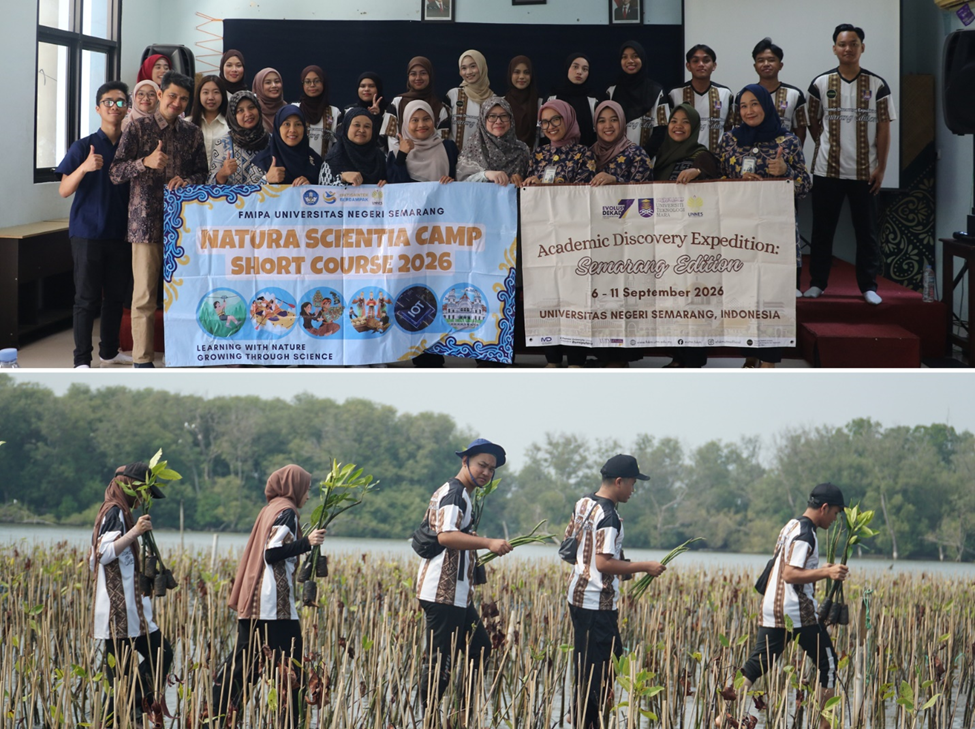

FMIPA UNNES Strengthens Biodiversity Conservation through Research-Based Green Open Space Management

Universitas Negeri Semarang/Faculty of Mathematics and Natural Sciences/Berita/FMIPA UNNES Strengthens Biodiversity Conservation through Research-Based Green Open Space Management
Green open space with diverse tree vegetation at FMIPA UNNES.

Semarang – The Faculty of Mathematics and Natural Sciences (FMIPA), Universitas Negeri Semarang (UNNES), continues to strengthen its commitment as a conservation-oriented faculty through the management of green open spaces (GOS), biodiversity conservation, and the provision of a comfortable, inclusive, and sustainable campus environment. These initiatives represent FMIPA’s contribution to achieving Sustainable Development Goal (SDG) 15: Life on Land by protecting terrestrial ecosystems and conserving plant biodiversity within the campus.
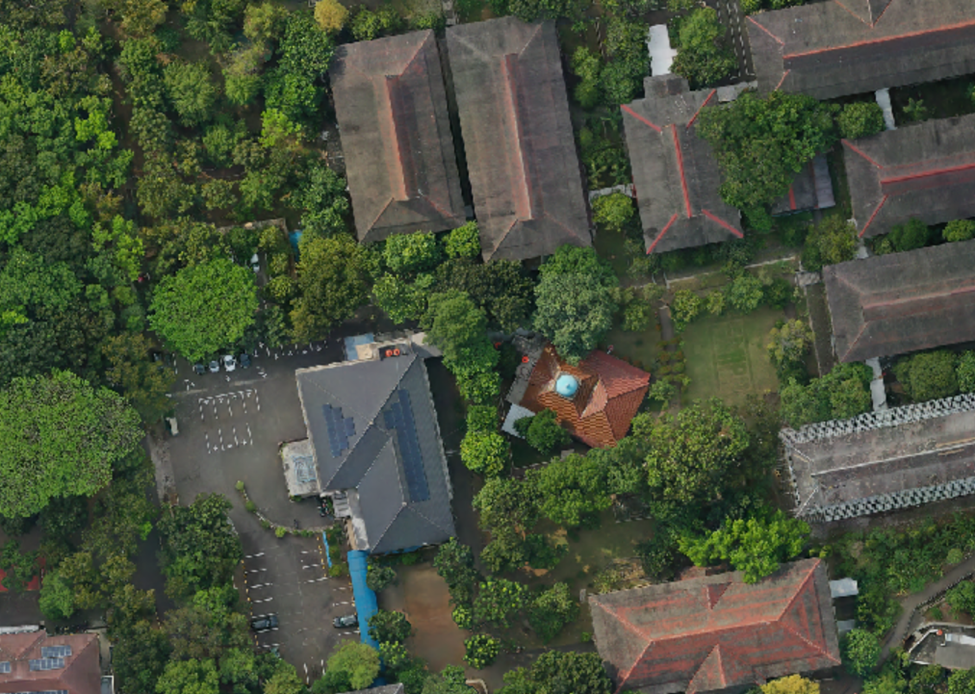
This commitment is reinforced by the findings of a research project entitled “Tree Diversity at the Faculty of Mathematics and Natural Sciences, Universitas Negeri Semarang Based on the Shannon–Wiener Diversity Index and IUCN Conservation Status,” conducted by Prof. Dr. Sri Ngabekti, Trida Ridho Fariz, Prof. Dr. Dewi Liesnoor Setyowati, and Maulana Malik Wicaksono from Universitas Negeri Semarang. The study inventoried all tree vegetation across the FMIPA campus to assess tree diversity and conservation status based on the IUCN Red List, providing a scientific basis for green open space management and campus conservation strategies.

The study identified 318 individual trees representing 58 species, with a Shannon–Wiener Diversity Index (H’) of 2.95, indicating a moderate-to-high level of biodiversity. These findings demonstrate that the tree community within FMIPA is relatively diverse and stable, contributing significantly to ecological functions such as carbon sequestration, oxygen production, microclimate regulation, and habitat provision for various organisms across the campus.
The research also identified several tree species with important conservation value according to the IUCN Red List, including Pterocarpus indicus (Narra), classified as Endangered (EN), and Swietenia mahagoni (Mahogany), classified as Near Threatened (NT). The presence of these species highlights FMIPA’s role not only as a green open space but also as an ex-situ conservation area that contributes to the protection of species with significant conservation value in an increasingly urbanized environment.

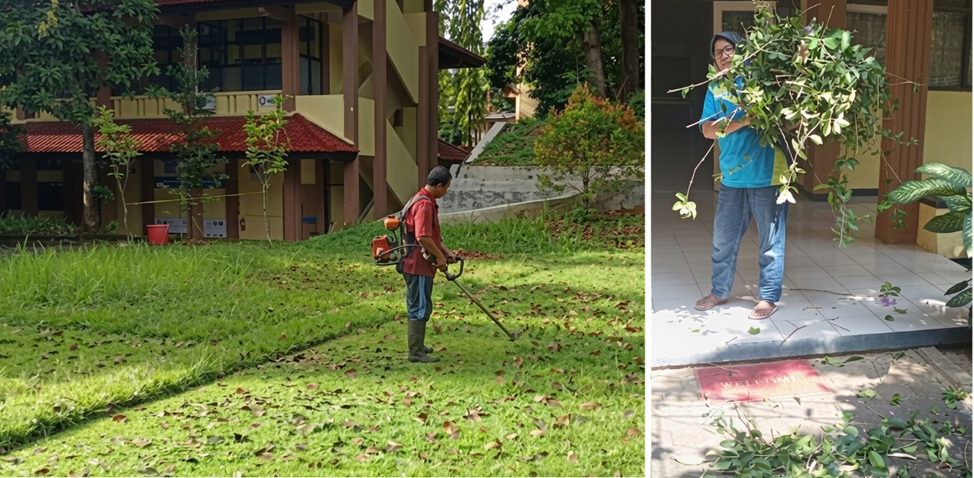
As a follow-up to the research findings, FMIPA continuously maintains the quality of its green open spaces through routine vegetation management, including grass mowing, plant maintenance, and landscape management to ensure a healthy, safe, and pleasant environment. These maintenance activities are carried out while preserving tree species with conservation value, ensuring that the ecological functions of the campus landscape remain intact alongside ongoing infrastructure development.

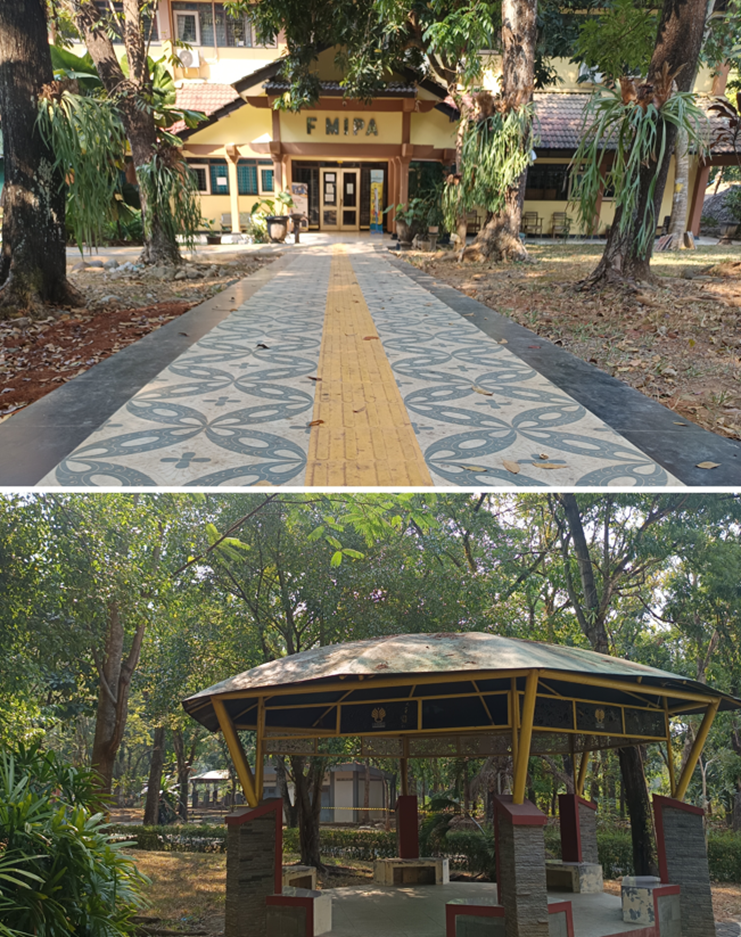
Beyond biodiversity conservation, FMIPA also provides green spaces that support academic and social activities. Several gazebos are available as outdoor spaces for learning, discussion, and academic interaction in a natural setting. In addition, the faculty is equipped with accessible pedestrian pathways for persons with disabilities, ensuring that all members of the university community can enjoy the campus’s green environment in a safe, comfortable, and inclusive manner.

The rich tree diversity within FMIPA also serves as a living laboratory for education, research, and community engagement. Students utilize the campus landscape to study plant identification, biodiversity, conservation, and terrestrial ecosystem management, making the green open spaces not only aesthetically valuable but also an important educational resource for promoting biodiversity conservation.
Through research-based green open space management, the protection of tree species listed under the IUCN Red List, sustainable vegetation maintenance, and the provision of environmentally friendly and inclusive campus facilities, FMIPA UNNES continues to strengthen its role in conserving and enhancing terrestrial ecosystems. These initiatives reflect the faculty’s commitment to biodiversity conservation while reinforcing UNNES’ vision as a conservation-oriented university that integrates education, research, and sustainable environmental management.

Related Posts

Leave a Reply

* Kode Akses Komentar:

* Tuliskan kode akses komentar diatas:

GDPR

  • Privacy Policy

Privacy Policy

At unnes.ac.id, the privacy of our visitors is of extreme importance to us. This privacy policy document outlines the types of personal information that is received and collected by unnes.ac.id and how it is used.

Log Files

Like many other Web sites, unnes.ac.id makes use of log files. The information inside the log files includes internet protocol (IP) addresses, type of browser, Internet Service Provider (ISP), date/time stamp, referring/exit pages, and number of clicks to analyze trends, administer the site, track user’s movement around the site, and gather demographic information. IP addresses and other such information are not linked to any information that is personally identifiable.

Cookies

unnes.ac.id uses cookies to store information about visitors’ preferences, to record user-specific information on which pages the site visitor accesses or visits, and to personalize or customize our web page content based upon visitors’ browser type or other information that the visitor sends via their browser.

Third-party ad servers or ad networks use technology in their respective advertisements and links that appear on unnes.ac.id and which are sent directly to your browser. They automatically receive your IP address when this occurs. Other technologies (such as cookies, JavaScript, or Web Beacons) may also be used by our site’s third-party ad networks to measure the effectiveness of their advertising campaigns and/or to personalize the advertising content that you see on the site.

unnes.ac.id has no access to or control over these cookies that are used by third-party advertisers.

You should consult the respective privacy policies of these third-party ad servers for more detailed information on their practices as well as for instructions about how to opt-out of certain practices. unnes.ac.id’s privacy policy does not apply to, and we cannot control the activities of, such other advertisers or web sites.

If you wish to disable cookies, you may do so through your individual browser options. More detailed information about cookie management with specific web browsers can be found at the browsers’ respective websites.

Consent

By using our website, you hereby consent to our privacy policy and agree to its terms.

Update

This Privacy Policy was last updated on: 2023-02-14. Should we update, amend or make any changes to our privacy policy, those changes will be posted here.

Contact Us

If you have any questions, comments, or concerns about our Privacy Policy or our practices with regards to your personal information, please feel free to contact us through the contact form on our website or by emailing us at humas[at]mail.unnes.ac.id.

This Privacy Policy is intended as a general guide to our practices in collecting and using information. If there is any inconsistency between this Privacy Policy and the terms of the Service Agreement or any other terms that may apply to specific services you use, then those specific service terms shall apply.

Terms of Use

By using our website, you agree to abide by this Privacy Policy. If you do not agree with this Privacy Policy, please do not use our website. We reserve the right to update this Privacy Policy from time to time without prior notice. Please review our Privacy Policy periodically to check for changes. Your continued use of our website following the posting of changes to this Privacy Policy means that you accept the changes.

Thank you for reading our Privacy Policy. We are committed to protecting the privacy of our website visitors and will continue to update our Privacy Policy to ensure optimal protection.