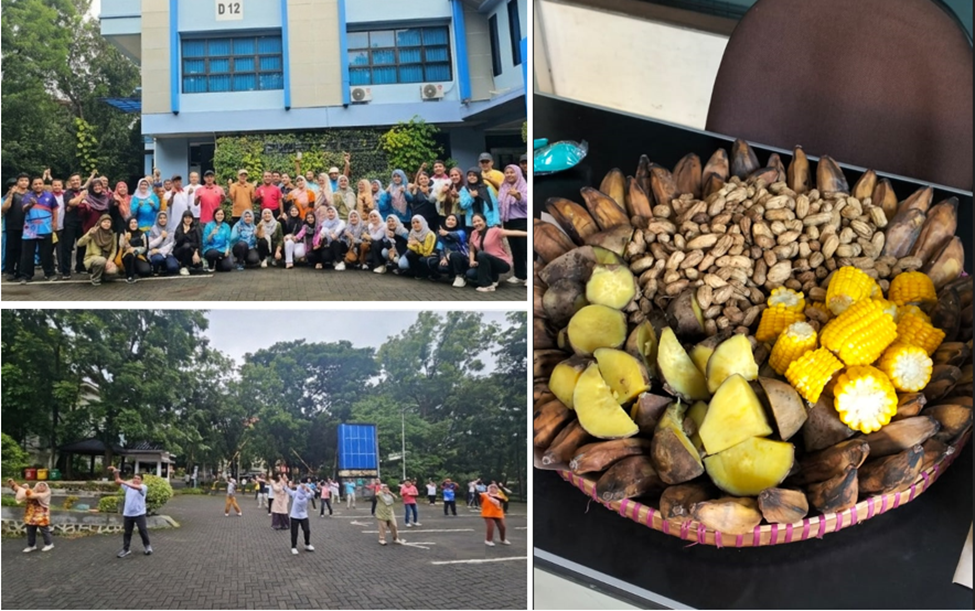



Semarang – Friday holds special significance for Muslims and is widely regarded as a blessed day. The spirit of sharing and caring for others is an important part of social values in the community. This spirit is reflected by the Faculty of Mathematics and Natural Sciences (FMIPA), Universitas Negeri Semarang (UNNES), through the “FMIPA Berbagi – Food Donation for Students” program, which was held on Friday, 7 November 2025, and Friday, 14 November 2025, at the Baitul Alim Mosque (MBA) of FMIPA UNNES.
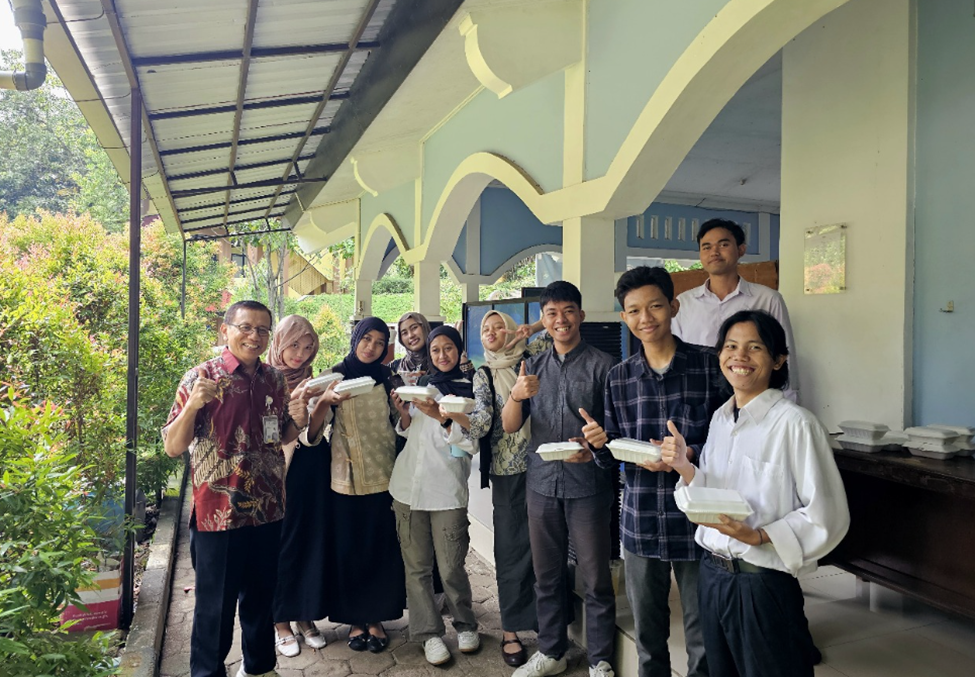
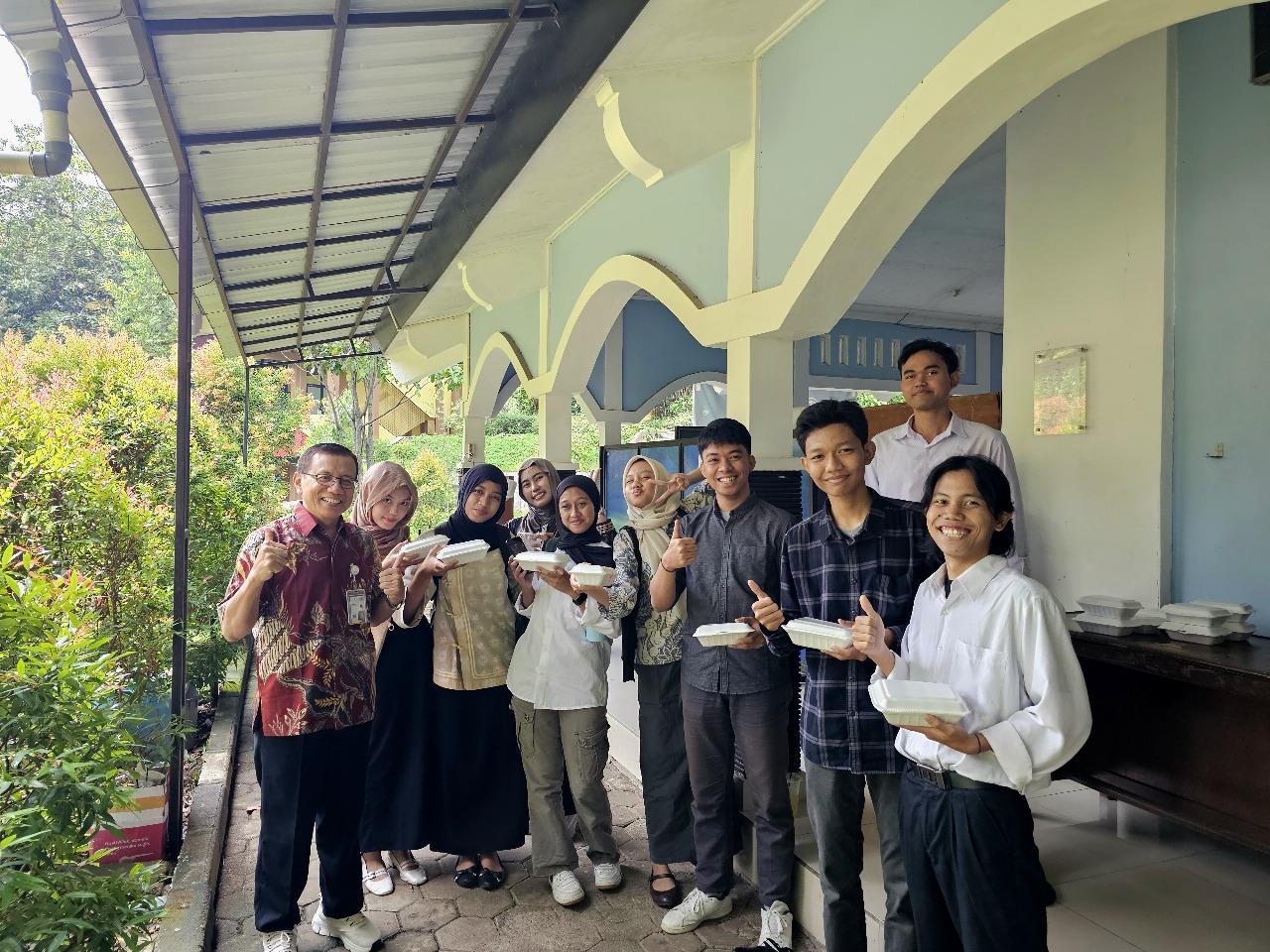
The “FMIPA Berbagi” program is a collective initiative involving the FMIPA academic community to help meet students’ food needs, particularly those who require additional support in accessing meals during their academic activities. By providing food directly to students, the program represents the faculty’s commitment to addressing student food insecurity while fostering a more inclusive and supportive academic environment.
The meals provided were prepared with attention to balanced nutrition, consisting of sources of carbohydrates, protein, and vegetables. Therefore, the assistance was not merely intended to provide meals that satisfy hunger, but also to provide nutritious food to support students’ needs while attending lectures, practical sessions, and other academic activities.
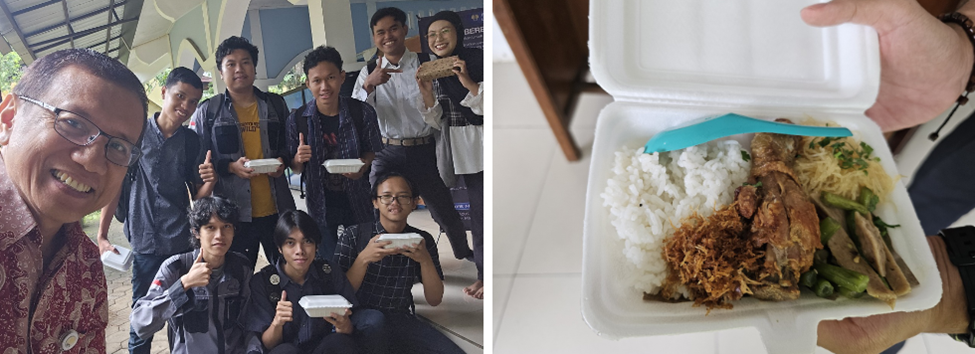
The first activity was held on Friday, 7 November 2025, and received an enthusiastic response from students. Food packages were distributed to students within the FMIPA campus as a form of support for their food needs during their academic activities.
The initiative was continued one week later, on Friday, 14 November 2025, with an even larger number of participants. The positive response demonstrated that the food assistance program provided tangible benefits to the campus community, particularly students experiencing difficulties in meeting their daily food needs.
For students, the assistance not only helped fulfill their basic need for food but also helped reduce part of their daily expenses. This support enables students to focus more fully on their academic activities without having to compromise their food needs.
The “FMIPA Berbagi” program represents one of the faculty’s interventions to prevent and reduce food insecurity and hunger among students. Direct food provision gives students in need access to food while strengthening the academic community’s collective concern for students’ basic needs.
The program also demonstrates that food security in higher education is not only about food availability, but also about students’ access to sufficient and nutritious food. Therefore, providing meals containing carbohydrates, protein, and vegetables is an important component of the program.
Beyond providing direct benefits to recipients, the initiative also builds collective awareness that students’ food needs are an important part of the well-being of the academic community. Lecturers, administrative staff, students, and the MBA management team all contribute to building a support system based on solidarity.
Funding for the food packages comes from donations made by lecturers, administrative staff, students, and members of the wider FMIPA community. Donations are provided either directly or through bank transfers and are subsequently managed by the MBA management team to purchase meals for distribution to students.
The funds are managed transparently and accountably. The MBA management team provides a financial report every month during the final week, allowing contributors to see how their donations are used and the benefits generated through their support.
This donation system demonstrates that efforts to address student food insecurity can be undertaken through collective action. Contributions from members of the FMIPA community are pooled and transformed into direct food assistance that provides tangible benefits to students.
Meeting students’ food needs is an important component of creating a supportive learning environment that promotes student well-being. In certain circumstances, limited access to food can add to students’ financial burdens and potentially affect their comfort and ability to participate fully in academic activities.
Through “FMIPA Berbagi,” the faculty seeks to provide simple yet tangible support for students. The program not only provides food but also fosters a culture of mutual support and strengthens a sense of community within FMIPA.
Given the positive response and benefits experienced by students, the “FMIPA Berbagi” program is expected to continue and develop as a regular initiative. Strengthening the donor network, expanding the number of beneficiaries, and developing targeted distribution mechanisms could serve as further steps to broaden the program’s impact.
Through this food-sharing initiative, FMIPA UNNES demonstrates that meeting students’ food needs can be part of efforts to create a more humane, inclusive, and sustainable educational environment. The food provided may be simple, but its impact can become an important source of support for students to continue learning and developing. The “FMIPA Berbagi” program contributes to the Sustainable Development Goal (SDG) 2: Zero Hunger, particularly through initiatives addressing student food insecurity, interventions to reduce hunger, and the provision of nutritious and affordable food for students. The program also supports SDG 1: No Poverty by helping reduce students’ daily expenses for basic food needs. In this way, the food-sharing initiative represents a tangible expression of solidarity among the academic community in strengthening food security and student well-being.