


Semarang – The Faculty of Mathematics and Natural Sciences (FMIPA), Universitas Negeri Semarang (UNNES), continues to strengthen laboratory waste management and occupational health and safety through wastewater treatment infrastructure, Hazardous and Toxic Waste (HTW) management, and capacity building for laboratory personnel. These efforts are aimed at ensuring that teaching, practical, and research activities are conducted safely while supporting responsible environmental management.
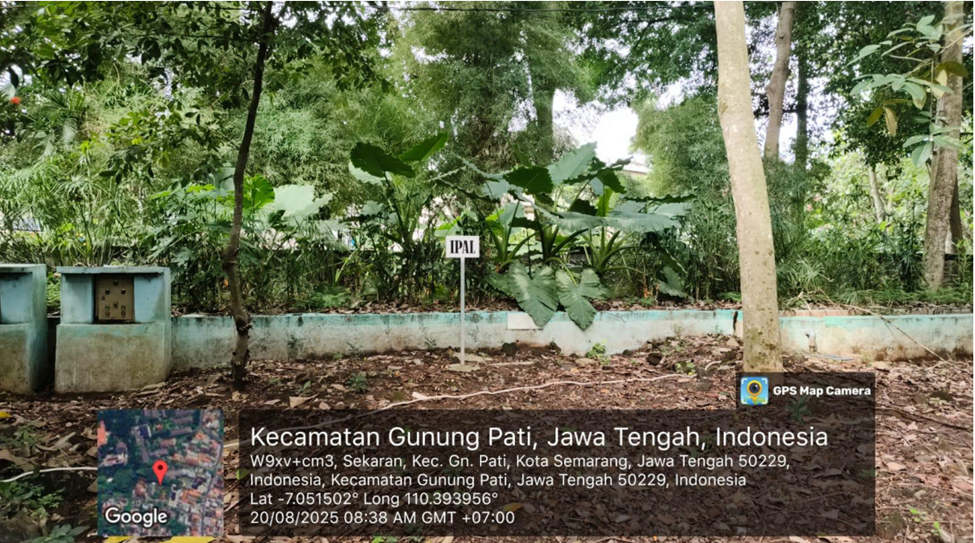
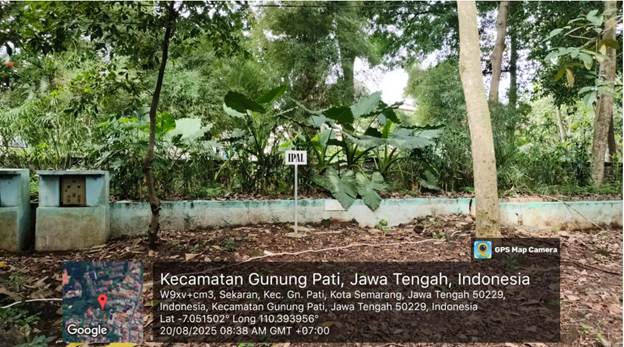
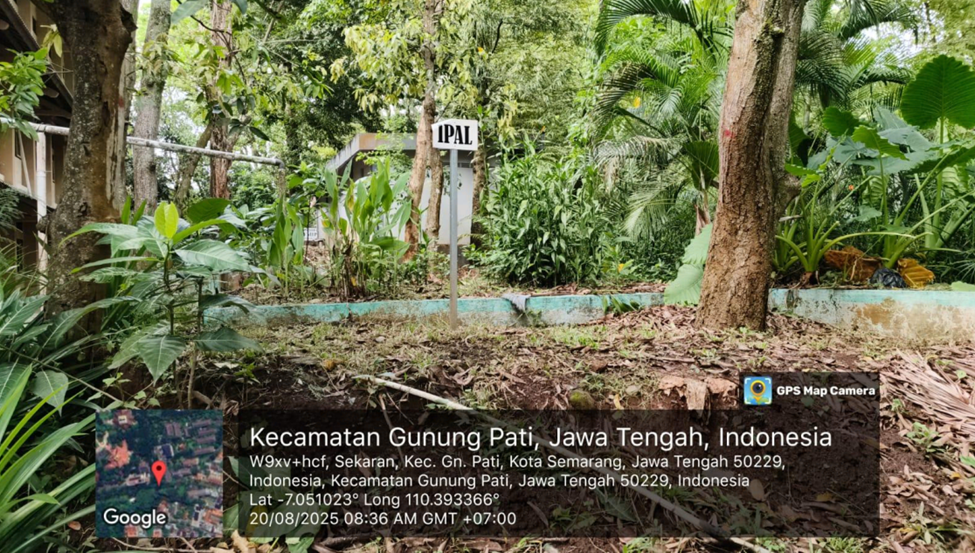
FMIPA UNNES operates two Wastewater Treatment Plants (WWTPs) to manage wastewater generated from faculty activities, including laboratory operations. Wastewater produced during practical and research activities is collected and directed to the appropriate treatment system according to its characteristics before being discharged into the environment. The availability of these WWTPs forms an important part of the faculty’s efforts to prevent untreated wastewater from being directly released into the environment.
Laboratory waste is managed according to its type and characteristics. Liquid waste that can be treated through the wastewater treatment system is directed to the WWTP, while Hazardous and Toxic Waste (HTW) is not mixed with ordinary waste streams. HTW generated from practical and research activities is collected, segregated according to its characteristics, and stored in designated facilities that are appropriate for hazardous waste management before further treatment or disposal.
HTW that is not treated or utilized internally is subsequently transferred to authorized third-party waste management providers in accordance with applicable hazardous-waste management requirements. The process includes appropriate packaging, labeling, documentation, transportation, and tracking to ensure that hazardous waste is handled safely throughout the management chain.
This system ensures that waste generated from academic activities is managed according to its type, characteristics, and appropriate treatment requirements, rather than simply being transferred from one location to another. Separating wastewater directed to the WWTP from HTW requiring specialized handling also helps reduce environmental pollution and potential exposure risks for students, laboratory technicians, lecturers, and other staff.
Laboratory waste management is further supported by the implementation of occupational health and safety (OHS/K3) measures. Laboratory technicians at FMIPA UNNES receive training in laboratory safety, including safe working procedures, the use of personal protective equipment, chemical handling, waste management, and emergency response procedures.
Capacity building is also provided to lecturers. Several FMIPA lecturers have undertaken occupational health and safety certification through the Indonesian Professional Certification Authority (BNSP) as part of efforts to strengthen human-resource competency in occupational safety. These competencies help reinforce a culture of safety in teaching, research, and community engagement activities involving laboratories.
Meanwhile, students also receive laboratory OHS training as part of their preparation before conducting practical and laboratory activities. The training introduces students to potential hazards, safe working procedures, the use of personal protective equipment, proper handling of laboratory materials and equipment, and appropriate procedures for managing waste generated during practical activities.
Through this integrated approach, FMIPA UNNES combines waste-treatment infrastructure, hazardous-waste management, human-resource competency, and safety education. The two WWTPs form part of the faculty’s liquid-waste management system, while HTW segregation and storage ensure that hazardous materials receive appropriate handling. At the same time, OHS training for laboratory technicians, lecturers, and students strengthens risk prevention from the source.
The approach also supports more responsible teaching and research activities. Laboratories are not only spaces for generating scientific knowledge and innovation, but also environments where students learn directly about occupational safety, environmental responsibility, and appropriate management of waste resulting from scientific activities.
Through integrated waste management and strengthened OHS competencies, FMIPA UNNES seeks to establish an environmentally responsible, safe, and healthy academic environment. This approach reflects the principles of responsible consumption and production, recognizing that every academic activity should consider both the resources it consumes and the waste and potential risks it generates.
These initiatives contribute to several Sustainable Development Goals (SDGs), particularly SDG 6 (Clean Water and Sanitation) through wastewater treatment using two WWTPs and efforts to prevent water pollution; SDG 12 (Responsible Consumption and Production) through waste segregation, appropriate storage, and responsible management of HTW; SDG 3 (Good Health and Well-being) through laboratory OHS practices and efforts to reduce exposure to hazardous substances; and SDG 4 (Quality Education) through OHS training for students and competency development for laboratory technicians and lecturers.
By integrating two WWTPs, Hazardous and Toxic Waste management, OHS competencies, and safety education, FMIPA UNNES demonstrates that sustainability in higher education extends beyond environmental programs outside the laboratory. It also requires responsible management of academic activities, from the use of materials and generation of waste to the protection of everyone involved in teaching, research, and laboratory activities.