

Related to SDGs
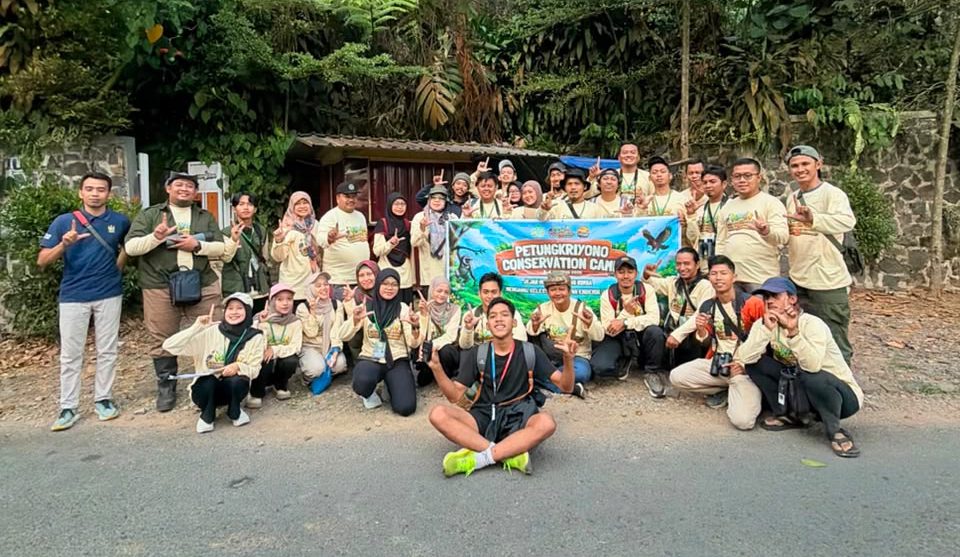
Four representatives of the Universitas Negeri Semarang (UNNES) Conservation Cadres participated in the Road to National Nature Conservation Day (HKAN) 2026: Petungkriyono Conservation Camp, held on August 5–6, 2026, in Petungkriyono, Pekalongan Regency. The program served as a field-learning platform for young conservationists to gain a deeper understanding of biodiversity conservation and tropical forest ecosystems.
Throughout the event, participants conducted field exploration and wildlife observation activities in the Sokokembang Forest, one of the most important habitats for endemic Javan wildlife. The UNNES Conservation Cadres were actively involved in biodiversity monitoring, observing birds, mammals, and primates within the forest area.
Among the species successfully observed were the Javan gibbon (Hylobates moloch), Javan langur (Trachypithecus auratus), surili (Presbytis comata), and long-tailed macaque (Macaca fascicularis). These observations provided participants with firsthand experience of the importance of protecting natural habitats and preserving species with high conservation value.
One of the UNNES Conservation Cadres, Rheza Rizky, stated that the program offered valuable insight into real-world conservation practices. “This activity gave us the opportunity to observe wildlife directly in their natural habitat. It broadened our understanding of the importance of protecting forests and maintaining biodiversity,” he said.
Rheza also highlighted the benefits of interacting with participants from different regions. “In addition to learning about wildlife and ecosystems, we exchanged ideas about conservation challenges in our respective regions. This experience was highly beneficial in expanding our perspectives as conservation cadres,” he added.
The participation of UNNES Conservation Cadres in this program reflects the university’s commitment to developing environmentally conscious students. Through field-based learning experiences, students gain not only theoretical knowledge but also a stronger sense of responsibility for protecting nature and biodiversity.
This activity supports the Sustainable Development Goals (SDGs), particularly SDG 4 (Quality Education), SDG 15 (Life on Land), and SDG 17 (Partnerships for the Goals).