



The Faculty of Social and Political Sciences (FISIP) at Universitas Negeri Semarang (UNNES) makes use of natural daylight to reduce daytime electricity consumption at its A.T. Soegito Building.
The building’s design accommodates natural lighting, supporting more energy-efficient daily operations across its academic and administrative facilities.
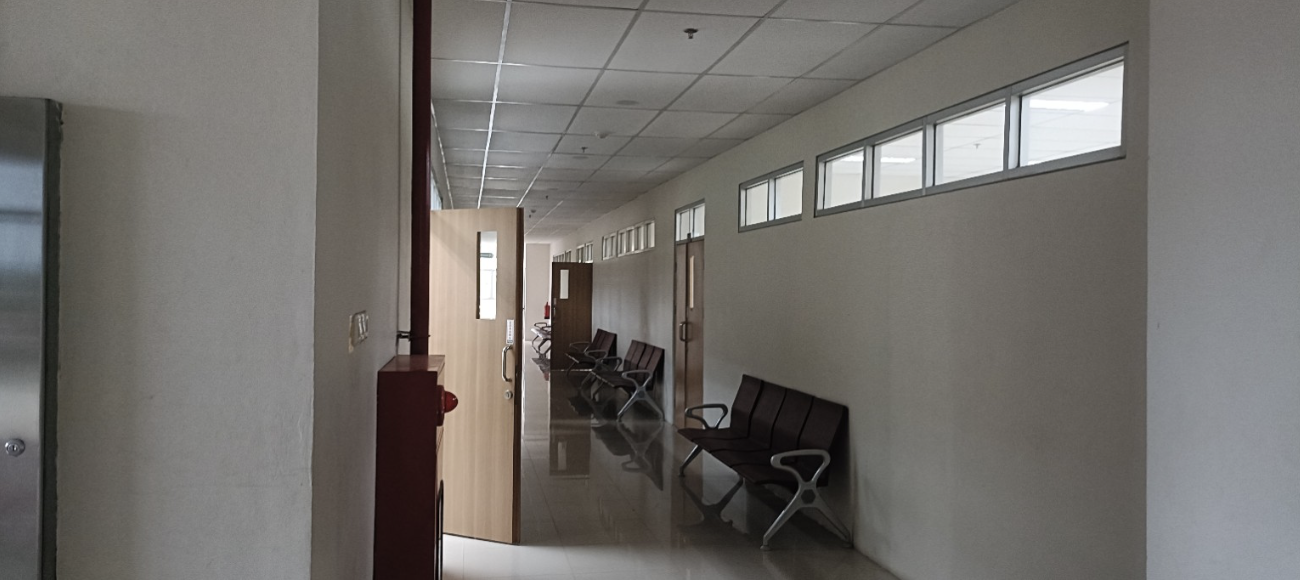
Natural lighting can be observed in the building’s corridors, where glazed openings allow light to enter and illuminate shared indoor spaces.
During daytime hours, corridor lights are deliberately switched off to take advantage of available daylight. This practice reduces the need for artificial lighting when natural illumination is sufficient for building occupants.
In addition to its daylighting approach, the A.T. Soegito Building uses light-emitting diode (LED) technology throughout its lighting installations. LED lighting generally requires less electricity than conventional incandescent lamps to provide equivalent illumination.
Natural daylight and LED technology offer complementary approaches to building energy management. Daylight can meet lighting requirements when sufficient sunlight is available, while energy-efficient lamps provide additional illumination when necessary.
Appropriate lighting management also contributes to the comfort of students, lecturers, and administrative staff. Adequate illumination remains essential for teaching, academic services, administrative activities, and safe movement throughout the building.
Improving energy efficiency in university buildings does not always require complex technological interventions. Effective use of architectural openings, energy-efficient lighting technologies, and responsible electricity consumption can all contribute to more sustainable building operations.
By combining natural daylight with LED lighting, FISIP UNNES seeks to reduce unnecessary electricity consumption while maintaining a comfortable academic environment. The management of the A.T. Soegito Building demonstrates how energy efficiency can be incorporated into the design and everyday operation of educational facilities.