Building a More Inclusive Campus for People with Disabilities

Universitas Negeri Semarang > Faculty of Social Sciences and Political Science > News > Building a More Inclusive Campus for People with Disabilities

A university campus is more than a place for lectures, research and academic achievement. It is also a space where students learn how to live with difference, develop empathy and understand what inclusion looks like in everyday life.

That idea has become an increasingly visible part of campus life at the Faculty of Social and Political Sciences at Universitas Negeri Semarang, or FISIP UNNES, where students have been encouraged to engage directly with communities of people with disabilities.

For Dr.sos. Puji Lestari, M.Si., the faculty’s Vice Dean for Business, Research and Cooperation, such encounters are an important part of higher education.

She said universities have a responsibility to shape the way students understand disability — not simply through the language of limitation, but through the recognition of rights, ability and equal participation.

“What we need to build is not only sympathy,” Puji said. “We also need an awareness that people with disabilities have the same rights, opportunities and space to learn, create and contribute.”

That distinction, she said, matters.

An inclusive campus cannot be measured only by ramps, accessible buildings or other physical facilities. It also depends on whether people are welcomed into conversations, given access to information and offered the same opportunities to take part in academic and social life.

For students, that understanding is often strengthened through direct interaction.

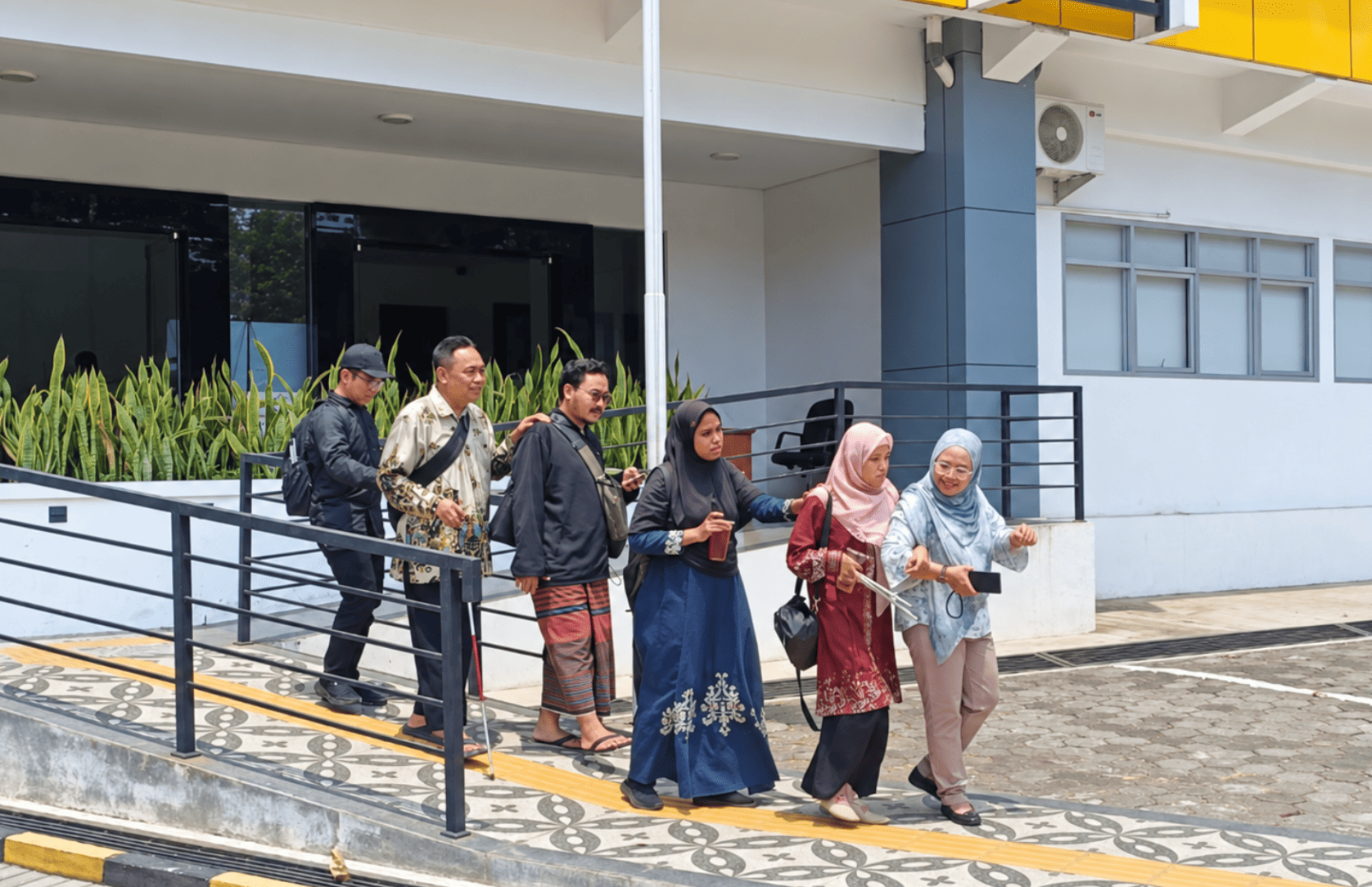
Rather than treating inclusion as an abstract concept discussed in the classroom, FISIP UNNES has sought to create opportunities for students to meet and learn from people with disabilities themselves.

One of the faculty’s partners in that effort is the Sahabat Mata Community in Semarang, an organization involved in education, empowerment and creative activities for people with visual disabilities.

Basuki, chairman of the Sahabat Mata Foundation, said people with disabilities need more than assistance. They need space to demonstrate their abilities, develop their talents and participate on equal terms.

A supportive environment, he said, can make a significant difference in allowing people with disabilities to grow in education, social life and creative work.

For students, the presence of disability communities on campus also brings questions of accessibility and equality closer to everyday experience.

It encourages them to see that inclusion is not simply about providing special facilities. It is also about building a culture of respect and challenging the stigma that can still surround disability.

Puji said universities should aspire to become places where people feel safe, respected and able to participate regardless of physical condition or background.

That awareness is especially important, she added, because students will eventually leave campus and enter communities shaped by different experiences, needs and identities.

In that sense, inclusion is not only a campus issue.

It is part of the education students carry with them into society.

Related Posts

Leave a Reply

* Kode Akses Komentar:

* Tuliskan kode akses komentar diatas:

GDPR

  • Privacy Policy

Privacy Policy

At unnes.ac.id, the privacy of our visitors is of extreme importance to us. This privacy policy document outlines the types of personal information that is received and collected by unnes.ac.id and how it is used.

Log Files

Like many other Web sites, unnes.ac.id makes use of log files. The information inside the log files includes internet protocol (IP) addresses, type of browser, Internet Service Provider (ISP), date/time stamp, referring/exit pages, and number of clicks to analyze trends, administer the site, track user’s movement around the site, and gather demographic information. IP addresses and other such information are not linked to any information that is personally identifiable.

Cookies

unnes.ac.id uses cookies to store information about visitors’ preferences, to record user-specific information on which pages the site visitor accesses or visits, and to personalize or customize our web page content based upon visitors’ browser type or other information that the visitor sends via their browser.

Third-party ad servers or ad networks use technology in their respective advertisements and links that appear on unnes.ac.id and which are sent directly to your browser. They automatically receive your IP address when this occurs. Other technologies (such as cookies, JavaScript, or Web Beacons) may also be used by our site’s third-party ad networks to measure the effectiveness of their advertising campaigns and/or to personalize the advertising content that you see on the site.

unnes.ac.id has no access to or control over these cookies that are used by third-party advertisers.

You should consult the respective privacy policies of these third-party ad servers for more detailed information on their practices as well as for instructions about how to opt-out of certain practices. unnes.ac.id’s privacy policy does not apply to, and we cannot control the activities of, such other advertisers or web sites.

If you wish to disable cookies, you may do so through your individual browser options. More detailed information about cookie management with specific web browsers can be found at the browsers’ respective websites.

Consent

By using our website, you hereby consent to our privacy policy and agree to its terms.

Update

This Privacy Policy was last updated on: 2023-02-14. Should we update, amend or make any changes to our privacy policy, those changes will be posted here.

Contact Us

If you have any questions, comments, or concerns about our Privacy Policy or our practices with regards to your personal information, please feel free to contact us through the contact form on our website or by emailing us at humas[at]mail.unnes.ac.id.

This Privacy Policy is intended as a general guide to our practices in collecting and using information. If there is any inconsistency between this Privacy Policy and the terms of the Service Agreement or any other terms that may apply to specific services you use, then those specific service terms shall apply.

Terms of Use

By using our website, you agree to abide by this Privacy Policy. If you do not agree with this Privacy Policy, please do not use our website. We reserve the right to update this Privacy Policy from time to time without prior notice. Please review our Privacy Policy periodically to check for changes. Your continued use of our website following the posting of changes to this Privacy Policy means that you accept the changes.

Thank you for reading our Privacy Policy. We are committed to protecting the privacy of our website visitors and will continue to update our Privacy Policy to ensure optimal protection.