

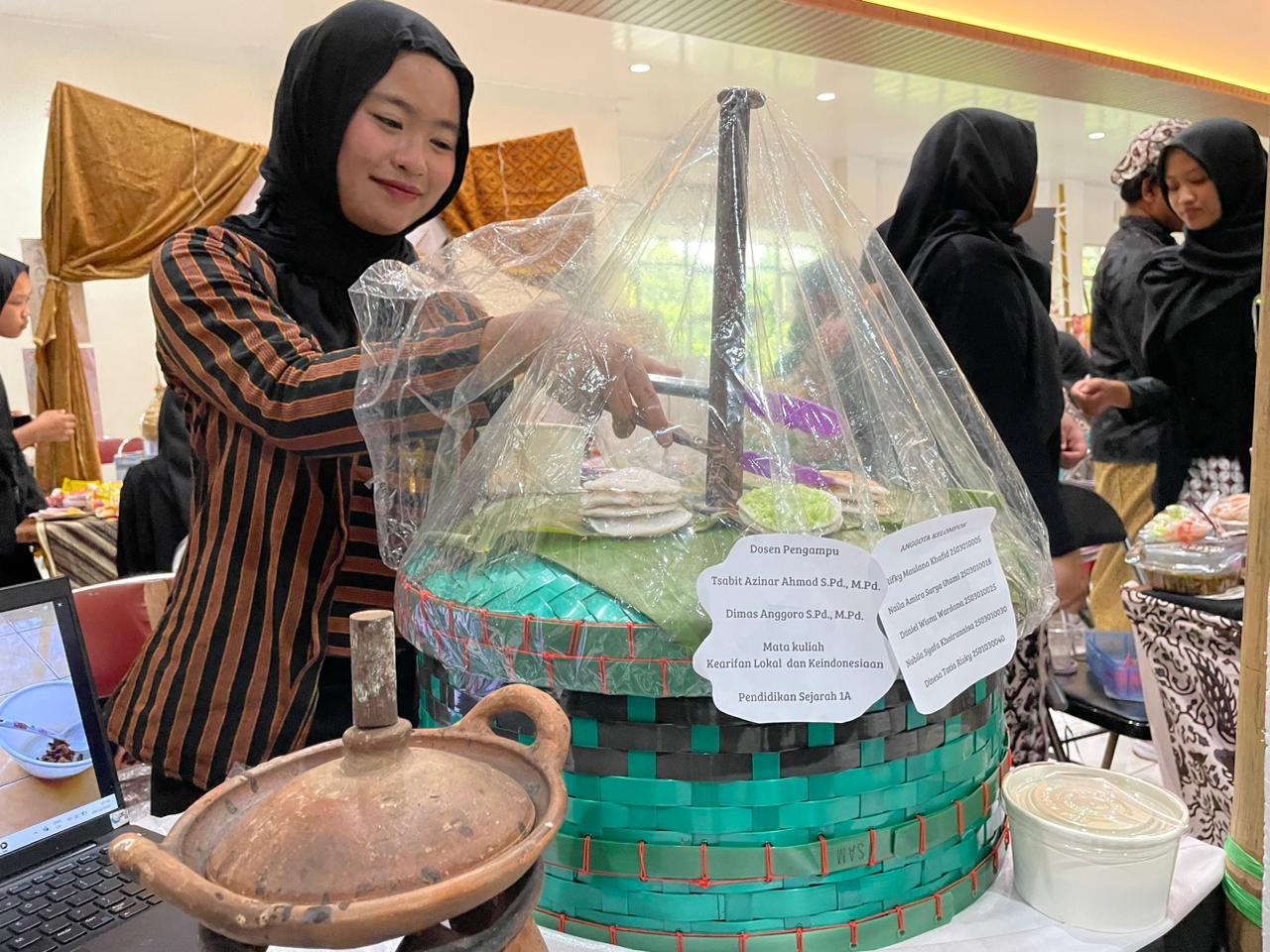
Sweet and savory aromas filled the third-floor hall of Building C7 at Universitas Negeri Semarang on Tuesday (Nov. 9, 2025), where students from the History Education Program presented a variety of traditional Indonesian foods as part of their academic showcase. At one table, first-semester student Dinesa Tatia introduced serabi from Ambarawa a five-centimeter snack that has become increasingly rare in local markets.
Dinesa demonstrated the traditional preparation method, which uses a small clay wok heated over a charcoal stove. “The batter is made from rice flour, coconut milk, palm sugar, white sugar, salt, and pandan and suji leaves for aroma,” she explained. The mixture is cooked for about three minutes until it sets and releases a fragrant steam.
Nearby, Dimas Yoga presented sawut, a traditional Yogyakarta dish made from grated cassava mixed with shaved palm sugar and steamed until soft. “We chose sawut because many people no longer recognize it, even though it used to be a common family treat,” he said.
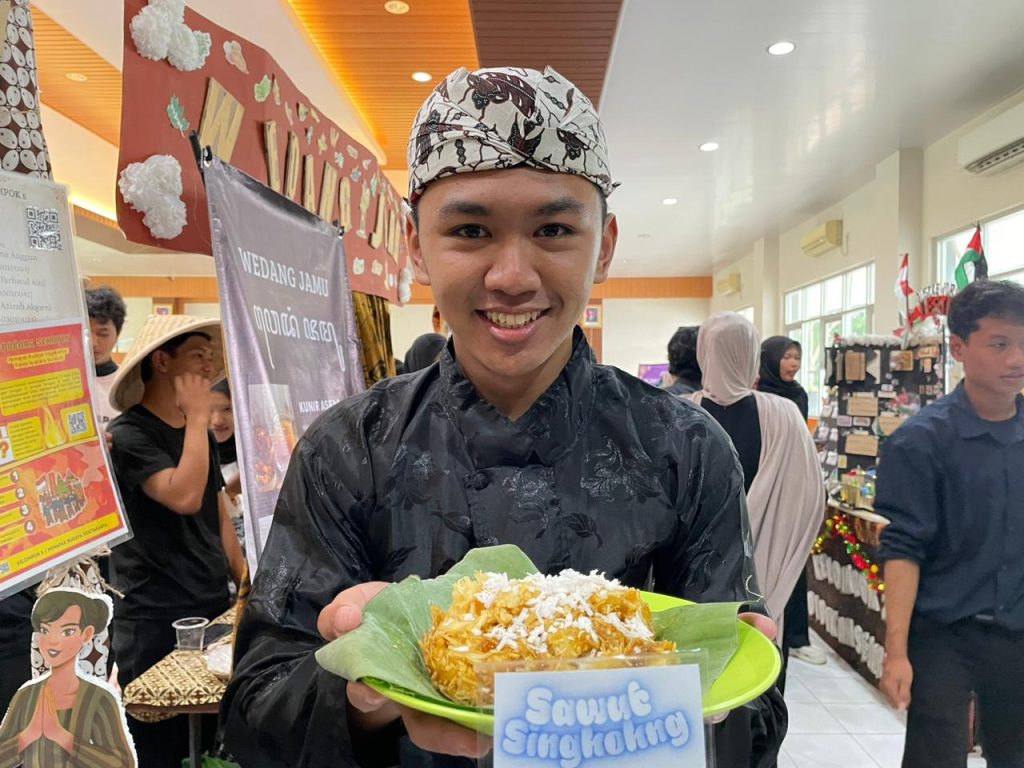
Both foods were part of the Gelar Karya (Creative Showcase) organized by the History Education Program under the theme Learning History, Learning Indonesian Identity. The event featured 14 types of traditional foods from various regions across Indonesia, along with eight academic products created by students throughout the semester.
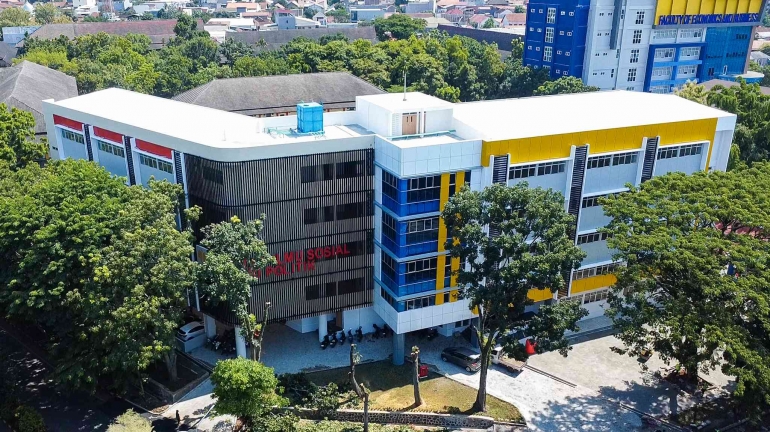
Dean of the Faculty of Social and Political Sciences (FISIP) UNNES, Prof. Arif Purnomo, praised the event as a form of historical learning that remains rooted in everyday culture. “Indonesian history must be lived and meaningful. Events like this bridge academic knowledge and social reality, including the cultural and economic potential of traditional products,” he said.
Prof. Arif added that the showcase provides an important creative platform for students to demonstrate their understanding of course materials. “It is a valuable way to assess how well students master the concepts behind the projects they undertake,” he noted.
In addition to promoting traditional snacks, the event aligns with the Sustainable Development Goals (SDGs), particularly those related to quality education and cultural preservation. Through hands-on learning experiences, students not only deepen their understanding of history but also contribute to safeguarding intangible cultural heritage and strengthening local sustainability by highlighting the value of Indonesia’s traditional culinary traditions.