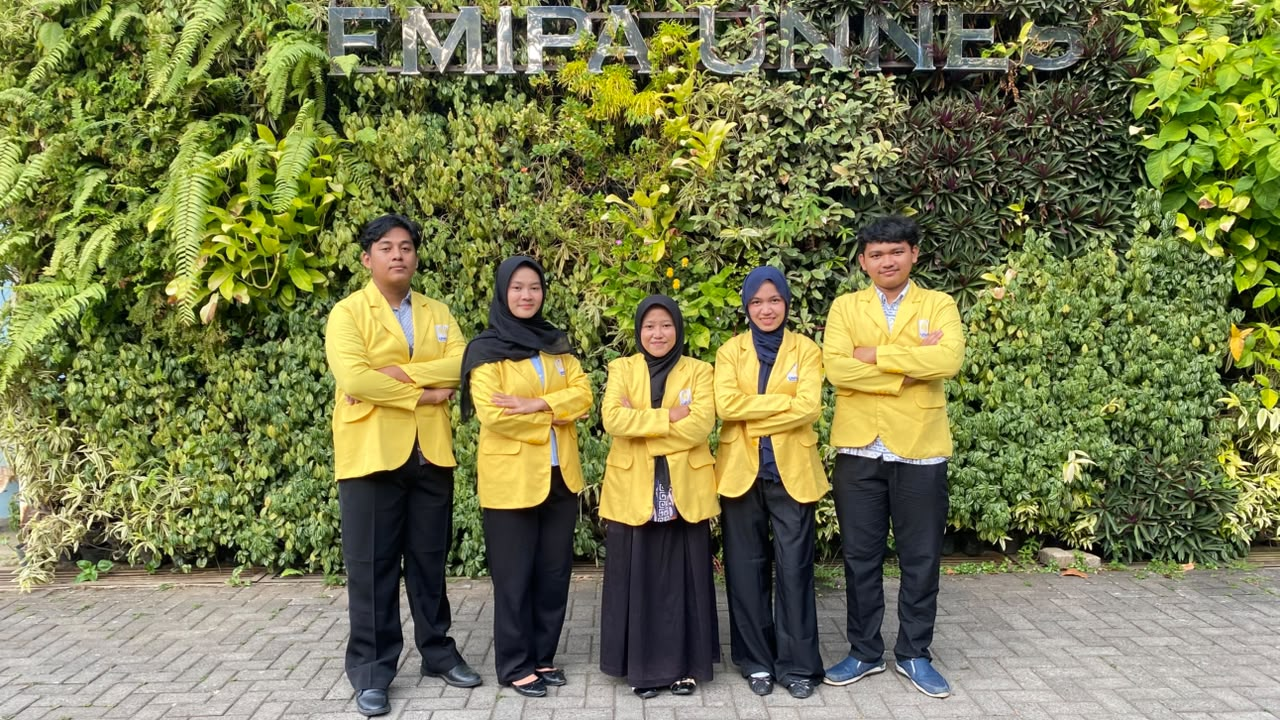

Tim Mahasiswa FMIPA UNNES Rancang KAMPUNG LESTARI melalui Pendekatan Lintas Disiplin untuk Mendukung Pencapaian (SDGs).

Universitas Negeri Semarang/Faculty of Mathematics and Natural Sciences/Berita/Tim Mahasiswa FMIPA UNNES Rancang KAMPUNG LESTARI melalui Pendekatan Lintas Disiplin untuk Mendukung Pencapaian (SDGs).
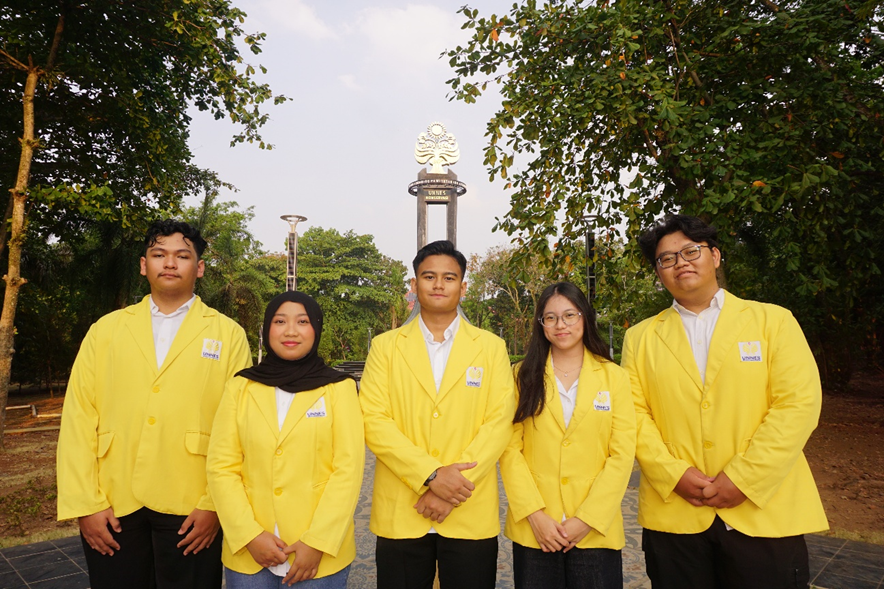
Lima mahasiswa yang terdiri dari tiga laki-laki dan dua perempuan mengenakan jas almamater kuning khas UNNES, berdiri sejajar menghadap kamera di luar ruangan dengan latar belakang pepohonan dan tugu konservasi kampus.

Permukiman masa depan tidak hanya membutuhkan infrastruktur fisik, tetapi juga ketahanan terhadap krisis iklim dan efisiensi pemanfaatan sumber daya. Pengelolaan air, pangan, energi, data, dan partisipasi masyarakat membutuhkan pendekatan dari berbagai bidang keilmuan. Hal ini sangat krusial untuk mewujudkan permukiman yang inklusif, aman, tangguh, dan berkelanjutan, selaras dengan tujuan SDG 11 (Sustainable Cities and Communities). 

Pendekatan lintas disiplin tersebut menjadi bagian fundamental dalam pengembangan KAMPUNG LESTARI, sebuah gagasan inovatif dari lima mahasiswa Fakultas Matematika dan Ilmu Pengetahuan Alam (FMIPA) Universitas Negeri Semarang (UNNES) yang diajukan dalam PKM AMLI 2026 bidang Gagasan Futuristik Tertulis.

Tim ini terdiri atas mahasiswa program studi Teknik Informatika, Kimia, dan Biologi yang membagi kontribusi sesuai keahlian bidang masing-masing. Syafiq Akmal Fauzan, Achmad Fauzan, dan Mohammad Kresna Anugrah Raharjo berkontribusi pada perancangan aspek teknologi informasi, tata kelola digital, dan arsitektur sistem. Putri Angellina berkontribusi pada analisis aspek kimia dalam pengolahan air dan penyimpanan energi, sedangkan Nur Alfiati berperan merancang sistem pangan sirkular dan proses biologis.

Gagasan KAMPUNG LESTARI mengintegrasikan empat pilar, yaitu Water Resilience, Circular Bio-System, Energy Resili               ence, dan Digital Governance. Seluruh sistem dirancang terhubung melalui sebuah Resource Center dengan menerapkan prinsip Zero Resource Loss. Pendekatan ekonomi sirkular ini menargetkan efisiensi pemanfaatan sumber daya alam guna mendukung SDG 12 (Responsible Consumption and Production).  

Pada aspek kimia dan pengelolaan air, rancangan tersebut memisahkan aliran greywater dan blackwater. Greywater diarahkan melalui constructed wetland, elektrokoagulasi, dan disinfeksi UV sebelum digunakan kembali sebagai air olahan nonpotabel setelah memenuhi parameter mutu. Inovasi sanitasi dan efisiensi daur ulang air ini merupakan wujud dukungan langsung terhadap SDG 6 (Clean Water and Sanitation). Blackwater sendiri memiliki jalur tersendiri menuju proses anaerobik.  

Dalam sistem biologis, KAMPUNG LESTARI mengintegrasikan akuaponik, pertanian vertikal, biokonversi larva Black Soldier Fly (BSF), dan pengelolaan residu organik. Pendekatan ini dirancang agar sumber daya dan hasil samping dari sistem pangan dapat dikelola kembali sesuai fungsi penggunannya, sekaligus memperkuat ketahanan lingkungan kawasan terhadap perubahan iklim sesuai dengan SDG 13 (Climate Action).  

Pada sisi teknologi informasi, jaringan Internet of Things (IoT) digunakan untuk mengumpulkan data dari berbagai sistem. Digital Twin digunakan untuk merepresentasikan kondisi kawasan secara digital dan mendukung simulasi, sementara Artificial Intelligence (AI) ditempatkan sebagai alat bantu analisis dan rekomendasi keputusan bagi warga.

Keterhubungan antarkomponen tersebut juga diterapkan pada sistem energi melalui skema smart microgrid. Pemanfaatan teknologi hibrida terbarukan yang didukung oleh pemantauan sensor, komunikasi data, dan pengolahan informasi menjadi fondasi untuk menyediakan energi yang andal bagi kawasan, sejalan dengan target SDG 7 (Affordable and Clean Energy).  

KAMPUNG LESTARI disusun oleh Syafiq Akmal Fauzan, Achmad Fauzan, Mohammad Kresna Anugrah Raharjo, Putri Angellina, dan Nur Alfiati, di bawah bimbingan dosen M. Faris Al Hakim, S.Pd., M.Cs. Melalui kolaborasi komprehensif tersebut, gagasan KAMPUNG LESTARI menempatkan persoalan permukiman sebagai persoalan multidisipliner yang membutuhkan keterhubungan antara teknologi informasi, ilmu kimia, biologi, dan pengelolaan masyarakat secara berkelanjutan.
Related Posts

Leave a Reply

* Kode Akses Komentar:

* Tuliskan kode akses komentar diatas:

GDPR

  • Privacy Policy

Privacy Policy

At unnes.ac.id, the privacy of our visitors is of extreme importance to us. This privacy policy document outlines the types of personal information that is received and collected by unnes.ac.id and how it is used.

Log Files

Like many other Web sites, unnes.ac.id makes use of log files. The information inside the log files includes internet protocol (IP) addresses, type of browser, Internet Service Provider (ISP), date/time stamp, referring/exit pages, and number of clicks to analyze trends, administer the site, track user’s movement around the site, and gather demographic information. IP addresses and other such information are not linked to any information that is personally identifiable.

Cookies

unnes.ac.id uses cookies to store information about visitors’ preferences, to record user-specific information on which pages the site visitor accesses or visits, and to personalize or customize our web page content based upon visitors’ browser type or other information that the visitor sends via their browser.

Third-party ad servers or ad networks use technology in their respective advertisements and links that appear on unnes.ac.id and which are sent directly to your browser. They automatically receive your IP address when this occurs. Other technologies (such as cookies, JavaScript, or Web Beacons) may also be used by our site’s third-party ad networks to measure the effectiveness of their advertising campaigns and/or to personalize the advertising content that you see on the site.

unnes.ac.id has no access to or control over these cookies that are used by third-party advertisers.

You should consult the respective privacy policies of these third-party ad servers for more detailed information on their practices as well as for instructions about how to opt-out of certain practices. unnes.ac.id’s privacy policy does not apply to, and we cannot control the activities of, such other advertisers or web sites.

If you wish to disable cookies, you may do so through your individual browser options. More detailed information about cookie management with specific web browsers can be found at the browsers’ respective websites.

Consent

By using our website, you hereby consent to our privacy policy and agree to its terms.

Update

This Privacy Policy was last updated on: 2023-02-14. Should we update, amend or make any changes to our privacy policy, those changes will be posted here.

Contact Us

If you have any questions, comments, or concerns about our Privacy Policy or our practices with regards to your personal information, please feel free to contact us through the contact form on our website or by emailing us at humas[at]mail.unnes.ac.id.

This Privacy Policy is intended as a general guide to our practices in collecting and using information. If there is any inconsistency between this Privacy Policy and the terms of the Service Agreement or any other terms that may apply to specific services you use, then those specific service terms shall apply.

Terms of Use

By using our website, you agree to abide by this Privacy Policy. If you do not agree with this Privacy Policy, please do not use our website. We reserve the right to update this Privacy Policy from time to time without prior notice. Please review our Privacy Policy periodically to check for changes. Your continued use of our website following the posting of changes to this Privacy Policy means that you accept the changes.

Thank you for reading our Privacy Policy. We are committed to protecting the privacy of our website visitors and will continue to update our Privacy Policy to ensure optimal protection.