

Guru Besar FMIPA UNNES Dorong Urban Farming untuk Ketahanan Pangan dan Lingkungan Perkotaan Berkelanjutan

Universitas Negeri Semarang/Faculty of Mathematics and Natural Sciences/Berita/Guru Besar FMIPA UNNES Dorong Urban Farming untuk Ketahanan Pangan dan Lingkungan Perkotaan Berkelanjutan
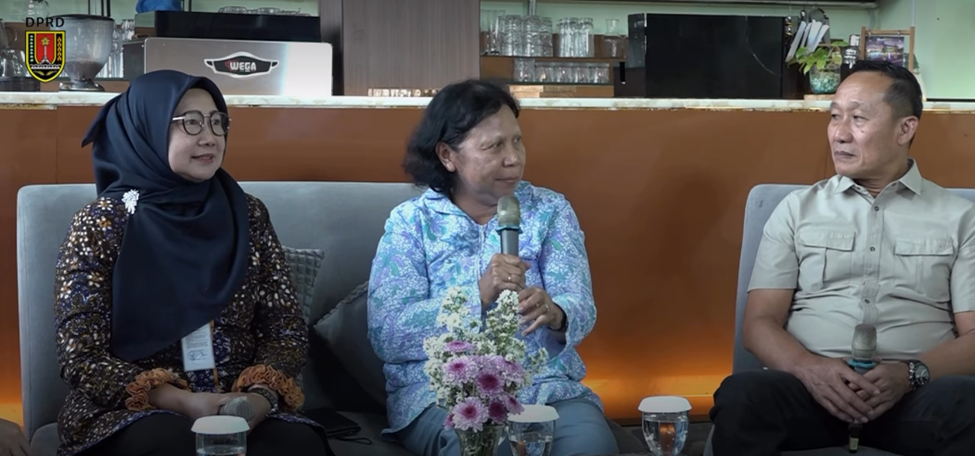
Tiga narasumber duduk di sofa abu-abu dalam acara dialog interaktif dengan logo DPRD di pojok kiri atas, menampilkan Prof. Nana Kariada Tri Martuti berbaju biru bermotif berbicara menggunakan mikrofon di tengah antara Shoti'ah dan Kadarlusman.

SEMARANG – Guru Besar Fakultas Matematika dan Ilmu Pengetahuan Alam Universitas Negeri Semarang (FMIPA UNNES), Prof. Nana Kariada Tri Martuti, menjadi narasumber dalam dialog interaktif bertema “Urban Farming, Solusi Cerdas Mengatasi Keterbatasan Lahan” yang diselenggarakan DPRD Kota Semarang di Hotel Quest Semarang, Selasa (3/11/2026). Kegiatan tersebut turut menghadirkan Ketua DPRD Kota Semarang Kadarlusman dan Kepala Dinas Pertanian Kota Semarang Shoti’ah.

Dalam dialog tersebut, Prof. Nana Kariada Tri Martuti menyoroti pentingnya pengembangan pertanian perkotaan (urban farming) sebagai alternatif pemanfaatan lahan terbatas untuk mendukung ketahanan pangan keluarga. Selain menyediakan sumber pangan, urban farming juga berpotensi meningkatkan kualitas lingkungan melalui penghijauan kawasan permukiman serta mendorong partisipasi masyarakat dalam pengelolaan lingkungan perkotaan.

Komitmen tersebut sejalan dengan kegiatan pengabdian kepada masyarakat yang telah dilakukan Prof. Nana Kariada Tri Martuti bersama tim FMIPA UNNES melalui program “Pemberdayaan Kelompok Tani Melalui Pertanian Perkotaan Terpadu untuk Mendukung Kemandirian Pangan di Kelurahan Sekaran”. Program ini dilaksanakan bersama Kelompok Tani Bangkong Lestari di RW VII Kelurahan Sekaran, Kota Semarang, sebagai upaya mengatasi keterbatasan pengetahuan, keterampilan, sarana budidaya, dan kapasitas kelembagaan dalam memanfaatkan lahan kosong.

Melalui kegiatan sosialisasi, pelatihan, pendampingan, dan penerapan teknologi, tim pengabdian memperkenalkan empat sistem pertanian perkotaan, yaitu raised bed, vertikultur, hidroponik, dan akuaponik. Hasil kegiatan menunjukkan bahwa seluruh sistem budidaya yang direncanakan berhasil diterapkan. Sarana yang disediakan telah dimanfaatkan untuk membudidayakan berbagai komoditas pangan, seperti tomat, cabai, terung, kangkung, selada, pakcoy, seledri, serta ikan lele.

Selain penerapan teknologi pertanian, program tersebut juga memperkuat kelembagaan kelompok tani melalui pendampingan terhadap 15 anggota. Kelompok Tani Bangkong Lestari telah memiliki kepengurusan dan mekanisme pengelolaan fasilitas secara bersama. Anggota kelompok juga mampu menggunakan serta merawat sarana budidaya yang diberikan. Capaian ini menunjukkan bahwa urban farming tidak hanya berkaitan dengan produksi pangan, tetapi juga dapat menjadi sarana pemberdayaan masyarakat dan penguatan kapasitas produsen pangan lokal.
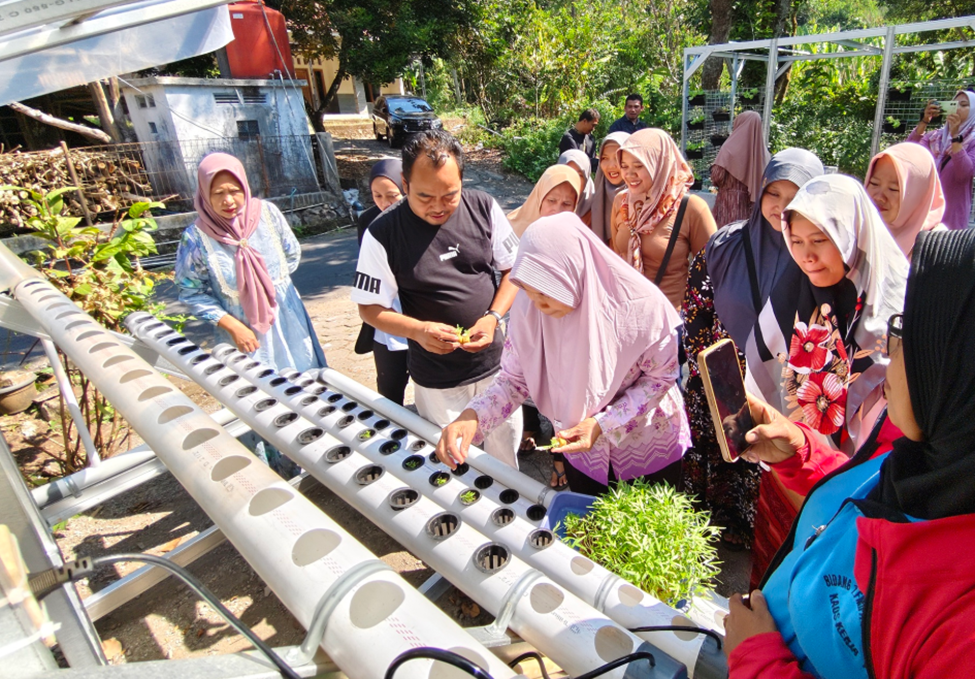
Dampak positif kegiatan ini adalah meningkatnya akses masyarakat terhadap pengetahuan, keterampilan, dan teknologi pertanian perkotaan, sekaligus terbentuknya model pemanfaatan lahan terbatas yang mengintegrasikan produksi pangan, penghijauan lingkungan, dan penguatan kelembagaan. Meski demikian, pendampingan berkelanjutan tetap diperlukan untuk menjaga keberlangsungan produksi dan kemandirian kelompok tani.

Kegiatan ini turut mendukung pencapaian Sustainable Development Goals (SDGs), khususnya SDG 2 (Tanpa Kelaparan) melalui penguatan kapasitas masyarakat dalam memproduksi pangan secara lokal, SDG 11 (Kota dan Permukiman yang Berkelanjutan) melalui optimalisasi ruang perkotaan, serta SDG 12 (Konsumsi dan Produksi yang Bertanggung Jawab) melalui penerapan praktik budidaya pangan yang lebih berkelanjutan.

Melalui keterlibatan dalam dialog kebijakan publik dan kegiatan pengabdian berbasis masyarakat, Prof. Nana Kariada Tri Martuti bersama tim FMIPA UNNES menunjukkan kontribusi akademisi dalam menjembatani ilmu pengetahuan dengan kebutuhan masyarakat. Sinergi antara perguruan tinggi, pemerintah daerah, dan kelompok tani diharapkan dapat memperluas penerapan urban farming sebagai salah satu strategi memperkuat ketahanan pangan dan mewujudkan lingkungan Kota Semarang yang lebih hijau dan berkelanjutan.

Related Posts

Leave a Reply

* Kode Akses Komentar:

* Tuliskan kode akses komentar diatas:

GDPR

  • Privacy Policy

Privacy Policy

At unnes.ac.id, the privacy of our visitors is of extreme importance to us. This privacy policy document outlines the types of personal information that is received and collected by unnes.ac.id and how it is used.

Log Files

Like many other Web sites, unnes.ac.id makes use of log files. The information inside the log files includes internet protocol (IP) addresses, type of browser, Internet Service Provider (ISP), date/time stamp, referring/exit pages, and number of clicks to analyze trends, administer the site, track user’s movement around the site, and gather demographic information. IP addresses and other such information are not linked to any information that is personally identifiable.

Cookies

unnes.ac.id uses cookies to store information about visitors’ preferences, to record user-specific information on which pages the site visitor accesses or visits, and to personalize or customize our web page content based upon visitors’ browser type or other information that the visitor sends via their browser.

Third-party ad servers or ad networks use technology in their respective advertisements and links that appear on unnes.ac.id and which are sent directly to your browser. They automatically receive your IP address when this occurs. Other technologies (such as cookies, JavaScript, or Web Beacons) may also be used by our site’s third-party ad networks to measure the effectiveness of their advertising campaigns and/or to personalize the advertising content that you see on the site.

unnes.ac.id has no access to or control over these cookies that are used by third-party advertisers.

You should consult the respective privacy policies of these third-party ad servers for more detailed information on their practices as well as for instructions about how to opt-out of certain practices. unnes.ac.id’s privacy policy does not apply to, and we cannot control the activities of, such other advertisers or web sites.

If you wish to disable cookies, you may do so through your individual browser options. More detailed information about cookie management with specific web browsers can be found at the browsers’ respective websites.

Consent

By using our website, you hereby consent to our privacy policy and agree to its terms.

Update

This Privacy Policy was last updated on: 2023-02-14. Should we update, amend or make any changes to our privacy policy, those changes will be posted here.

Contact Us

If you have any questions, comments, or concerns about our Privacy Policy or our practices with regards to your personal information, please feel free to contact us through the contact form on our website or by emailing us at humas[at]mail.unnes.ac.id.

This Privacy Policy is intended as a general guide to our practices in collecting and using information. If there is any inconsistency between this Privacy Policy and the terms of the Service Agreement or any other terms that may apply to specific services you use, then those specific service terms shall apply.

Terms of Use

By using our website, you agree to abide by this Privacy Policy. If you do not agree with this Privacy Policy, please do not use our website. We reserve the right to update this Privacy Policy from time to time without prior notice. Please review our Privacy Policy periodically to check for changes. Your continued use of our website following the posting of changes to this Privacy Policy means that you accept the changes.

Thank you for reading our Privacy Policy. We are committed to protecting the privacy of our website visitors and will continue to update our Privacy Policy to ensure optimal protection.