

Dosen FMIPA UNNES Berkontribusi dalam Kajian dan Perencanaan Kebijakan Adaptasi Perubahan Iklim Daerah

Universitas Negeri Semarang/Faculty of Mathematics and Natural Sciences/Berita/Dosen FMIPA UNNES Berkontribusi dalam Kajian dan Perencanaan Kebijakan Adaptasi Perubahan Iklim Daerah
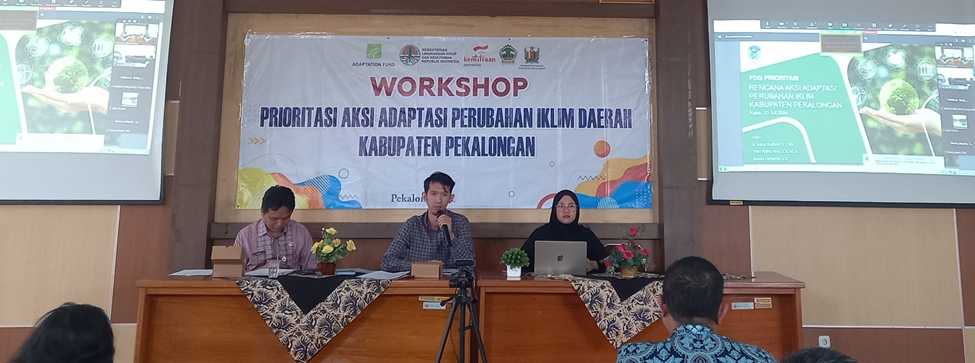
Tiga narasumber duduk di meja panel di depan spanduk bertuliskan Workshop Prioritasi Aksi Adaptasi Perubahan Iklim Daerah Kabupaten Pekalongan dengan pria berkemeja kotak-kotak di tengah berbicara menggunakan mikrofon di antara dua layar proyektor.

SEMARANG – Dosen Fakultas Matematika dan Ilmu Pengetahuan Alam Universitas Negeri Semarang (FMIPA UNNES), Trida Ridho Fariz, M.Sc., berkontribusi sebagai tenaga ahli dalam sejumlah kegiatan kajian dan perencanaan adaptasi perubahan iklim pemerintah daerah. Keterlibatan tersebut mencakup analisis risiko bencana, pemetaan kerentanan wilayah, serta penyediaan informasi ilmiah sebagai salah satu bahan pertimbangan dalam penyusunan kebijakan adaptasi perubahan iklim.

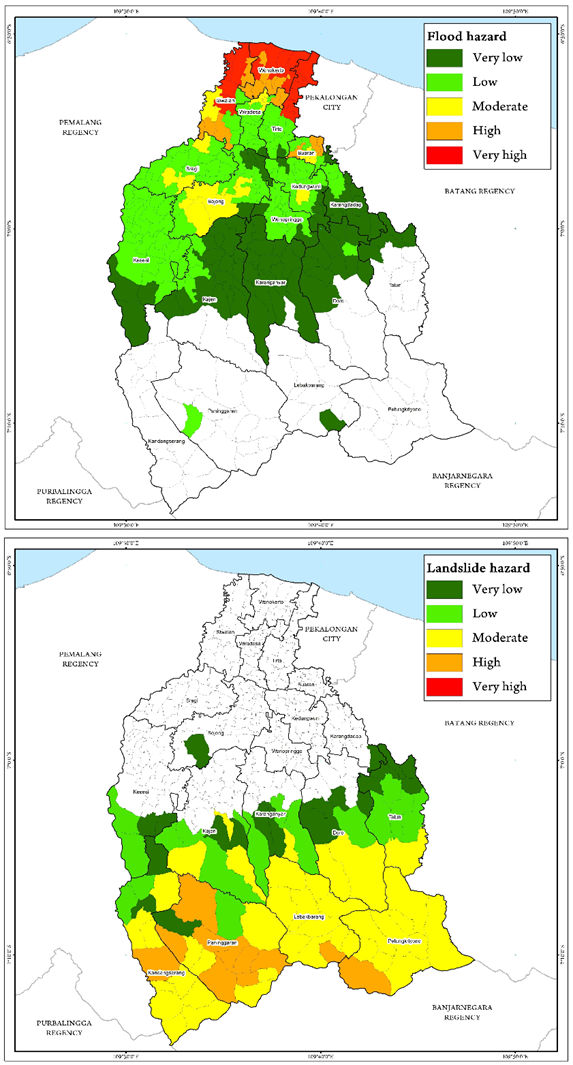
Pengalaman tersebut turut menjadi dasar penelitian berjudul “A Participatory GIS Framework for Multi-Hazard Climate Risk Mapping in Indonesia” yang diterbitkan pada Januari 2026 dalam jurnal internasional terindeks Scopus, Advance Sustainable Science, Engineering and Technology (ASSET). Penelitian ini menggunakan pendekatan Public Participation GIS (PPGIS) untuk memetakan risiko banjir dan tanah longsor di Kabupaten Pekalongan dengan mengintegrasikan data spasial, kondisi sosial ekonomi, dan masukan instansi pemerintah melalui Focus Group Discussion (FGD).
Hasil penelitian mengidentifikasi wilayah dengan risiko banjir sangat tinggi di sejumlah desa di Kecamatan Tirto, Wiradesa, dan Wonokerto, serta risiko tanah longsor tinggi di wilayah perbukitan Lebakbarang dan Petungkriyono. Informasi tersebut dapat menjadi rujukan dalam mengidentifikasi permasalahan dan menentukan prioritas wilayah dalam perencanaan adaptasi perubahan iklim. Kajian lainnya berjudul “Spatiotemporal Climate Trends, Future Projections, and Implications for Rice Agriculture in Demak Regency, Indonesia” yang diterbitkan dalam IOP Conference Series: Earth and Environmental Science. Hasilnya menunjukkan potensi peningkatan suhu sebesar 2–4°C, musim kemarau yang semakin kering, serta peningkatan hujan ekstrem yang berpotensi memengaruhi produksi padi dan ketahanan pangan daerah.

Selain publikasi ilmiah, Trida memiliki pengalaman sebagai tenaga ahli dalam kegiatan kajian dan perencanaan adaptasi perubahan iklim di Provinsi Jawa Tengah bersama BAPPEDA pada 2023, wilayah Demak, Pekalongan, dan Kota Tegal pada 2024, serta Kota Surakarta pada 2025. Keterlibatan dalam kajian kerentanan perubahan iklim Kabupaten Purworejo juga direncanakan pada akhir 2026.

Dampak positif kontribusi tersebut adalah tersedianya analisis spasial, identifikasi wilayah rentan, dan proyeksi risiko iklim yang dapat digunakan sebagai masukan teknis bagi pemerintah daerah dalam merumuskan strategi adaptasi perubahan iklim. Dengan demikian, hasil penelitian dan pengalaman tenaga ahli dapat membantu memperkuat dasar ilmiah dalam proses perencanaan kebijakan, meskipun keputusan dan implementasinya tetap menjadi kewenangan pemerintah daerah.

Kontribusi ini relevan dengan Sustainable Development Goals (SDGs), terutama SDG 13 (Penanganan Perubahan Iklim) melalui kajian risiko dan adaptasi iklim, SDG 11 (Kota dan Permukiman yang Berkelanjutan) melalui pemetaan kerentanan wilayah, serta SDG 2 (Tanpa Kelaparan) melalui kajian dampak perubahan iklim terhadap pertanian. Keterlibatan akademisi sebagai tenaga ahli juga mendukung SDG 16 (Perdamaian, Keadilan, dan Kelembagaan yang Tangguh) dan SDG 17 (Kemitraan untuk Mencapai Tujuan) melalui penyediaan masukan ilmiah dalam proses perencanaan kebijakan pemerintah daerah.

Melalui kegiatan tersebut, dosen FMIPA UNNES turut berperan dalam menghubungkan hasil penelitian akademik dengan kebutuhan perencanaan pemerintah daerah, khususnya dalam mengidentifikasi tantangan perubahan iklim dan menyediakan dasar ilmiah bagi penyusunan strategi adaptasi yang sesuai dengan karakteristik wilayah.
Related Posts

Leave a Reply

* Kode Akses Komentar:

* Tuliskan kode akses komentar diatas:

GDPR

  • Privacy Policy

Privacy Policy

At unnes.ac.id, the privacy of our visitors is of extreme importance to us. This privacy policy document outlines the types of personal information that is received and collected by unnes.ac.id and how it is used.

Log Files

Like many other Web sites, unnes.ac.id makes use of log files. The information inside the log files includes internet protocol (IP) addresses, type of browser, Internet Service Provider (ISP), date/time stamp, referring/exit pages, and number of clicks to analyze trends, administer the site, track user’s movement around the site, and gather demographic information. IP addresses and other such information are not linked to any information that is personally identifiable.

Cookies

unnes.ac.id uses cookies to store information about visitors’ preferences, to record user-specific information on which pages the site visitor accesses or visits, and to personalize or customize our web page content based upon visitors’ browser type or other information that the visitor sends via their browser.

Third-party ad servers or ad networks use technology in their respective advertisements and links that appear on unnes.ac.id and which are sent directly to your browser. They automatically receive your IP address when this occurs. Other technologies (such as cookies, JavaScript, or Web Beacons) may also be used by our site’s third-party ad networks to measure the effectiveness of their advertising campaigns and/or to personalize the advertising content that you see on the site.

unnes.ac.id has no access to or control over these cookies that are used by third-party advertisers.

You should consult the respective privacy policies of these third-party ad servers for more detailed information on their practices as well as for instructions about how to opt-out of certain practices. unnes.ac.id’s privacy policy does not apply to, and we cannot control the activities of, such other advertisers or web sites.

If you wish to disable cookies, you may do so through your individual browser options. More detailed information about cookie management with specific web browsers can be found at the browsers’ respective websites.

Consent

By using our website, you hereby consent to our privacy policy and agree to its terms.

Update

This Privacy Policy was last updated on: 2023-02-14. Should we update, amend or make any changes to our privacy policy, those changes will be posted here.

Contact Us

If you have any questions, comments, or concerns about our Privacy Policy or our practices with regards to your personal information, please feel free to contact us through the contact form on our website or by emailing us at humas[at]mail.unnes.ac.id.

This Privacy Policy is intended as a general guide to our practices in collecting and using information. If there is any inconsistency between this Privacy Policy and the terms of the Service Agreement or any other terms that may apply to specific services you use, then those specific service terms shall apply.

Terms of Use

By using our website, you agree to abide by this Privacy Policy. If you do not agree with this Privacy Policy, please do not use our website. We reserve the right to update this Privacy Policy from time to time without prior notice. Please review our Privacy Policy periodically to check for changes. Your continued use of our website following the posting of changes to this Privacy Policy means that you accept the changes.

Thank you for reading our Privacy Policy. We are committed to protecting the privacy of our website visitors and will continue to update our Privacy Policy to ensure optimal protection.