


Wedhang uwuh is a traditional herbal beverage originating from Yogyakarta made from various spices and natural ingredients, such as ginger, sappan wood (kayu secang), cloves, cinnamon, and aromatic leaves. This drink possesses appealing characteristics as it blends spicy aromas, a warm taste, and a distinctive reddish hue. Simply put, wedhang uwuh shares similarities with mulled wine or Glühwein, a warm spiced beverage popular in several European countries, particularly Germany. The difference is that wedhang uwuh generally contains no alcohol and features unique ingredients and serving traditions that reflect Indonesian local wisdom.
The uniqueness of wedhang uwuh inspired Prof. Sudarmin and a team of researchers at the Faculty of Mathematics and Natural Sciences, Universitas Negeri Semarang (FMIPA UNNES), to develop a culture-based and digital technology science learning innovation through the Ethno-Virtual Reality (Ethno-VR) approach. This innovation integrates traditional knowledge regarding wedhang uwuh with scientific concepts through an interactive virtual learning environment.
The research was developed through two interconnected scientific articles. The first article, entitled “Integrating Ethno-VR Wedhang Uwuh into an Inquiry Project Learning Model to Actualize Science and Technology Literacy in Accordance with Sustainable Development Goal 4”, has been published in the international proceedings E3S Web of Conferences, Volume 695, Article 05003 (2026), from the Scopus-indexed ICSChem 2025 conference. This study focuses on integrating Ethno-VR media with an inquiry-based project learning model to support students’ science and technology literacy.
Meanwhile, the second study, entitled “Ethno-Virtual Reality Media on Wedhang Uwuh as a Traditional Indonesian Herbal Beverage for Enhancing Scientific and Technological Literacy”, was developed for publication in Jurnal Pendidikan IPA Indonesia (JPII), a Scopus Q3-indexed international journal. This research places special emphasis on the development, validity, and student responses toward Ethno-VR learning media as an immersive learning environment bridging science, technology, and local culture.
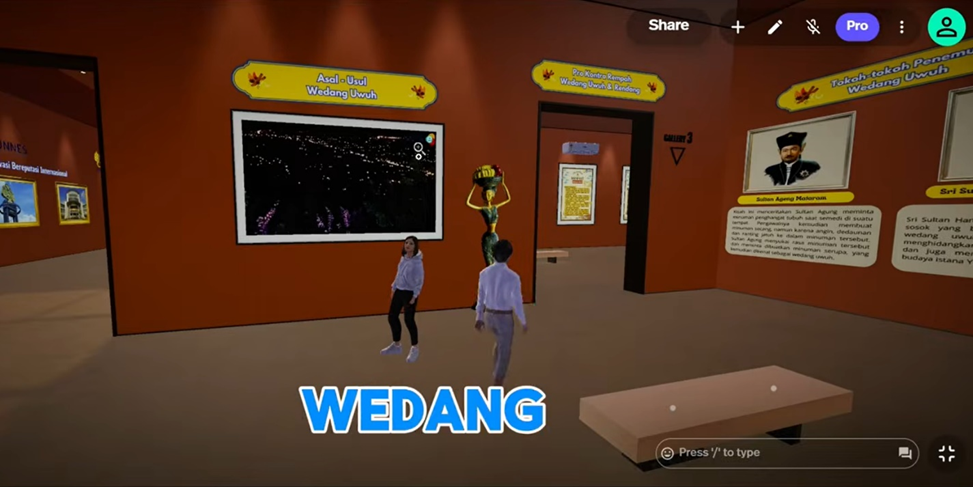
The development of the Ethno-VR media was carried out through a research and development (R&D) approach utilizing observations, interviews, literature studies, and experimental activities. The resulting media takes the form of an interactive virtual museum that introduces the history and culture of wedhang uwuh, its production process, as well as scientific explanations regarding the characteristics of its constituent ingredients. Users can explore the material through virtual museum tours, educational multimedia, and various scientific activities, including organoleptic testing, phytochemical analysis, observation of ingredient structures, and identification of aroma characteristics.
Both studies demonstrate the potential of utilizing virtual reality technology to deliver a more contextual and engaging learning experience. Through this approach, students not only learn chemistry and science concepts theoretically, but are also encouraged to understand their connection to cultural products close to everyday community life. Nevertheless, the research findings primarily indicate media validity and positive student responses, meaning that direct improvements in science and technology literacy skills still require further testing.
The wedhang uwuh Ethno-VR innovation also has a positive impact in introducing and documenting Indonesian traditional knowledge through digital technology. The utilization of a virtual museum opens opportunities for the younger generation to become acquainted with local cultural heritage through a more interactive approach, while simultaneously understanding the scientific value behind the use of traditional spices. This approach can also serve as an inspiration for developing other local wisdom-based learning media.
From a sustainable development perspective, both studies support the Sustainable Development Goals (SDGs), particularly SDG 4 (Quality Education) through the development of contextual, interactive digital learning media innovations oriented toward strengthening science and technology literacy. In addition, this innovation is relevant to SDG 11 (Sustainable Cities and Communities), especially Target 11.4, which relates to efforts to protect and safeguard cultural heritage. The digitalization of knowledge regarding wedhang uwuh through a virtual museum has the potential to support the documentation, introduction, and inheritance of traditional cultural knowledge to future generations.
Through the development of wedhang uwuh Ethno-VR, Prof. Sudarmin and his team demonstrate how rich local culture can serve as a source of innovation in modern science education. This research is expected to encourage the development of learning that is not only adaptive to technological advancements, but also remains rooted in Indonesian cultural identity and local wisdom as part of the effort to realize quality education and sustainable cultural heritage preservation.