

FMIPA UNNES Research Team Explores Kombucha Bioleather Potential as a Sustainable Fashion Material Alternative

Universitas Negeri Semarang/Faculty of Mathematics and Natural Sciences/Berita/FMIPA UNNES Research Team Explores Kombucha Bioleather Potential as a Sustainable Fashion Material Alternative
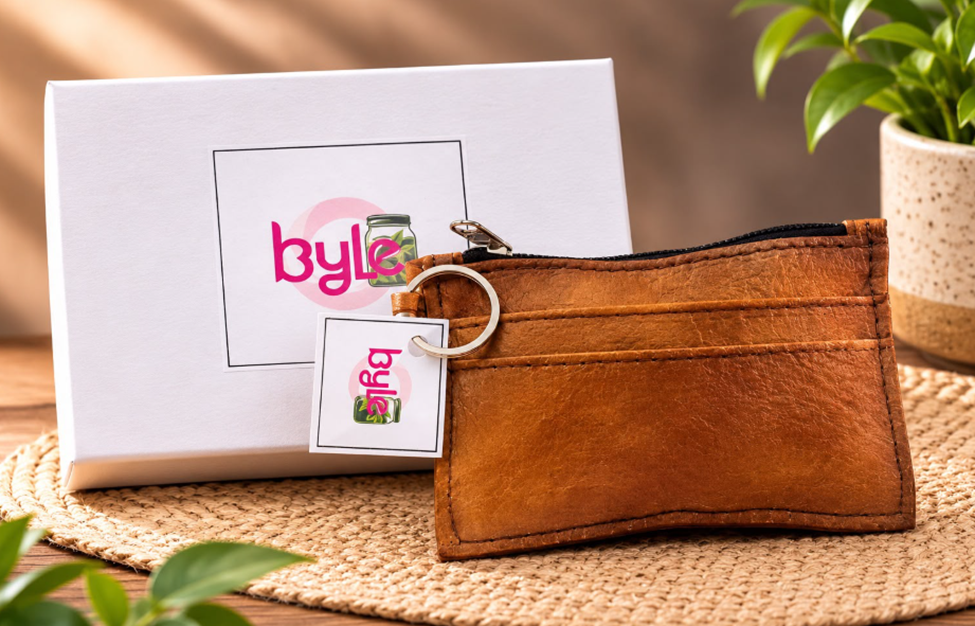
A brown textured bioleather zippered card holder with a metal keyring and a white hangtag reading byle resting on a woven placemat in front of a white gift box.

SEMARANG – Developing environmentally friendly materials has become one of the key efforts to support the sustainable fashion industry. In line with this, Fidia Fibriana, Ph.D., together with a research team from the Faculty of Mathematics and Natural Sciences, Universitas Negeri Semarang (FMIPA UNNES), has conducted research on kombucha-based bioleather as a candidate alternative material to replace animal leather.

The research resulted in two publications in reputable international journals in 2026, namely “Production of Kombucha Symbiotic Culture of Bacteria and Yeast (SCOBY)-Based Bioleather as a Sustainable Alternative Material for Fashion Accessory” in Bioresource Technology Reports and “Application of Biocoating from Milkfish (Chanos chanos) Scale Chitosan for Mold-Resistant Kombucha-Derived Bioleather” in the Journal of Stored Products Research.

Both studies utilize the Symbiotic Culture of Bacteria and Yeast (SCOBY) from kombucha to produce bioleather, a cellulose-based leather-like material generated through microbial activity. This material holds potential as an alternative to animal leather because it originates from biological processes and is biodegradable.

In the first study, the team optimized bioleather production using palm sugar, black tea, and SCOBY culture. The results yielded a material with a thickness of 0.893 mm and a tensile strength of 15.81 MPa. The study also tested natural dyes from curcumin, red dragon fruit peel, and butterfly pea flower, with red dragon fruit peel extract demonstrating the best color fastness. As an initial utilization test, the bioleather was successfully crafted into a fashion accessory in the form of a card holder.
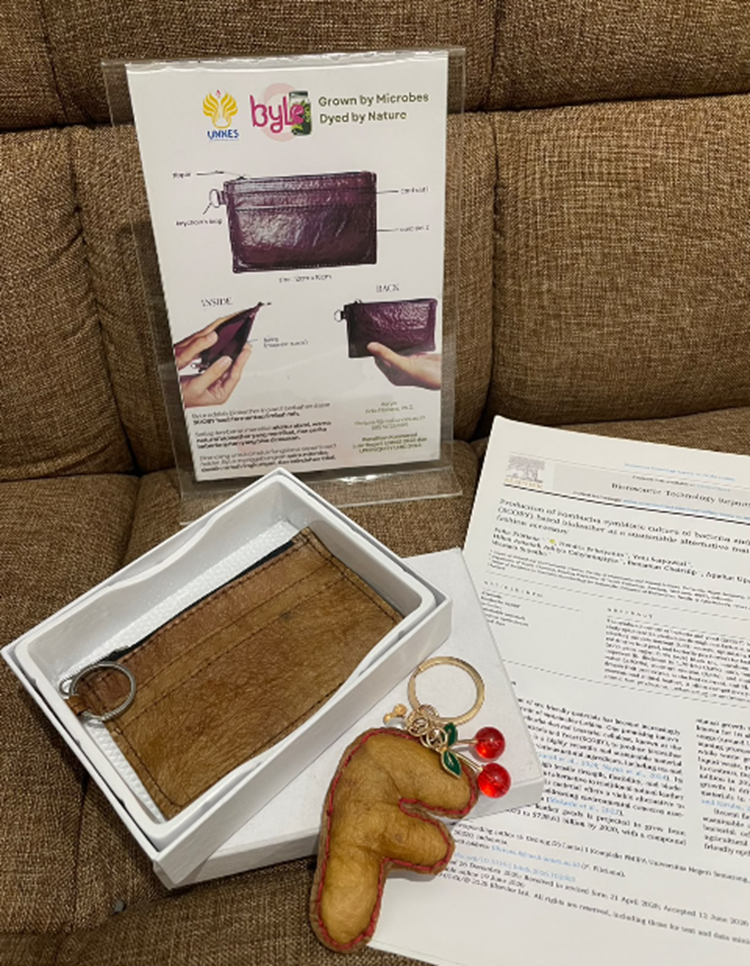
Meanwhile, the second study focused on enhancing the mold resistance of bioleather through the application of a biocoating made from milkfish (Chanos chanos) scale chitosan and lavender essential oil. This research also utilized liquid tea waste as a production medium. Test results showed that the coating was able to inhibit the growth of several mold species and maintain the surface condition of the bioleather over three months of storage.

The positive impact of both studies lies in opening opportunities for developing bio-based fashion materials while simultaneously utilizing waste into value-added products. The use of SCOBY, tea waste, and milkfish scales demonstrates the potential for implementing a circular economy in biomaterial development. However, further research is still needed to ensure durability, large-scale production feasibility, and environmental benefits.

This research supports the Sustainable Development Goals (SDGs), particularly SDG 9 (Industry, Innovation and Infrastructure) through biotechnology-based material innovation and SDG 12 (Responsible Consumption and Production) through the utilization of biological resources and waste as value-added materials. This research also has the potential to support SDG 13 (Climate Action) if further development can demonstrate emission reductions compared to conventional materials.

Through these two publications, Fidia Fibriana, Ph.D., and the FMIPA UNNES team contribute to the advancement of sustainable biomaterials. Although still at the laboratory research stage, these findings serve as a scientific foundation for developing more environmentally friendly fashion material alternatives.
Related Posts

Leave a Reply

* Kode Akses Komentar:

* Tuliskan kode akses komentar diatas:

GDPR

  • Privacy Policy

Privacy Policy

At unnes.ac.id, the privacy of our visitors is of extreme importance to us. This privacy policy document outlines the types of personal information that is received and collected by unnes.ac.id and how it is used.

Log Files

Like many other Web sites, unnes.ac.id makes use of log files. The information inside the log files includes internet protocol (IP) addresses, type of browser, Internet Service Provider (ISP), date/time stamp, referring/exit pages, and number of clicks to analyze trends, administer the site, track user’s movement around the site, and gather demographic information. IP addresses and other such information are not linked to any information that is personally identifiable.

Cookies

unnes.ac.id uses cookies to store information about visitors’ preferences, to record user-specific information on which pages the site visitor accesses or visits, and to personalize or customize our web page content based upon visitors’ browser type or other information that the visitor sends via their browser.

Third-party ad servers or ad networks use technology in their respective advertisements and links that appear on unnes.ac.id and which are sent directly to your browser. They automatically receive your IP address when this occurs. Other technologies (such as cookies, JavaScript, or Web Beacons) may also be used by our site’s third-party ad networks to measure the effectiveness of their advertising campaigns and/or to personalize the advertising content that you see on the site.

unnes.ac.id has no access to or control over these cookies that are used by third-party advertisers.

You should consult the respective privacy policies of these third-party ad servers for more detailed information on their practices as well as for instructions about how to opt-out of certain practices. unnes.ac.id’s privacy policy does not apply to, and we cannot control the activities of, such other advertisers or web sites.

If you wish to disable cookies, you may do so through your individual browser options. More detailed information about cookie management with specific web browsers can be found at the browsers’ respective websites.

Consent

By using our website, you hereby consent to our privacy policy and agree to its terms.

Update

This Privacy Policy was last updated on: 2023-02-14. Should we update, amend or make any changes to our privacy policy, those changes will be posted here.

Contact Us

If you have any questions, comments, or concerns about our Privacy Policy or our practices with regards to your personal information, please feel free to contact us through the contact form on our website or by emailing us at humas[at]mail.unnes.ac.id.

This Privacy Policy is intended as a general guide to our practices in collecting and using information. If there is any inconsistency between this Privacy Policy and the terms of the Service Agreement or any other terms that may apply to specific services you use, then those specific service terms shall apply.

Terms of Use

By using our website, you agree to abide by this Privacy Policy. If you do not agree with this Privacy Policy, please do not use our website. We reserve the right to update this Privacy Policy from time to time without prior notice. Please review our Privacy Policy periodically to check for changes. Your continued use of our website following the posting of changes to this Privacy Policy means that you accept the changes.

Thank you for reading our Privacy Policy. We are committed to protecting the privacy of our website visitors and will continue to update our Privacy Policy to ensure optimal protection.