


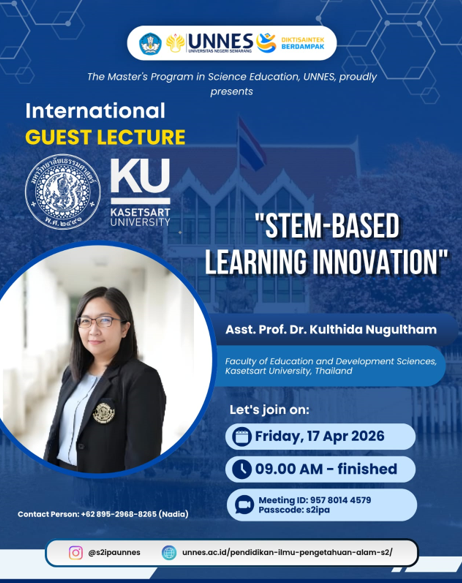
Semarang — The Master’s Program in Science Education held a guest lecture titled “STEM-Based Learning Innovation” on July 17, from 9:00 to 11:00 a.m. The event featured an international speaker, Dr. Kulthida Nugultham from Kasetsart University (KU), Thailand.
The lecture was attended by 81 participants, including students from the Master’s Programs in Science Education and Physics Education, as well as from the Undergraduate Program in Physics Education. Participants showed strong enthusiasm throughout the session, particularly during the interactive discussion segment.
The event was initiated by the Head of the Science Education Program, Arif Widiatmoko, S.Pd., M.Pd., Ph.D., in collaboration with Dr. Ellianawati, the principal investigator of an international Matching Grant research project 2026, and Kasetsart University, one of its partner institutions. In addition to her role in the collaboration, Dr. Ellianawati also served as the event moderator.
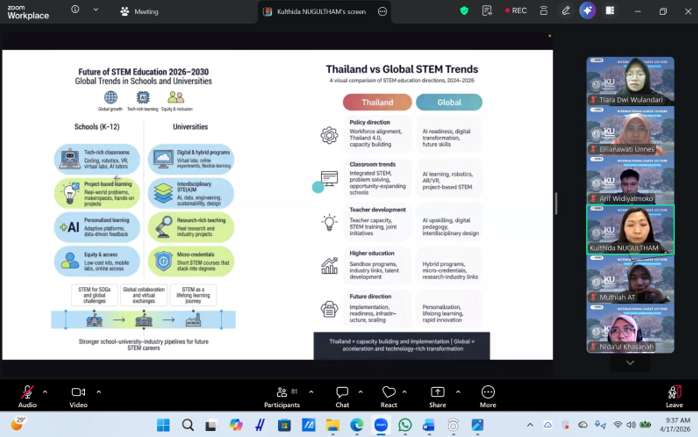
In her presentation, Dr. Kulthida Nugultham highlighted recent developments in STEM-based learning innovation at Kasetsart University. She emphasized that the STEM approach is now evolving toward strengthening students’ scientific activities with a focus on sustainability. Key areas include the zero-waste mission, agricultural development, and processing of agricultural products.
“STEM education is not only about technology, but also about enabling students to solve real-world problems in their environment, including sustainability issues,” she stated.
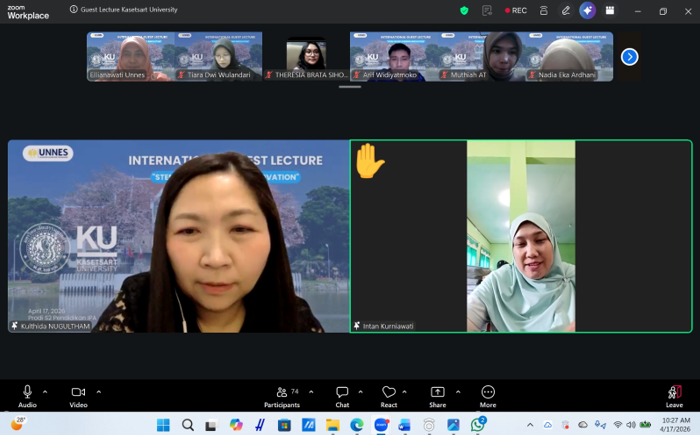
The question-and-answer session was dynamic, featuring a range of critical inquiries from participants. Topics raised included workplace safety in technology-integrated learning, strategies to motivate teachers in areas with limited access to modern technology to implement STEM approaches, and ways to integrate art into the STEAM framework. The discussion reflected participants’ strong interest in applying innovative teaching practices across diverse educational contexts.
The guest lecture concluded with a vote of thanks from the Head of the Master’s Program in Science Education to the speaker and all participants for their active engagement. It is hoped that this activity will broaden students’ perspectives and encourage the development of contextual and sustainable STEM learning in Indonesia.