
FMIPA UNNES Studies Energy Use Intensity and Electricity-Related Carbon Emissions to Support Indonesia’s Net Zero Emission 2060 Target

Universitas Negeri Semarang/Faculty of Mathematics and Natural Sciences/Berita/FMIPA UNNES Studies Energy Use Intensity and Electricity-Related Carbon Emissions to Support Indonesia’s Net Zero Emission 2060 Target
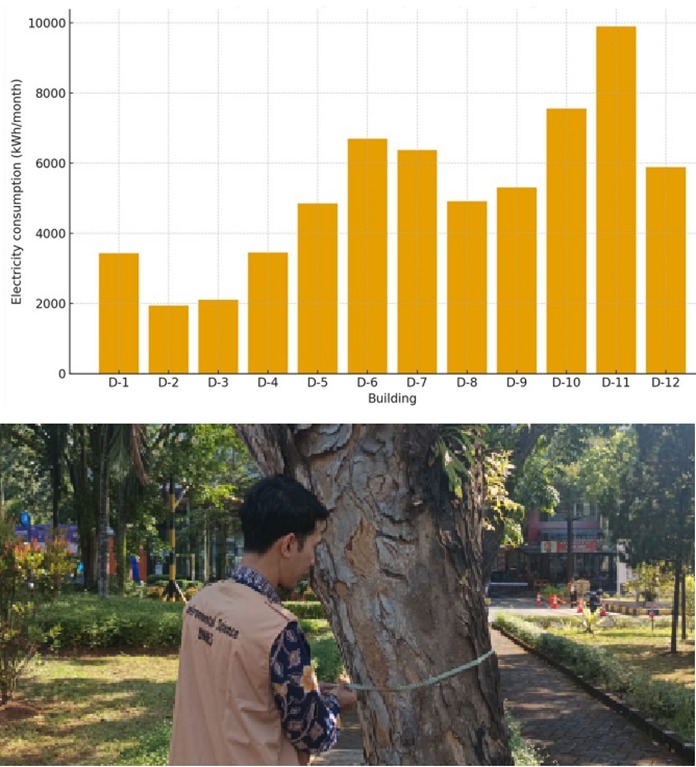
laboratory buildings consumed the highest amount of electricity

Semarang – The Faculty of Mathematics and Natural Sciences (FMIPA), Universitas Negeri Semarang (UNNES), continues to demonstrate its commitment to sustainable development through research on Energy Use Intensity (EUI) and electricity-related carbon emissions across its campus buildings. The findings have been published in the internationally reputable journal Ecological Engineering & Environmental Technology (EEET), which is indexed in Scopus Q3.

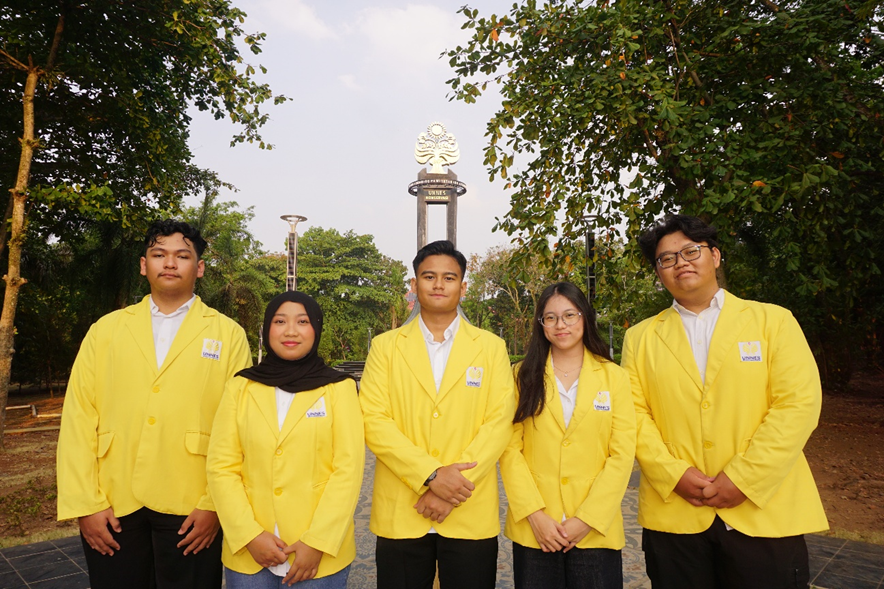
The research was conducted by Prof. Dr. Sri Ngabekti, Trida Ridho Fariz, Prof. Dr. Dewi Liesnoor Setyowati, and Maulana Malik Wicaksono. The study focused on analyzing electricity consumption, carbon emissions, and the role of campus vegetation in carbon sequestration to support Indonesia’s Net Zero Emission (NZE) 2060 target.

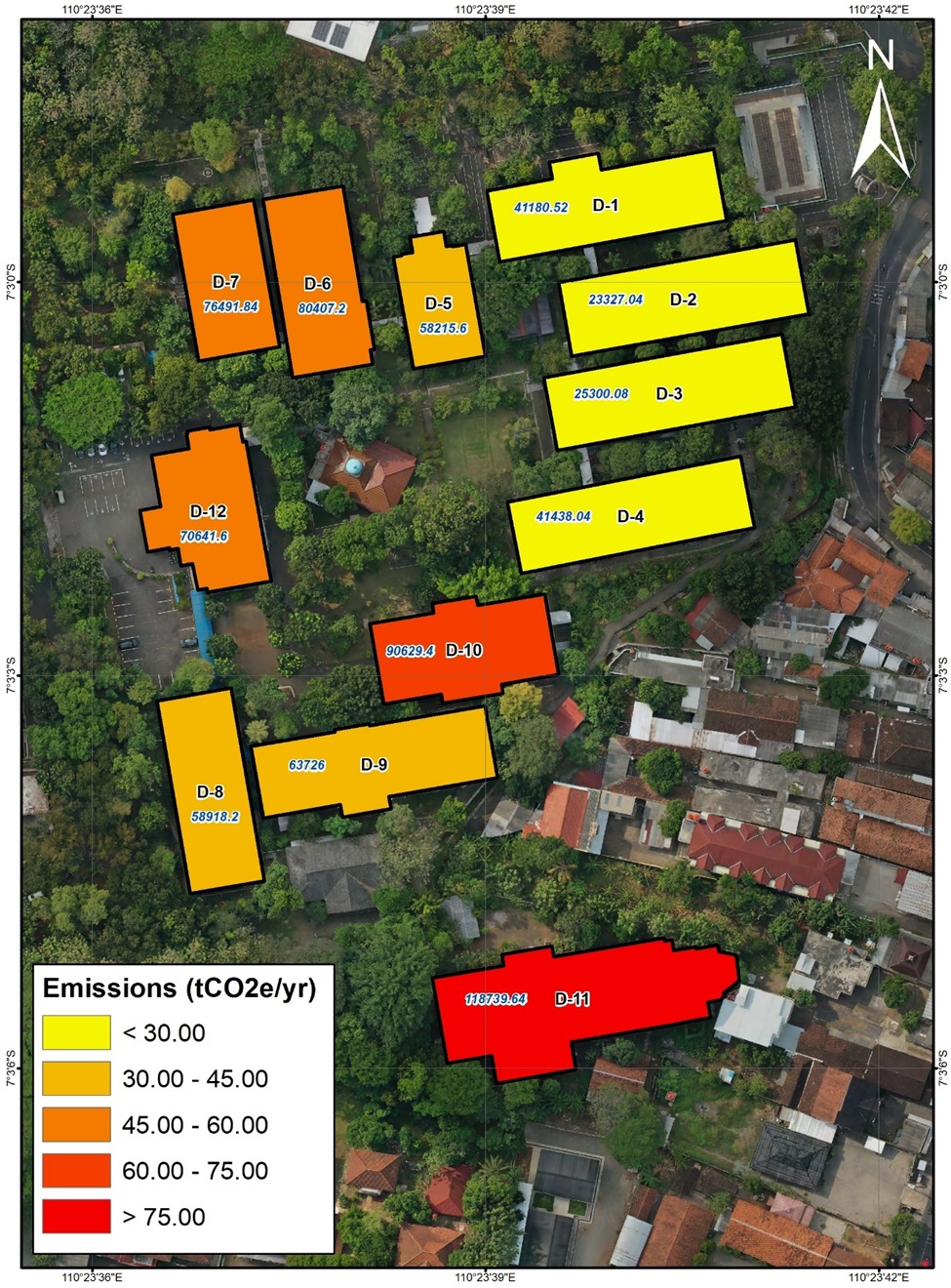
According to the research team, the building sector is one of the largest contributors to greenhouse gas emissions. Therefore, universities play a strategic role as living laboratories by implementing energy efficiency measures and managing green open spaces as part of climate change mitigation efforts. The study at FMIPA UNNES revealed that laboratory buildings recorded the highest electricity consumption and carbon emissions among all campus buildings, making them a priority for energy-saving initiatives.

In addition to the international publication, the research also served as the basis for the undergraduate thesis of Maulana Malik Wicaksono, which examined electricity consumption and carbon balance at FMIPA UNNES. The thesis aimed to analyze energy consumption and Energy Use Intensity (EUI) under various scenarios, carbon footprint, and the carbon sequestration capacity of campus vegetation to evaluate the campus carbon balance.

The results showed that laboratory buildings consumed the highest amount of electricity, averaging 6,916.94 kWh per month. Meanwhile, Laboratory Building D12 recorded the highest EUI of 10.08 kWh/m²/month, which still falls within the efficient category. Under the energy-saving scenario, all campus buildings achieved the very efficient category, demonstrating significant potential for reducing electricity consumption across the campus.

In terms of carbon emissions, the study found that the existing condition generated 52,680 kgCO₂eq. Under a wasteful energy consumption scenario, emissions could increase to 71,269.76 kgCO₂eq, whereas implementing energy efficiency measures could reduce emissions to 39,715.93 kgCO₂eq.

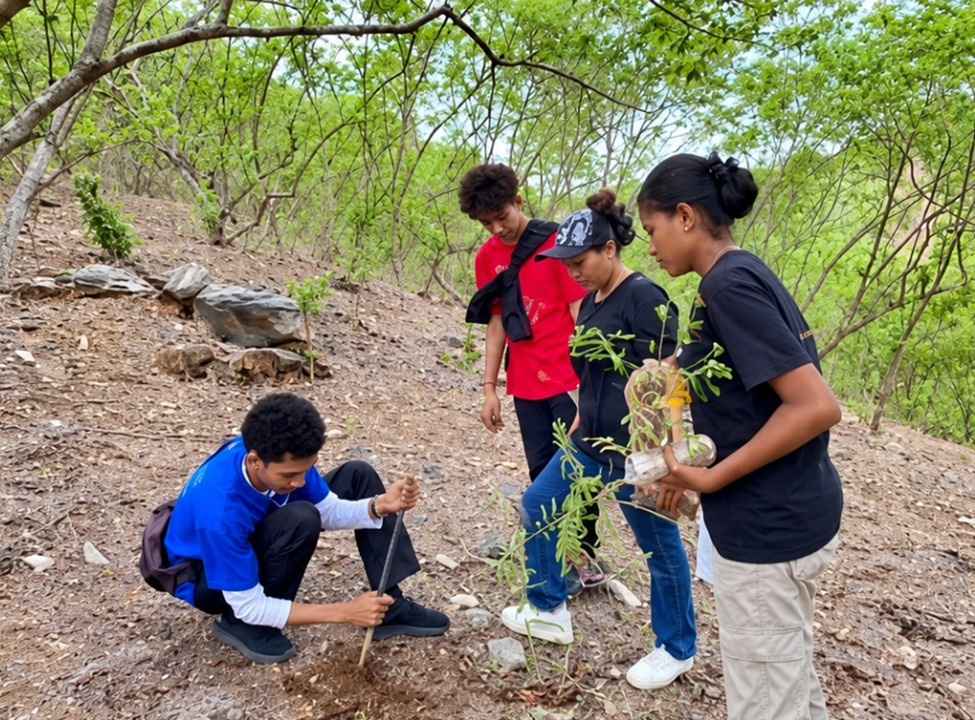
Remarkably, the existing trees across the FMIPA campus possess a carbon sequestration capacity of 1,067,414.24 kgCO₂eq, far exceeding the carbon emissions generated by electricity consumption. As a result, the campus achieved a negative carbon balance, indicating that the carbon absorbed by the existing vegetation is sufficient to offset and even surpass the carbon emissions produced from electricity use.
The findings are expected to serve as a valuable reference for other higher education institutions in developing energy management policies and promoting sustainable campus development. Furthermore, the study contributes directly to several United Nations Sustainable Development Goals (SDGs), particularly SDG 7 (Affordable and Clean Energy) through improved energy efficiency, SDG 11 (Sustainable Cities and Communities) through sustainable green space management, SDG 13 (Climate Action) through carbon emission reduction and enhanced carbon sequestration, and SDG 15 (Life on Land) through the conservation of campus vegetation as a natural carbon sink.

Related Posts

Leave a Reply

* Kode Akses Komentar:

* Tuliskan kode akses komentar diatas:

GDPR

  • Privacy Policy

Privacy Policy

At unnes.ac.id, the privacy of our visitors is of extreme importance to us. This privacy policy document outlines the types of personal information that is received and collected by unnes.ac.id and how it is used.

Log Files

Like many other Web sites, unnes.ac.id makes use of log files. The information inside the log files includes internet protocol (IP) addresses, type of browser, Internet Service Provider (ISP), date/time stamp, referring/exit pages, and number of clicks to analyze trends, administer the site, track user’s movement around the site, and gather demographic information. IP addresses and other such information are not linked to any information that is personally identifiable.

Cookies

unnes.ac.id uses cookies to store information about visitors’ preferences, to record user-specific information on which pages the site visitor accesses or visits, and to personalize or customize our web page content based upon visitors’ browser type or other information that the visitor sends via their browser.

Third-party ad servers or ad networks use technology in their respective advertisements and links that appear on unnes.ac.id and which are sent directly to your browser. They automatically receive your IP address when this occurs. Other technologies (such as cookies, JavaScript, or Web Beacons) may also be used by our site’s third-party ad networks to measure the effectiveness of their advertising campaigns and/or to personalize the advertising content that you see on the site.

unnes.ac.id has no access to or control over these cookies that are used by third-party advertisers.

You should consult the respective privacy policies of these third-party ad servers for more detailed information on their practices as well as for instructions about how to opt-out of certain practices. unnes.ac.id’s privacy policy does not apply to, and we cannot control the activities of, such other advertisers or web sites.

If you wish to disable cookies, you may do so through your individual browser options. More detailed information about cookie management with specific web browsers can be found at the browsers’ respective websites.

Consent

By using our website, you hereby consent to our privacy policy and agree to its terms.

Update

This Privacy Policy was last updated on: 2023-02-14. Should we update, amend or make any changes to our privacy policy, those changes will be posted here.

Contact Us

If you have any questions, comments, or concerns about our Privacy Policy or our practices with regards to your personal information, please feel free to contact us through the contact form on our website or by emailing us at humas[at]mail.unnes.ac.id.

This Privacy Policy is intended as a general guide to our practices in collecting and using information. If there is any inconsistency between this Privacy Policy and the terms of the Service Agreement or any other terms that may apply to specific services you use, then those specific service terms shall apply.

Terms of Use

By using our website, you agree to abide by this Privacy Policy. If you do not agree with this Privacy Policy, please do not use our website. We reserve the right to update this Privacy Policy from time to time without prior notice. Please review our Privacy Policy periodically to check for changes. Your continued use of our website following the posting of changes to this Privacy Policy means that you accept the changes.

Thank you for reading our Privacy Policy. We are committed to protecting the privacy of our website visitors and will continue to update our Privacy Policy to ensure optimal protection.