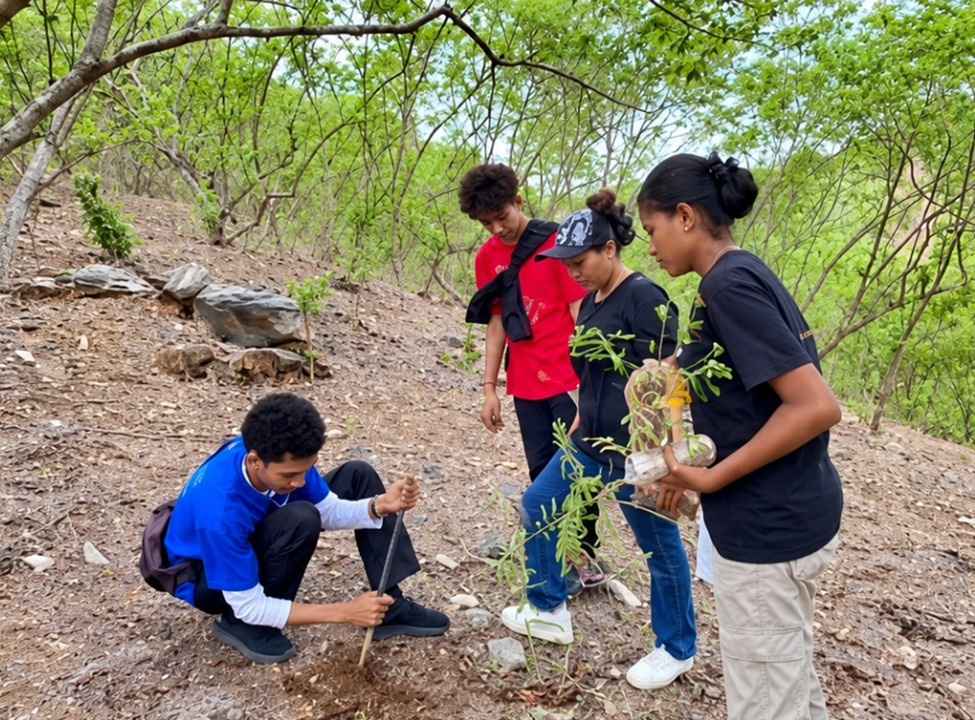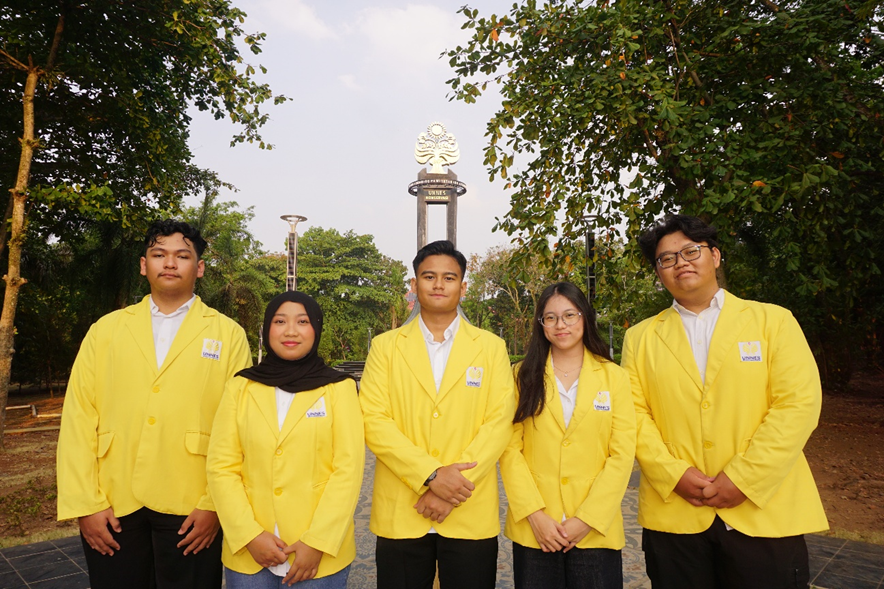



Semarang – The Faculty of Mathematics and Natural Sciences (FMIPA), Universitas Negeri Semarang (UNNES), continues to strengthen its commitment to becoming a conservation-oriented campus by implementing an integrated waste management system. This commitment is reflected through institutional policies, waste segregation practices, single-use plastic reduction initiatives, and the active participation of the entire academic community. These efforts form part of FMIPA UNNES’s long-term strategy to support the development of a zero waste campus while contributing to the achievement of the Sustainable Development Goals (SDGs).
As an institutional commitment, FMIPA UNNES has established an official Dean’s Decree on the implementation of the faculty’s waste segregation program, complemented by a Standard Operating Procedure (SOP) for Waste Segregation and Waste Management. These official documents serve as mandatory guidelines for lecturers, administrative staff, students, and all members of the FMIPA community in segregating waste at its source. The policy reinforces UNNES’s conservation principles while fostering responsible waste management practices throughout the faculty.
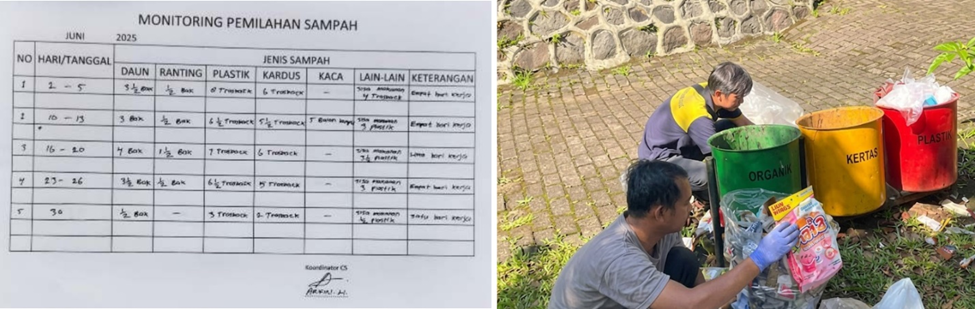
To ensure effective implementation, FMIPA UNNES regularly conducts monitoring and evaluation of the waste segregation program. The monitoring results are formally documented and used as the basis for continuous improvement, enabling the faculty to assess the effectiveness of waste management practices, monitor waste handling performance, reduce the amount of waste sent to landfills, and increase the proportion of waste that can be recycled.
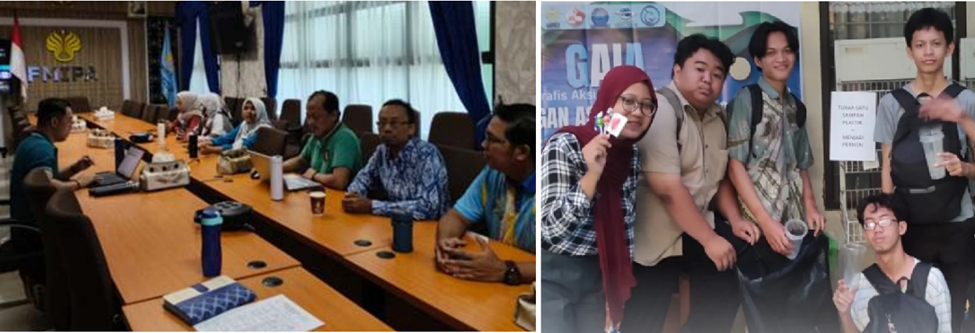
In addition to waste segregation, FMIPA UNNES actively promotes the reduction of single-use plastics within the faculty. One practical initiative is the encouragement for lecturers and administrative staff to bring reusable tumblers to faculty meetings and official events instead of using disposable plastic bottles or cups. This simple yet meaningful practice helps reduce plastic waste generation while fostering environmentally responsible behavior among the academic community.
The faculty’s policies are further strengthened through student-led environmental initiatives. One notable example is GAIA (Grafis Aksi Inspirasi Alam/Graphic Action for Nature Inspiration) 2025, organized by the Environmental Affairs Department of the FMIPA UNNES Student Executive Board (BEM FMIPA UNNES) on Wednesday, October 1, 2025, at the former FMIPA Library area. Carrying the theme “Green Environment, Harmonious Living,” the event encouraged students to cultivate environmental awareness and actively contribute to maintaining a clean and sustainable campus.
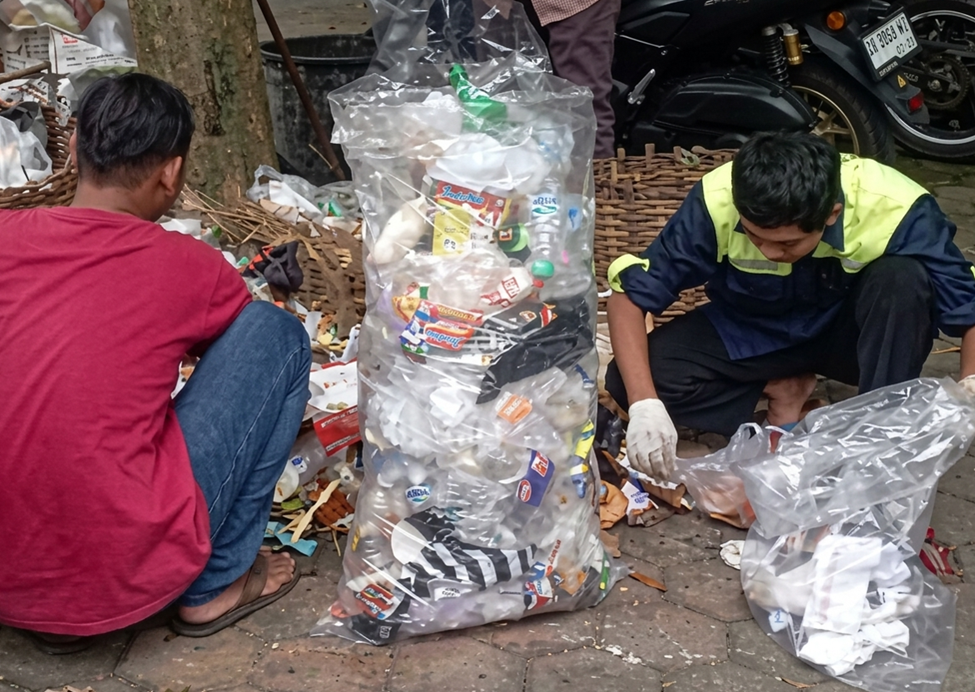
Through the “1 Waste Item = 1 Candy” campaign, students exchanged used plastic bottles for candy as a symbolic appreciation for their contribution to campus cleanliness. This simple mechanism served as an educational approach to encourage waste segregation at the source while promoting responsible plastic waste disposal. More importantly, the initiative demonstrated that small individual actions can collectively contribute to significant environmental improvements.
FMIPA UNNES’s waste management efforts are integrated with the broader waste management system of Universitas Negeri Semarang. Waste generated by all faculties is transported to the Integrated Waste Processing Facility (TPST) UNNES, where it undergoes further sorting and treatment according to waste type. Nevertheless, FMIPA UNNES continues to implement waste segregation at the faculty level before transportation to TPST. This upstream segregation improves the quality of recyclable materials, minimizes waste contamination, enhances recycling efficiency, and supports the university’s comprehensive waste management system. The integration of faculty-level waste segregation with centralized waste processing represents a systematic approach toward achieving UNNES’s vision of becoming a zero waste campus.
Through the combination of institutional policies, standard operating procedures, regular monitoring, reusable tumbler campaigns, and active student participation through programs such as GAIA 2025, FMIPA UNNES continues to strengthen a culture of environmental stewardship across the faculty. These integrated efforts demonstrate that waste management at FMIPA UNNES extends beyond periodic campaigns and has become an essential component of institutional governance aimed at reducing waste generation, increasing recycling rates, minimizing plastic pollution, and protecting the environment. These initiatives directly support the achievement of the Sustainable Development Goals, particularly SDG 12 (Responsible Consumption and Production) through institutional waste management policies and monitoring systems; SDG 14 (Life Below Water) through comprehensive action plans to reduce plastic waste that may pollute aquatic ecosystems; and SDG 15 (Life on Land) through faculty-wide policies and practices that reduce plastic waste while strengthening environmental conservation across the campus.