


Kendal – The Faculty of Mathematics and Natural Sciences (FMIPA), Universitas Negeri Semarang (UNNES), continues to strengthen its commitment to biodiversity conservation through various community engagement programs implemented in villages on the slopes of Mount Ungaran, Kendal Regency. In collaboration with village governments, the Central Java Natural Resources Conservation Agency (BKSDA), local community groups, and student organizations, FMIPA UNNES carries out a wide range of initiatives in flora and fauna conservation, ecosystem restoration, environmental education, and conservation-based ecotourism development in Peron Village and Ngesrepbalong Village, Limbangan District. Both villages are part of the Padang Sumampir Community-Based Ecotourism (CBE) area, a rural ecotourism destination developed through community empowerment by integrating biodiversity conservation, local cultural heritage preservation, and sustainable economic development.
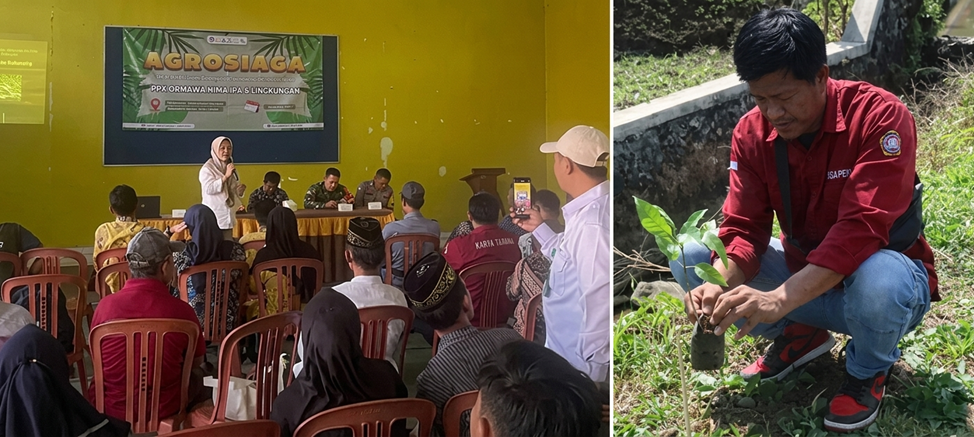
In Peron Village, the Student Organization Capacity Strengthening Program (PPK Ormawa) of the Environmental Science Student Association (HIMA IPA dan Lingkungan) organized a Community Outreach Program on Local Rare Flora and Fauna Diversity and Their Conservation on 23 September 2025 at the Peron Village Hall. The program aimed to enhance community knowledge about rare plant and animal species found on the slopes of Mount Ungaran, the factors contributing to their population decline, and practical conservation measures that local communities can implement.
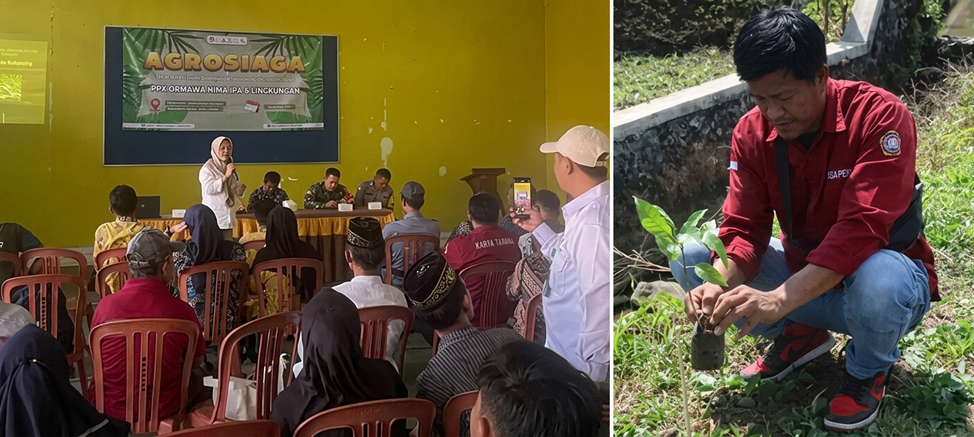
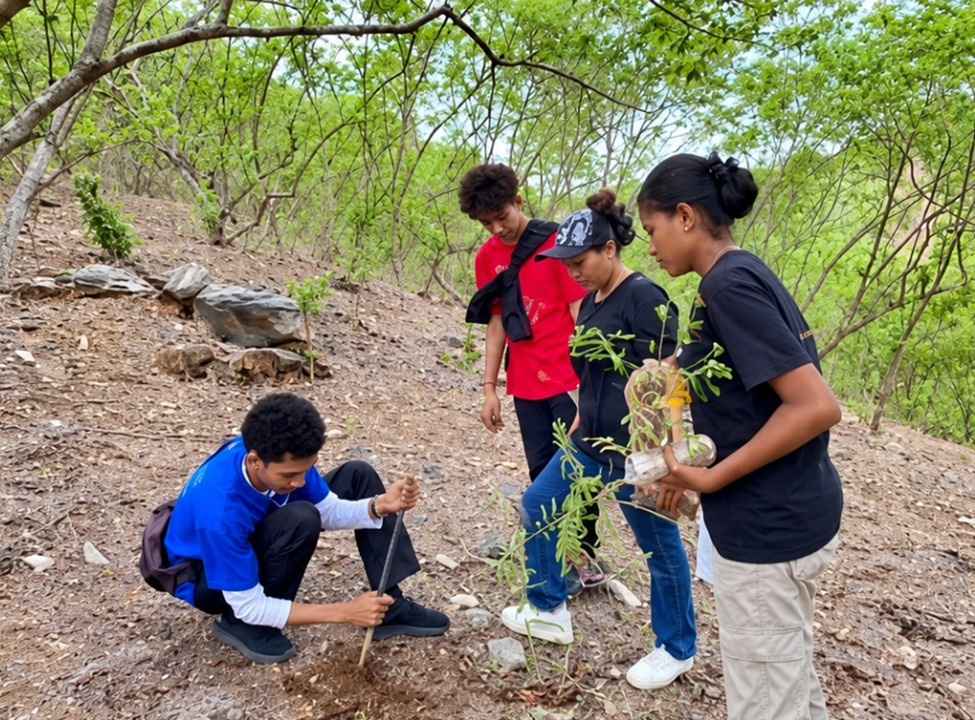
The outreach program featured a speaker from the Central Java Natural Resources Conservation Agency (BKSDA), Sisca Febrianti Listyaningrum, S.P., who delivered a session on the importance of conserving local rare flora and fauna and protecting their natural habitats. She also introduced participants to strategies for living in harmony with wildlife, including safe and responsible approaches to encountering wild and venomous animals in order to minimize human–wildlife conflicts. The second session was delivered by Rheza Rizky Al Fath’Qi, S.Ling., an alumnus of the Environmental Science Program at FMIPA UNNES and a National Conservation Cadre (Intermediate Level). He explained the strategic importance of Peron Village as part of the upstream Bodri Watershed and highlighted the urgency of conserving local flora and fauna to maintain the watershed’s hydrological functions and ecosystem stability. Participants also received a Training of Trainers (ToT) on biodiversity conservation, buffer tree planting, and disaster risk mitigation. He emphasized that conserving biodiversity in the upstream watershed not only preserves ecological balance but also plays a crucial role in reducing disaster risks, safeguarding water resources, and supporting the long-term environmental sustainability and well-being of downstream communities.
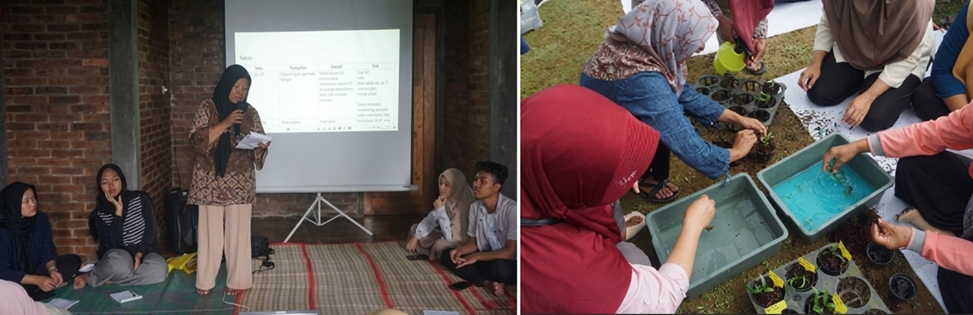
Meanwhile, in Ngesrepbalong Village, the FMIPA UNNES Community Service Team led by Prof. Dr. Enni Suwarsi Rahayu developed a Forest Orchid Cultivation and Conservation Education Center Using Tissue Culture Technology as an educational ecotourism destination. Funded through the 2025 UNNES Institute for Research and Community Service (LPPM) budget, the program established a tissue culture laboratory, a conservation greenhouse (Omah Anggrek), educational tourism packages, forest orchid cultivation training, expert guide training, and mentoring for the development of conservation-based ecotourism packages.
Through the program known as “Rumat Anggrek” (“Caring for Orchids”), community members were introduced not only to the diversity of native forest orchids found on Mount Ungaran but also to practical skills in tissue culture propagation, species conservation, ecotourism management, marketing, and tourism business planning. This integrated approach has created new opportunities for conservation-based enterprises while strengthening Ngesrepbalong Village’s identity as a biodiversity-based ecotourism destination.
Together, these two programs demonstrate how FMIPA UNNES utilizes the Mount Ungaran landscape as a living laboratory for education and community empowerment. Through education, capacity building, mentoring, and technology transfer, local communities are encouraged to become active stewards of biodiversity while developing sustainable local economic opportunities that remain closely aligned with environmental conservation.
The collaboration involving the Central Java BKSDA, village governments, conservation groups, student organizations, and local communities represents a strong multi-stakeholder partnership supporting species conservation, habitat protection, watershed restoration, and sustainable ecotourism development. Beyond improving community capacity in sustainable natural resource management, these initiatives also strengthen public awareness of the importance of conserving Indonesia’s unique flora and fauna as part of the nation’s natural heritage.
These programs contribute to the achievement of the Sustainable Development Goals (SDGs), particularly SDG 15 (Life on Land) through the conservation of local flora and fauna, habitat restoration, and biodiversity protection; SDG 4 (Quality Education) through community-based environmental education and conservation training; SDG 8 (Decent Work and Economic Growth) through ecotourism development and community economic empowerment; SDG 11 (Sustainable Cities and Communities) by strengthening conservation-based rural development; SDG 13 (Climate Action) through tree planting and upstream watershed conservation as climate adaptation measures; and SDG 17 (Partnerships for the Goals) through collaboration among universities, government agencies, conservation institutions, student organizations, and local communities in advancing sustainable development.