



Related to SDGs
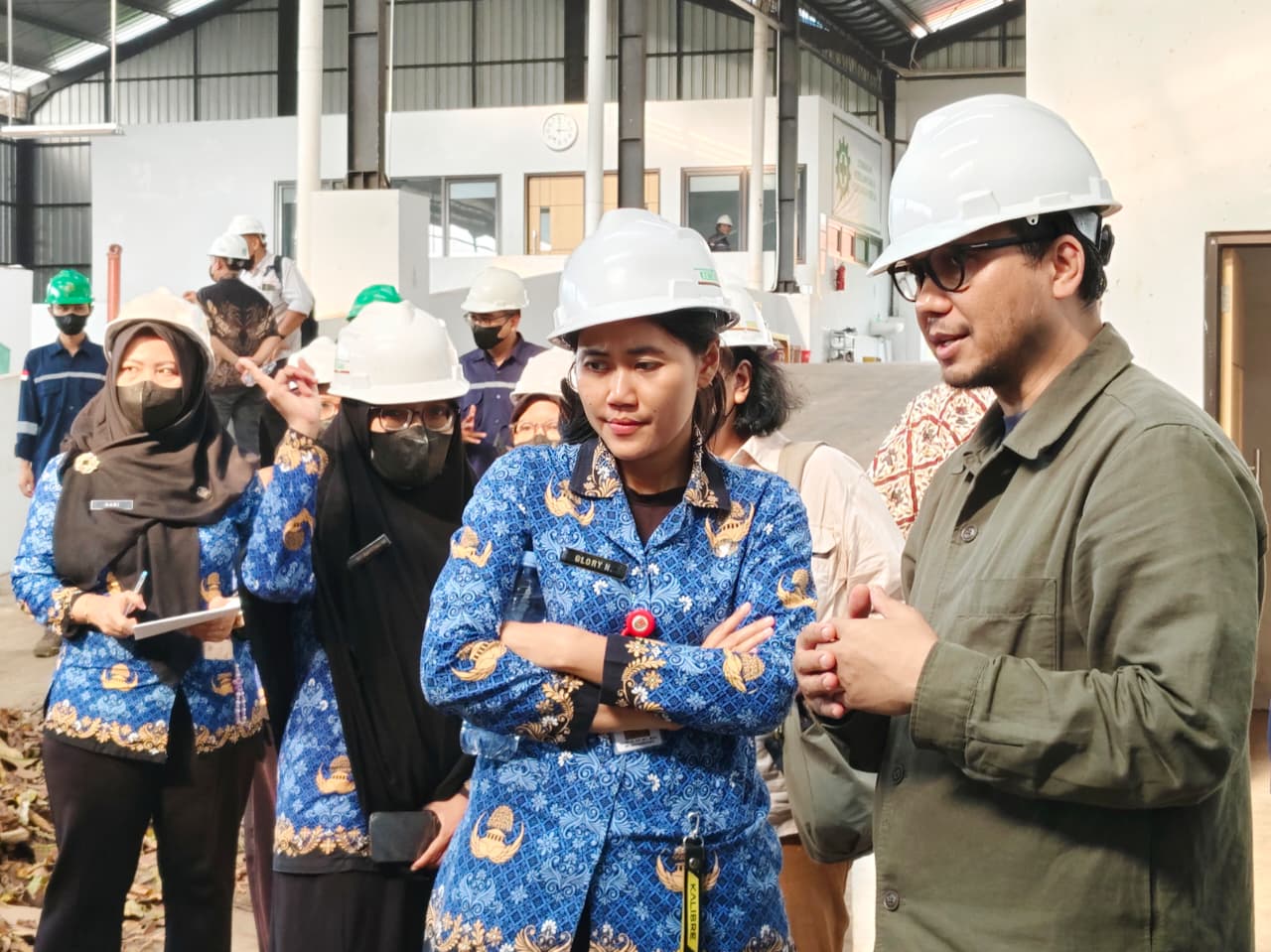
Universitas Negeri Semarang (UNNES), through its Subdirectorate of Conservation, facilitated a field visit from the Semarang Environmental Agency (DLH) on Wednesday, June 17, 2026, at the UNNES Integrated Waste Processing Facility (TPST). The visit aimed to directly observe the integrated waste management system implemented on campus.
The delegation was welcomed by the Vice Rector for Cooperation, Business, and International Relations, Prof. Dr. Nur Qudus, M.T., IPM., as part of strengthening collaboration in sustainable environmental management.
The Semarang Environmental Agency showed strong interest in UNNES’s zero waste-based waste management system. This approach emphasizes waste segregation at the source, reducing the amount of residual waste sent to landfills.
“We see that UNNES has developed a waste management system that no longer depends heavily on landfill disposal but focuses on upstream sorting and processing. This model has strong potential to be replicated in Semarang,” said the Head of the Semarang Environmental Agency, Glory Nasarani, S.T., M.T., M.Sc.
The agency also explored the utilization of waste into value-added products, including incinerator residue processing and paving block production. These innovations contribute to reducing waste volume while generating economic benefits.
Following the visit, the Environmental Agency plans to develop a community-based pilot project in collaboration with UNNES. The initiative will involve surrounding communities as pilot areas, including the implementation of small-scale waste processing systems that can be replicated at the neighborhood level.
“This community-based approach is essential to build collective awareness so that waste sorting and management can be carried out independently and sustainably,” Glory Nasarani added.
Through this activity, UNNES reaffirmed its commitment as a conservation-oriented university that promotes collaboration and shares best practices in environmental management. The synergy between academia, government, and communities is expected to create a more effective and sustainable waste management system.
This activity supports the Sustainable Development Goals (SDGs), particularly SDG 11 (Sustainable Cities and Communities), SDG 12 (Responsible Consumption and Production), and SDG 17 (Partnerships for the Goals).