

Related to SDGs
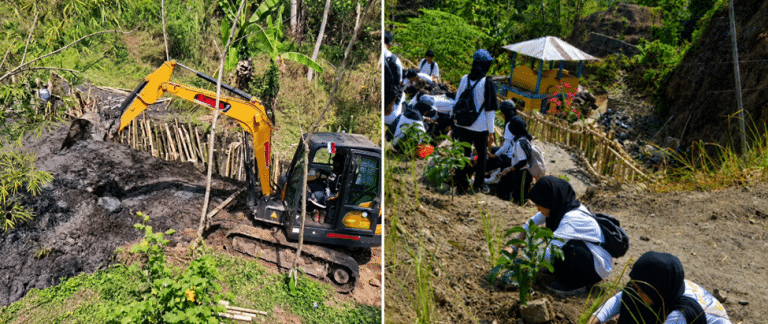
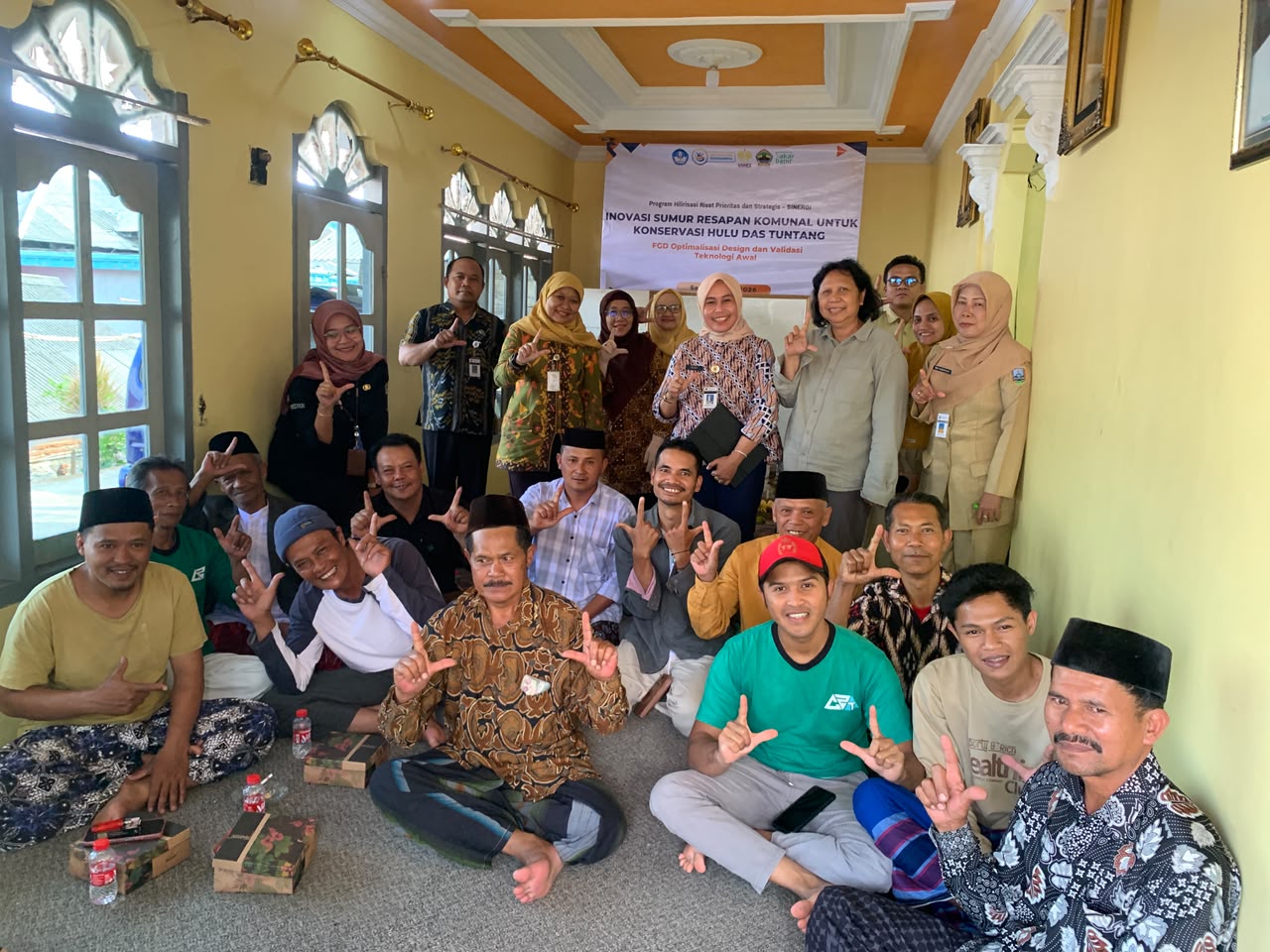
As a concrete effort to promote environmental conservation, Universitas Negeri Semarang (UNNES) implemented a program titled “Social Innovation for the Downstreaming of Communal Recharge Well Technology Integrated with Agroforestry Systems for Water Conservation in the Upper Tuntang Watershed” on Tuesday, June 9, 2026, in the Bandungan area.
The initiative is a collaborative effort involving UNNES, the Environmental and Forestry Office (DLHK), CDK 3, the Semarang Regency Government, and the Akara Banir Foundation. The program focuses on developing communal recharge well technology integrated with agroforestry systems, particularly horticultural plants such as avocado.
The program responds to the condition of the Tuntang watershed, which has been categorized as a priority due to environmental degradation. High sedimentation in Rawapening Lake, land conversion, and intensive agricultural practices have led to reduced soil infiltration capacity and increased risks of flooding and landslides.
Through this innovation, previously individual-based recharge systems are transformed into communal, integrated solutions combined with agroforestry practices. This approach is considered more effective in enhancing groundwater infiltration, reducing surface runoff, and ensuring sustainable water resource management.
The program also aims to optimize community-based water conservation models and develop scalable infrastructure designs for recharge systems in upstream areas.
“This program represents a strategic step in integrating research outcomes with real-world needs. Through communal recharge well technology combined with agroforestry, we aim to improve soil infiltration capacity while supporting the sustainability of the Tuntang watershed ecosystem,” said Prof. Nana.
Through the synergy of academic research and field implementation, the initiative is expected to sustain the hydrological balance of the Tuntang watershed and Rawapening Lake. It also strengthens the role of higher education institutions in addressing environmental challenges at both local and national levels.
This activity supports the Sustainable Development Goals (SDGs), particularly SDG 6 (Clean Water and Sanitation), SDG 13 (Climate Action), and SDG 15 (Life on Land).