

A team of lecturers and students from Universitas Negeri Semarang (UNNES) conducted a community service activity titled “Enhancing Competence in Metal Casting Practices Using Automotive Aluminum Waste with the UNNES Furnace and Crucible” at SMK Negeri 2 Kudus. The event took place on Thursday, June 12, 2025, and was warmly welcomed by the school’s leadership. The initiative was led by Rusiyanto, S.Pd., M.T.—a researcher, holder of the UNNES crucible patent, and Vice Dean for Student Affairs at the UNNES Faculty of Engineering. In addition to the team leader, the group included two other lecturers: Dr. Ir. Rahmat Doni Widodo, S.T., M.T., and Ir. Kaleb Priyanto, S.Pd., M.T. Students also participated in the activity, including Muhammad Zakky Mubarok, Muhammad Emir Al Hakim, Yudistira Rijal Andika, Hibban Pasya Hafid, and Julivan Brian Womsiwor. Their involvement underscores UNNES’s commitment to engaging the younger generation in bringing research innovations to the community through service initiatives.
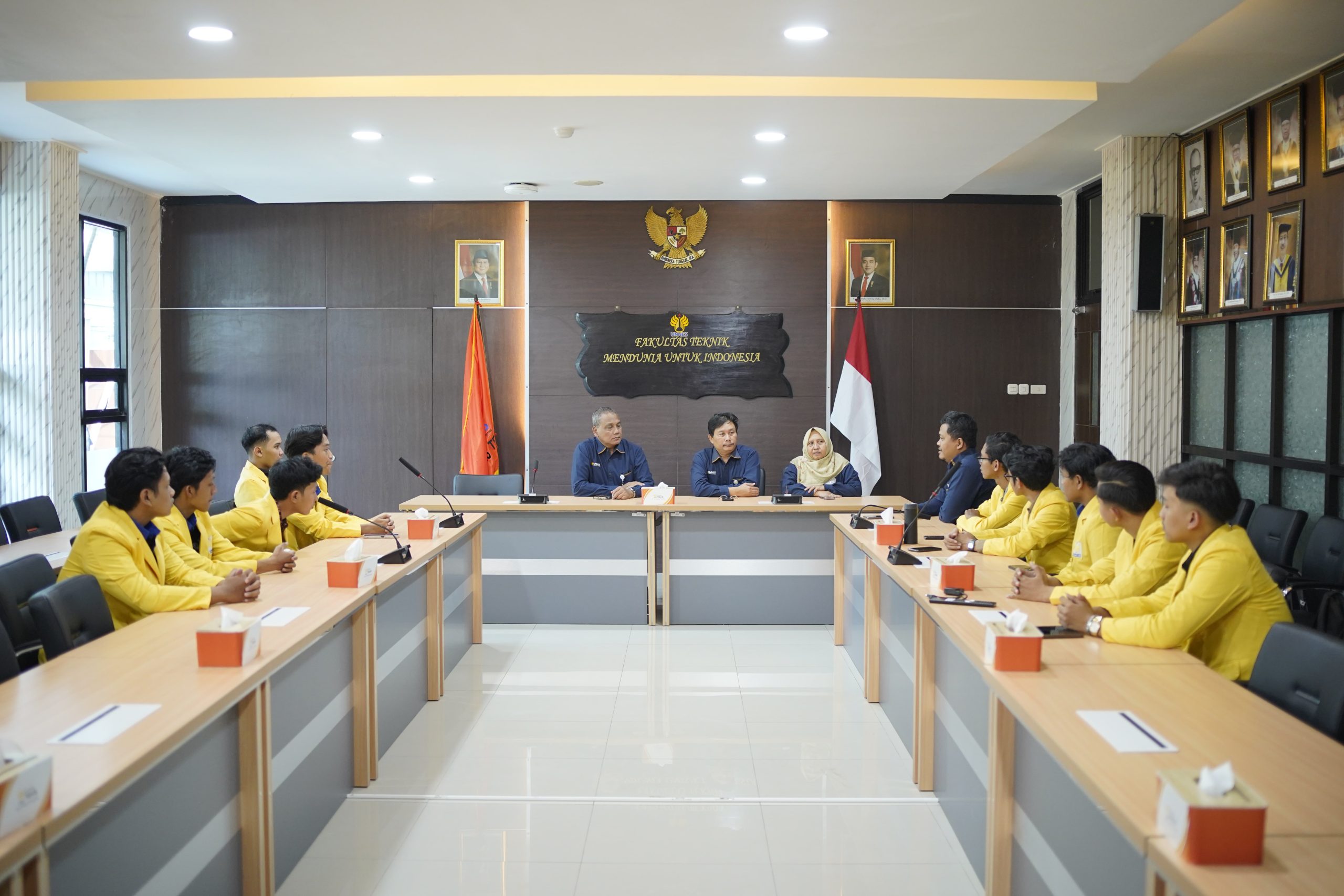
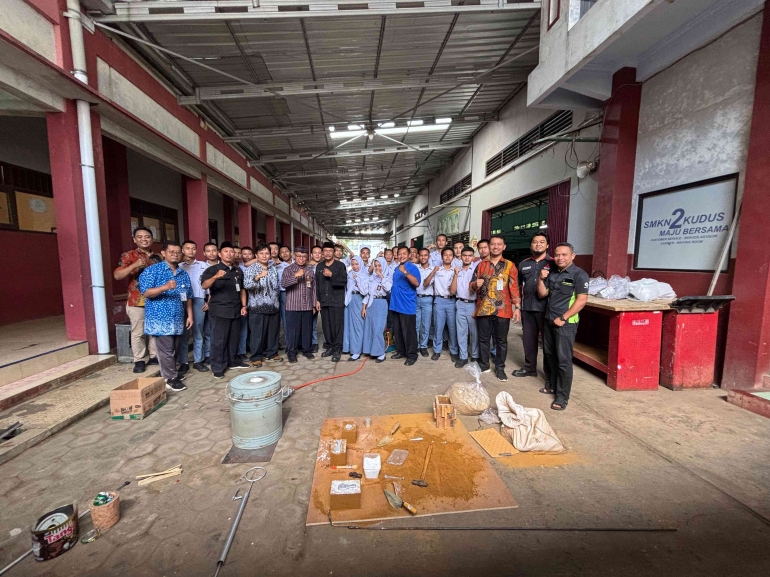
Upon arrival at SMK Negeri 2 Kudus, the team was welcomed by the Principal, Budi Susanto, S.Pd., M.Pd., accompanied by the Head of Administration, Harini, S.I.P., and the Vice Principal for Public Relations, Khumaedi, S.Pd. In his remarks, the Principal expressed appreciation for UNNES’s contribution to enriching the students’ vocational training. The program consisted of several sessions, beginning with the opening ceremony and the Principal’s address, followed by a pre-test for participants, a theoretical presentation, and hands-on field practice guided directly by the UNNES team. The practical activities encompassed equipment setup and preparation, the metal casting process, and an evaluation of the students’ work. A key highlight was the handover of practical equipment—specifically furnaces and crucibles made from repurposed “evaporation boat” waste—from the UNNES team to the school. This equipment is intended to offer an alternative solution to the cost and durability issues associated with imported or conventional graphite crucibles.
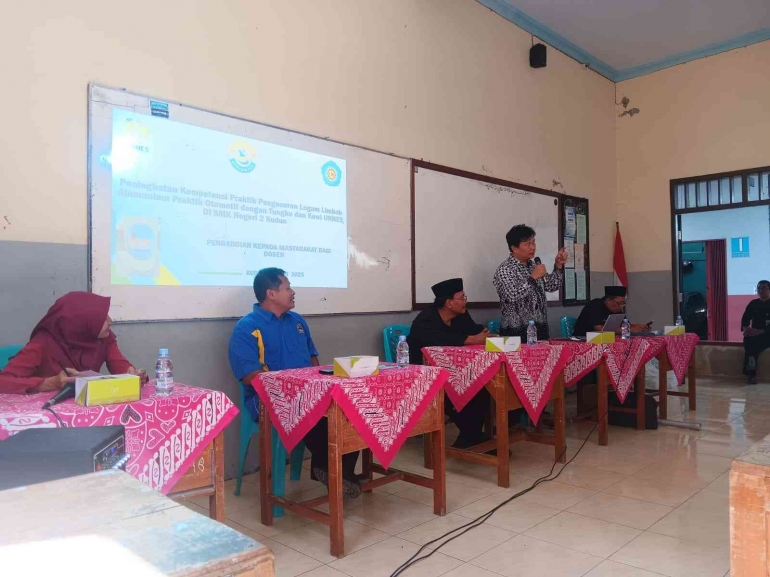
Data gathered indicated that the partner school, SMK Negeri 2 Kudus, faced two primary challenges: the suboptimal utilization of aluminum waste from automotive practical classes and a lack of affordable, durable crucibles. This community service program was designed as a tangible solution to these issues. The activities followed a structured approach, comprising awareness sessions, training, mentoring, and evaluation. Students were not only equipped with the theory of non-ferrous metal casting but also engaged in hands-on activities such as fabricating crucibles, operating LPG-fueled furnaces, preparing sand molds, and performing actual aluminum casting. Evaluation was conducted using pre-test and post-test methods, yielding significant results: the average student score rose from 4.85 in the pre-test to 9.0 in the post-test. This 85.57% increase in competence underscores the program’s effectiveness in enhancing students’ vocational skills. Furthermore, qualitative observations revealed that students gained confidence, improved their teamwork capabilities, and adhered to workplace safety standards. The practice also instilled principles of sustainability by recycling aluminum waste, thereby reducing costs while benefiting the environment.
Budi Susanto, the Principal of SMK Negeri 2 Kudus, expressed his gratitude to the UNNES team for the knowledge, mentoring, and practical equipment provided. He noted that this collaboration would broaden the students’ horizons and support the school’s “Teaching Factory” learning model. This activity is fully funded by the Institute for Research and Community Service (LPPM) of UNNES under the 2025 Budget Implementation Document (DPA) scheme, with total funding amounting to IDR 15,000,000 (fifteen million rupiah). This community service program demonstrates that synergy between higher education institutions and vocational schools can bridge the gap between research innovation and educational practice. Moving forward, this model can be replicated in other vocational schools, serving as a tangible manifestation of the university’s role in advancing education and supporting SDG 9 by building resilient infrastructure, promoting inclusive and sustainable industrialization, and fostering innovation.