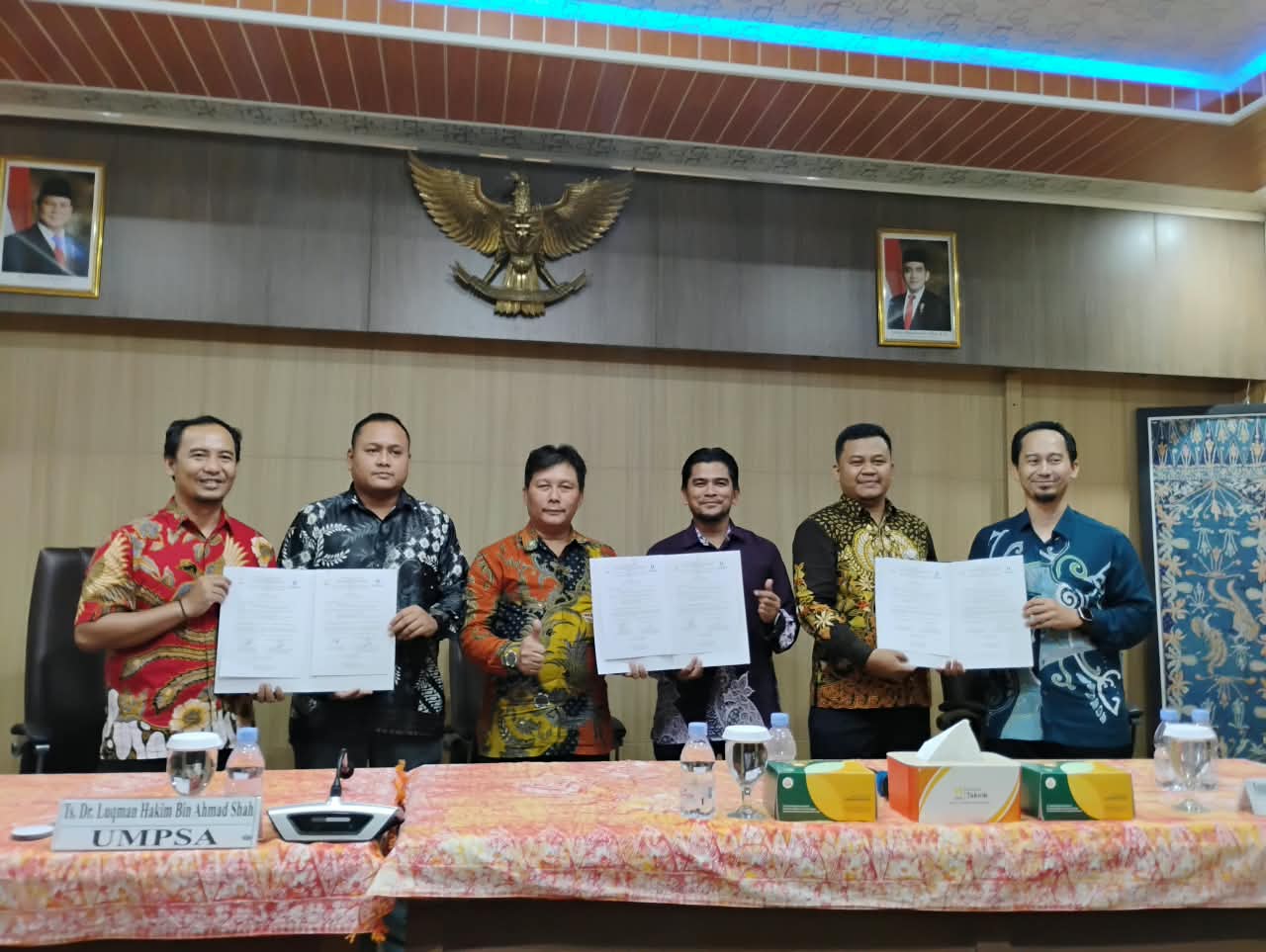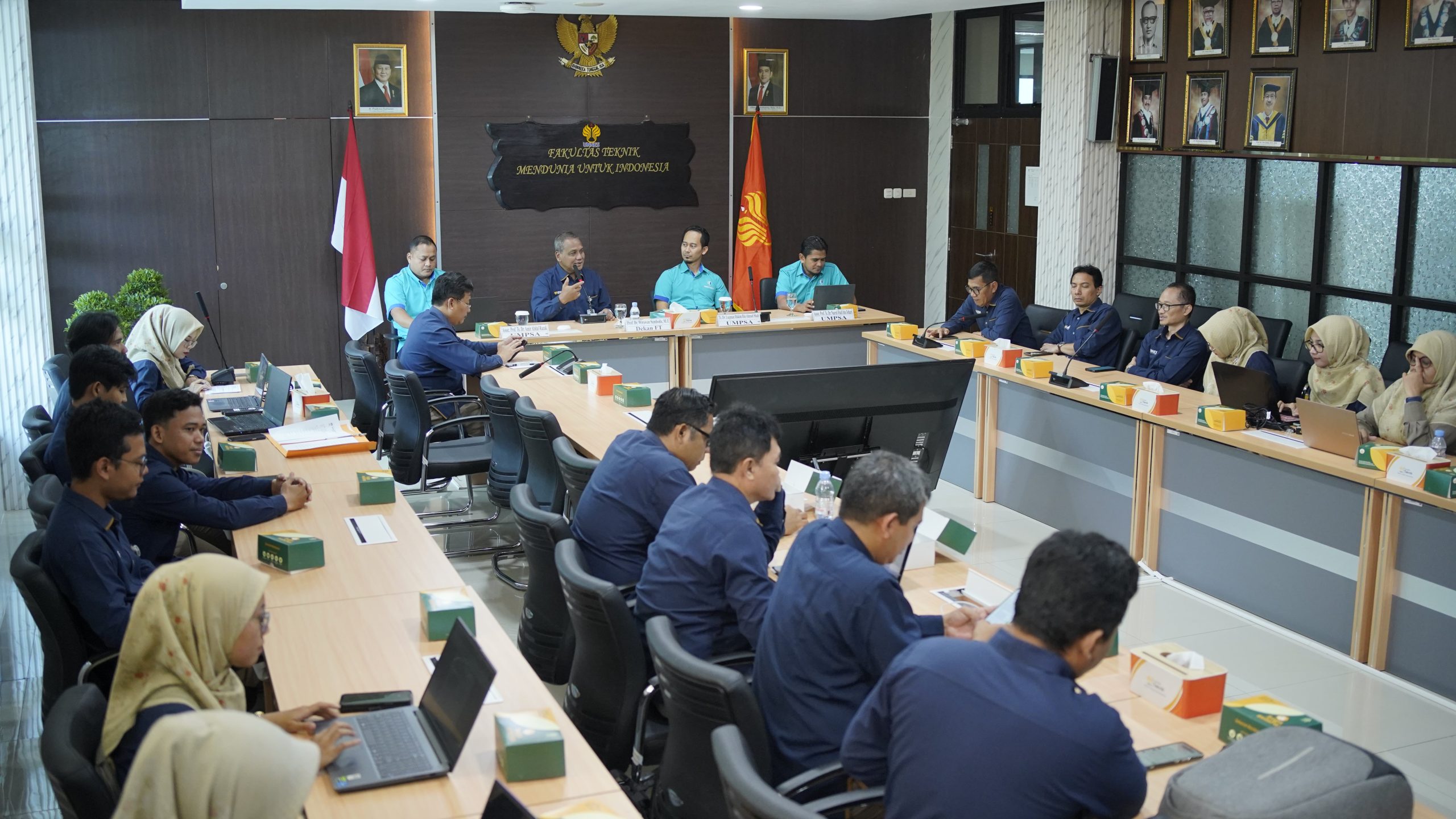




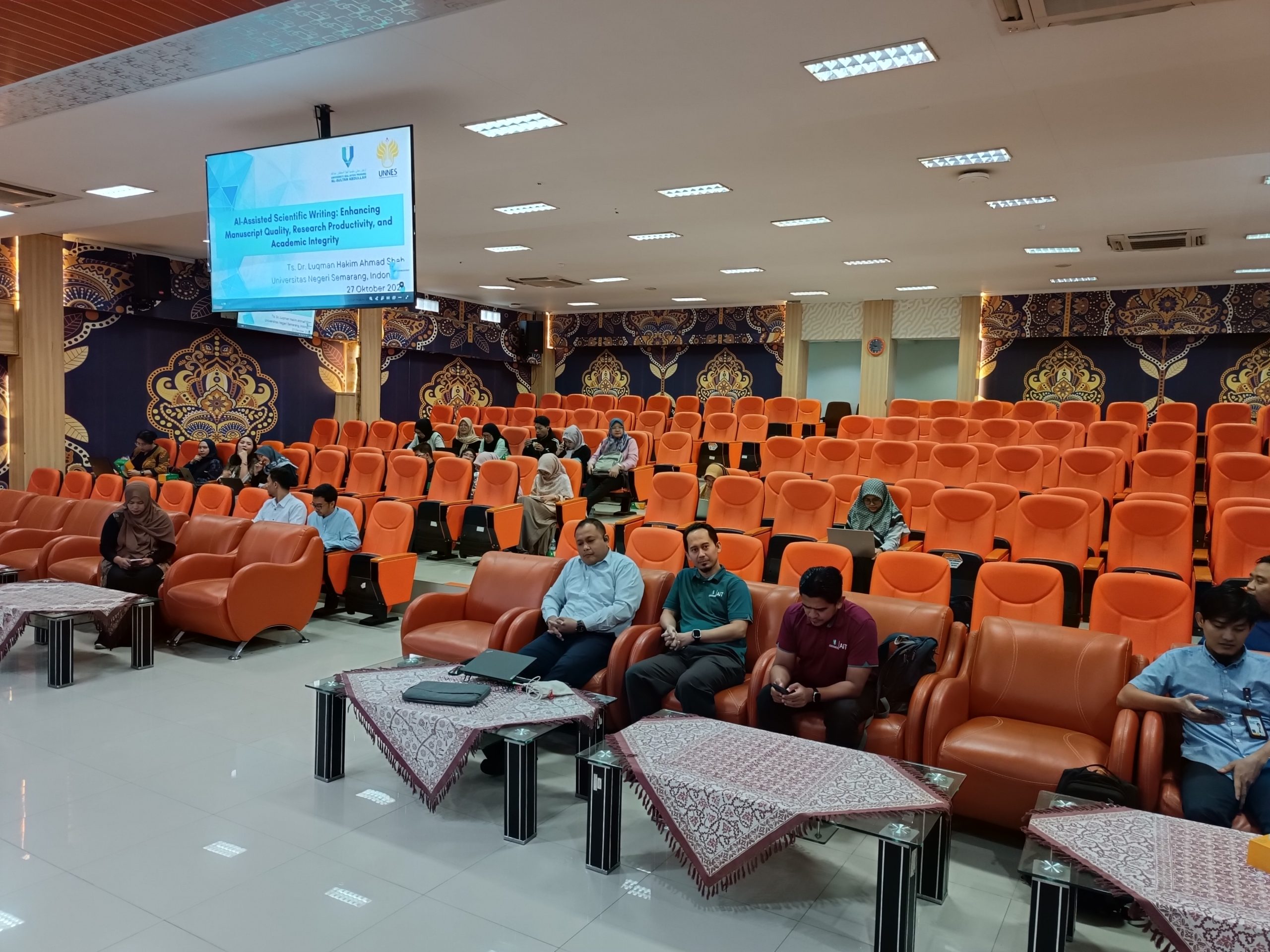
Semarang, Indonesia — The Faculty of Engineering at Universitas Negeri Semarang (FT UNNES) organized an artificial intelligence (AI)-assisted scientific writing workshop in collaboration with academics from Universiti Malaysia Pahang Al-Sultan Abdullah (UMPSA), Malaysia, on Tuesday, October 27, 2026. The workshop aimed to strengthen faculty members’ understanding of AI applications in academic writing while promoting manuscript quality, research productivity, and academic integrity.
Entitled “AI-Assisted Scientific Writing: Enhancing Manuscript Quality, Research Productivity, and Academic Integrity,” the workshop took place on the third floor of the FT UNNES Dean’s Office. It featured three UMPSA academics: Assoc. Prof. Ts. Dr. Amir Abdul Razak, Assoc. Prof. Ts. Dr. Nasrul Hadi bin Johari, and Ts. Dr. Luqman Hakim Bin Ahmad Shah.
The use of AI in scientific writing has become increasingly relevant as digital technologies continue to transform academic research practices. AI-based tools offer opportunities to support various stages of academic writing, yet their application requires careful consideration to ensure research quality, accuracy, originality, and ethical responsibility.
Through the workshop, participants explored the role of AI in scientific writing, with particular attention to maintaining manuscript quality and academic integrity. The discussion emphasized the importance of responsible technology use, recognizing that AI tools should support rather than replace researchers’ critical thinking, scientific judgment, and accountability for their work.
Following the workshop, the program continued with a “Scientific Article Review and Feedback Session.” During this session, the visiting academics reviewed scientific manuscripts and provided academic feedback aimed at supporting improvements in research article quality.
The review session complemented the workshop by offering faculty members an opportunity to receive insights and recommendations from international academics. Such feedback can serve as a valuable reference for revising manuscripts and improving their readiness for submission to scholarly journals.
The workshop formed part of FT UNNES’s broader efforts to strengthen faculty research capacity through international academic collaboration. By facilitating knowledge exchange and discussions on emerging technologies, the activity provided opportunities to enhance research practices and support the development of a stronger academic publication culture.
This initiative aligns with SDG 4 (Quality Education) by promoting professional development and strengthening academic competencies among university educators. It also reflects the importance of international knowledge exchange in supporting research capacity and academic collaboration.