

Semarang, October 19, 2026 — The Faculty of Engineering at Universitas Negeri Semarang (FT UNNES) continues to foster student creativity, research, and innovation aimed at addressing real-world challenges. This commitment is exemplified by two innovative projects from UNNES students: the development of a cleansing balm based on Nanostructured Lipid Carrier (NLC) technology using bidara (jujube) oil, and a women’s empowerment program centered on the production of crispy brownies made from MOCAF (modified cassava) flour.
Both innovations demonstrate how science and technology can be transformed into solutions with potential benefits in healthcare, product development, and community economic empowerment. This initiative aligns with the Sustainable Development Goals (SDGs)—specifically SDG 9: Industry, Innovation, and Infrastructure—which emphasizes the importance of strengthening research, technological development, sustainable industrialization, and enhancing innovation capacity.
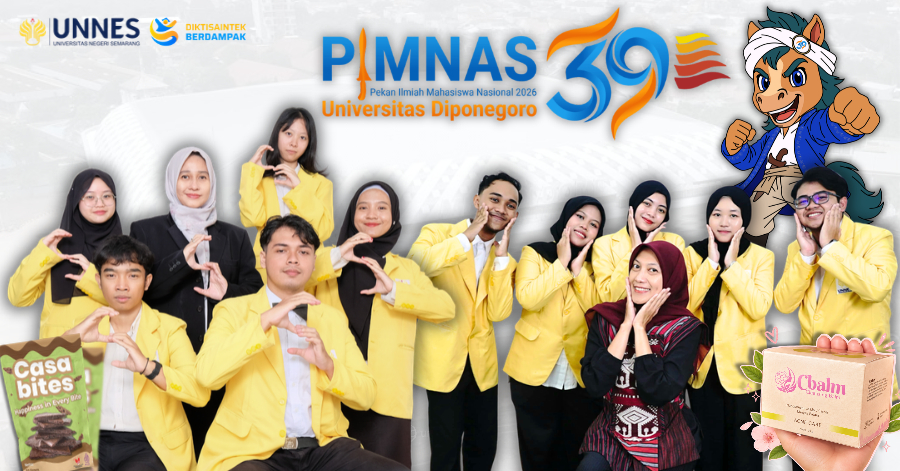
The 39th National Student Scientific Week (PIMNAS) 2026 is scheduled to take place from November 2–7, 2026, at Universitas Diponegoro, Semarang. This national event serves as a platform for students to present their scientific work, exchange ideas, and build collaborative networks.
First Innovation: Bidara Oil-Based Cleansing Balm (NLC Technology)
The UNNES Student Creativity Program for Exact Sciences Research (PKM-RE) team, led by Salma Oktavina, has developed a cleansing balm based on Nanostructured Lipid Carrier (NLC) technology incorporating bidara oil. The team includes Niken Ayu Saputri Ananda, Muhammad Firdaus Kurniawan, Sabila Nurfaiza, and Lucky Raihan Tri Septian, representing the fields of Beauty Education, Pharmacy, Medicine, and Chemical Engineering. The research was supervised by Dr. Eny Widhia Agustin, M.K.M.

This innovation stems from the need for a facial cleanser capable of effectively removing cosmetic residues. The use of decorative cosmetics—including waterproof products—often leaves behind residues that are difficult to cleanse with conventional facial cleansers. To address this, the team developed a cleansing balm formulation that incorporates bidara (jujube) oil, integrated into a nano-sized lipid carrier system.
Nanostructured Lipid Carrier (NLC) technology was selected to enhance the stability of the formulation, improve the delivery capacity of active ingredients, and optimize the release of these compounds. The bidara oil was formulated into a cleansing balm designed to remove makeup residue, with further research conducted on its potential antibacterial activity against acne-causing bacteria.
The research process encompassed the preparation of bidara oil-based NLCs, nanoparticle characterization, product formulation, physical quality and stability testing, evaluation of antibacterial activity, and assessment of the product’s efficacy in removing cosmetic residues. These stages are essential to research-based product development, ensuring that the product’s quality and characteristics can be scientifically evaluated.
In the context of SDG 9, this research demonstrates the application of formulation technology and material engineering in developing skincare products derived from Indonesia’s natural resources. Further development holds the potential to foster innovation in natural-based cosmetic products, while simultaneously strengthening the link between academic research and the needs of the industrial sector.
Second Innovation: CASANOVA—Transforming Cassava into Value-Added ‘Mocaf’ Brownies
The next innovation comes through the CASANOVA (Cassava Social Enterprise and Innovation) program, developed by a Community Service Student Creativity Program (PKM-PM) team from UNNES, led by Azis Sabila Rozaq from the Architecture Engineering study program. The program is supervised by Wiwit Setyowati, S.T., M.Sc., and is conducted in collaboration with the Mardi Utomo Social Service Center for the Homeless and Beggars (PGOT) in Semarang.
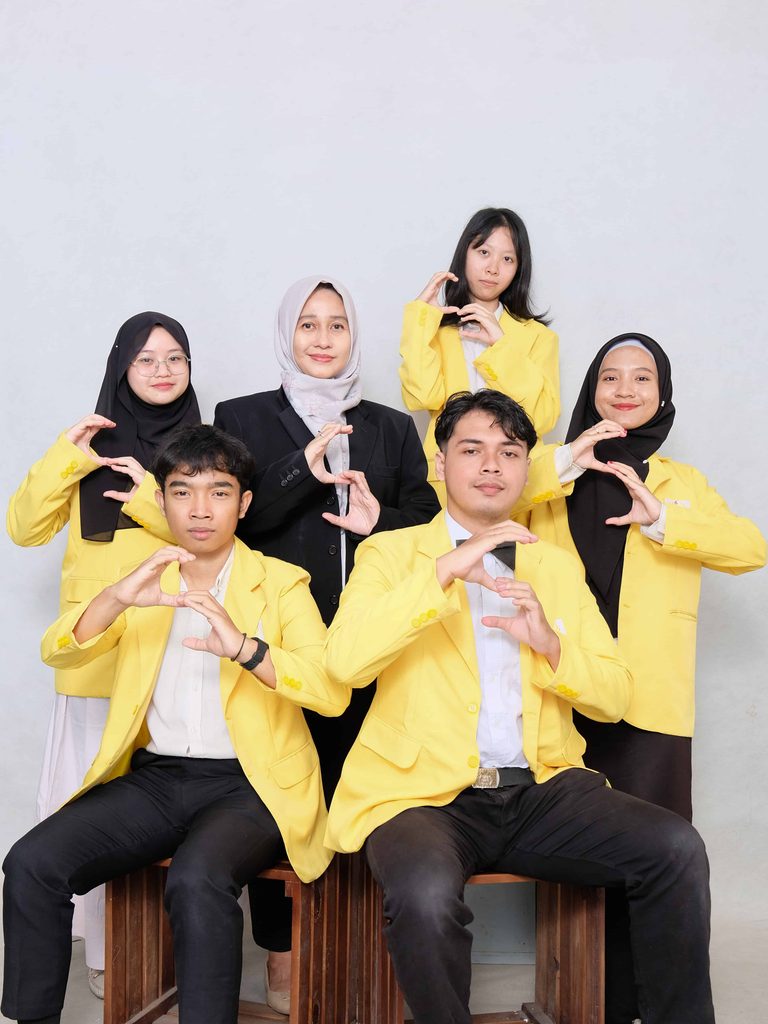
CASANOVA focuses on strengthening the capacity of female residents at the center by leveraging local resources—specifically, the cassava harvested from the center’s own gardens. Through this initiative, the cassava is processed into crispy brownies made from mocaf (modified cassava flour), adding value to the raw crop and transforming it into a food product with the potential to become a viable, productive business.
The program engages 15 female residents of productive age. The support provided extends beyond the actual production process; it encompasses recipe development, the standardization of operational and hygiene procedures, financial management, guidance on business legality, and digital marketing strategies.
This approach is designed to help participants cultivate entrepreneurial skills and gain an understanding of the entire product development lifecycle—from production to marketing. Utilizing local raw materials also creates opportunities to enhance the economic value of cassava by converting it into a competitive, market-ready product.
CASANOVA aligns with SDG 9 (Industry, Innovation, and Infrastructure) by fostering product innovation based on local potential, strengthening production processes, and introducing more structured business development practices. Standardized production, legal compliance support, and the use of digital marketing serve as essential pillars for building a business foundation with the potential for sustainable growth.
Furthermore, the program contributes to SDG 5 (Gender Equality) and SDG 8 (Decent Work and Economic Growth). Empowering women through production skills and entrepreneurship is expected to open doors to economic independence and expand the participation of vulnerable social groups in productive activities.
Bridging Research, Technology, and Societal Needs
These two innovations represent complementary approaches to innovation development within a university setting. The research on a bidara (jujube) oil-based NLC (Nanostructured Lipid Carrier) cleansing balm focuses on formulation technology and scientific product testing, while CASANOVA centers on the application of food processing innovations and the strengthening of community capacity to develop economically valuable products.
Both initiatives underscore that innovation is not merely about discovering new technologies, but also about the ability to develop processes, products, and systems that address real-world needs. For their benefits to be sustainable, innovations require rigorous testing, quality enhancement, capacity building, and opportunities for broader application and utilization.
By fostering a culture of research and student creativity, the Faculty of Engineering at UNNES (FT UNNES) is expected to remain an integral part of a higher education ecosystem that nurtures innovative ideas. Student involvement in research and community service also serves as a learning platform, connecting academic competence with development challenges.
The 39th PIMNAS (National Student Scientific Week) in 2026, to be hosted by Diponegoro University, marks a significant milestone in the development of a scientific culture among Indonesian students. Driven by a spirit of innovation and collaboration, student-led projects are expected to continue evolving, providing tangible benefits to society and contributing to the achievement of SDG 9 through the strengthening of research, technology, and the development of sustainable products and processes.