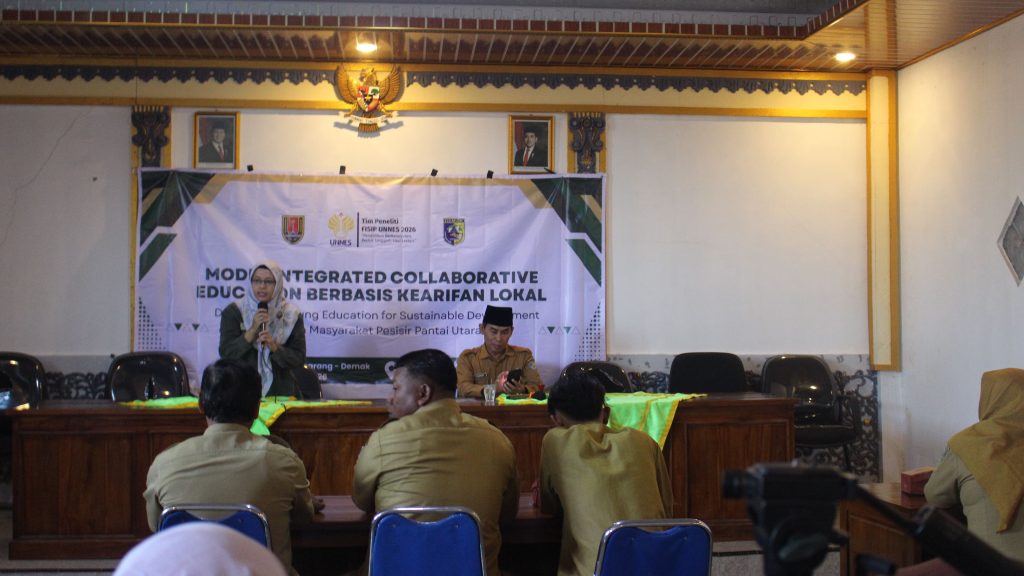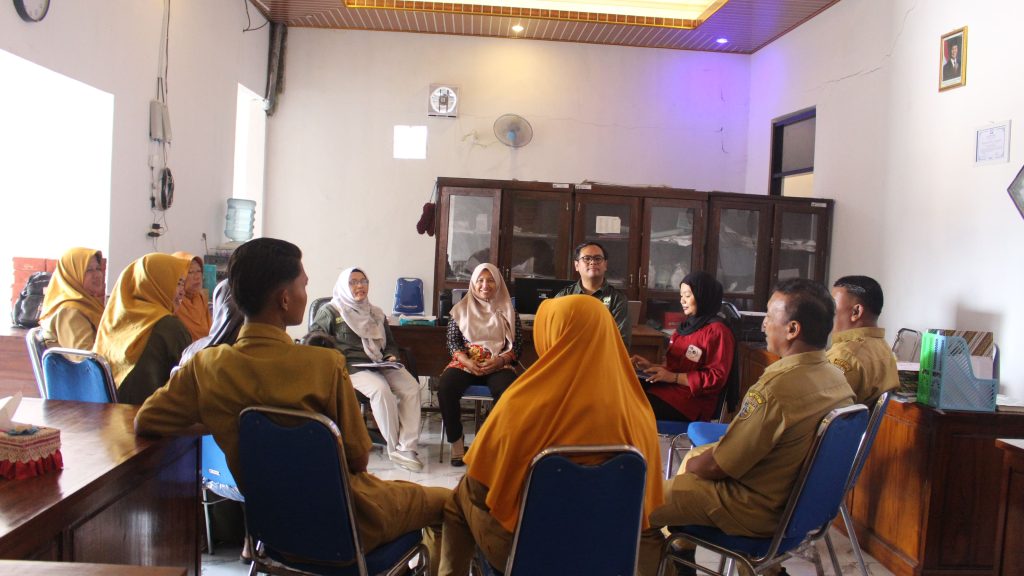


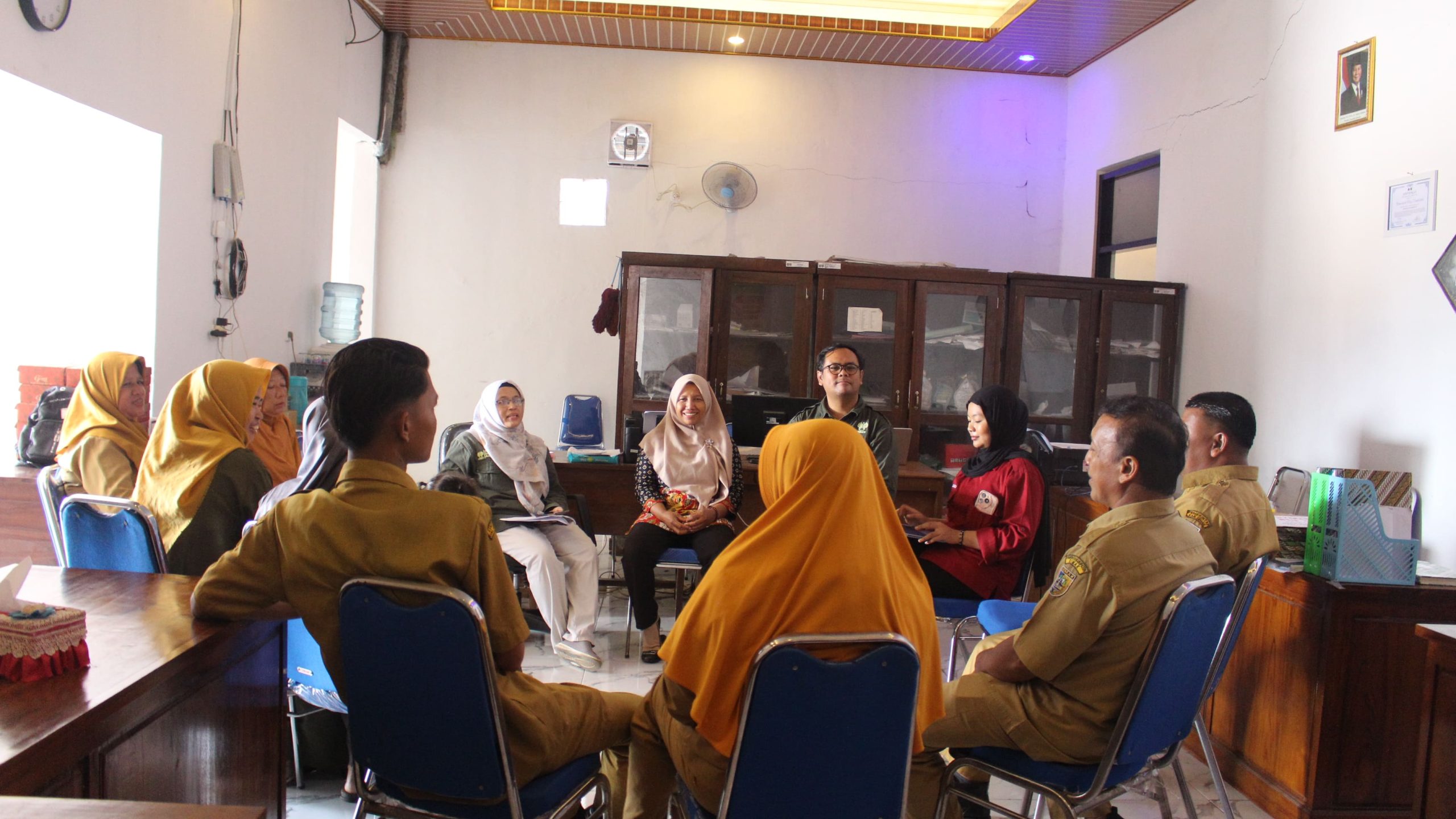
Demak, 12 Mei 2026 – Upaya merancang model pendidikan yang selaras dengan kebutuhan masyarakat pesisir terus dilakukan oleh tim peneliti Fakultas Ilmu Sosial dan Ilmu Politik (FISIP) Universitas Negeri Semarang (UNNES). Bertempat di Kantor Desa Timbulsloko, Kecamatan Sayung, Kabupaten Demak, tim peneliti menyelenggarakan Focus Group Discussion (FGD) bertajuk “Model Integrated Collaborative Education Berbasis Kearifan Lokal dalam Mendukung Education for Sustainable Development (ESD) pada Masyarakat Pesisir Pantai Utara Jawa.” Kegiatan ini melibatkan berbagai pemangku kepentingan, mulai dari perangkat desa, tokoh masyarakat, guru PAUD, TK, SD, hingga guru madrasah yang selama ini berperan dalam penyelenggaraan pendidikan di kawasan pesisir.
FGD dilaksanakan sebagai bagian dari penelitian yang diketuai oleh Dr. Nurul Fatimah, S.Pd., M.Si., bersama tim peneliti dari Program Studi Pendidikan Sosiologi dan Antropologi FISIP UNNES. Penelitian ini berangkat dari keprihatinan terhadap berbagai tantangan pendidikan dan pembangunan yang dihadapi masyarakat pesisir Pantai Utara Jawa, khususnya terkait menurunnya regenerasi profesi nelayan, memudarnya identitas budaya bahari, serta belum terintegrasinya berbagai program pendidikan yang dikembangkan oleh lembaga formal, nonformal, dan masyarakat.
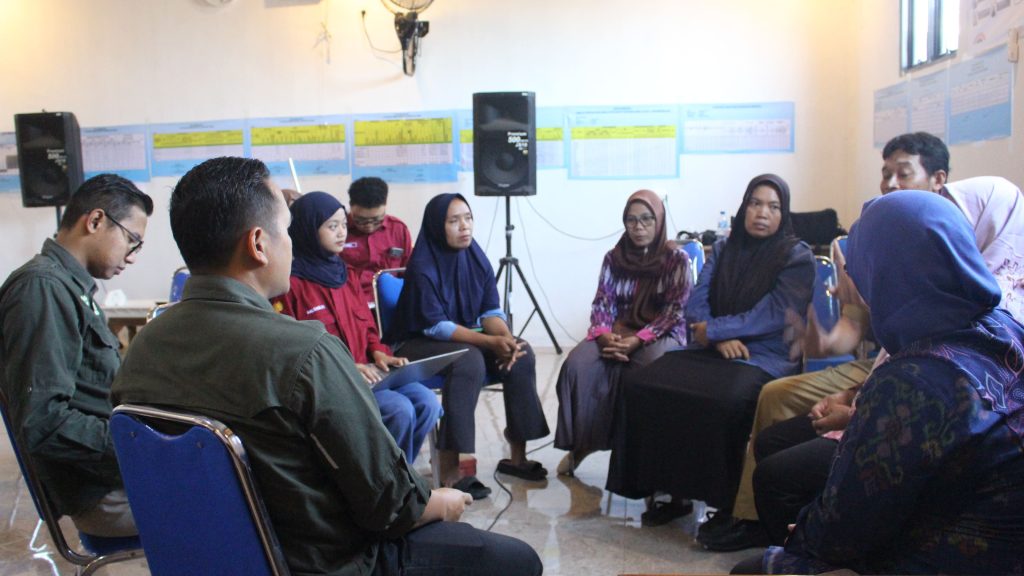
Dalam diskusi yang berlangsung secara partisipatif, para peserta membahas berbagai persoalan pendidikan pesisir, potensi kearifan lokal yang dapat diwariskan kepada generasi muda, serta peluang kolaborasi antarlembaga pendidikan dan masyarakat. Forum ini juga menjadi ruang bersama untuk mengidentifikasi kebutuhan pendidikan yang sesuai dengan karakteristik sosial budaya masyarakat pesisir, sekaligus merumuskan strategi pengembangan model Integrated Collaborative Education yang mampu menghubungkan pendidikan formal, nonformal, dan informal dalam satu kerangka pembangunan berkelanjutan.
Menurut tim peneliti, masyarakat pesisir memiliki kekayaan budaya bahari yang selama ini belum sepenuhnya terintegrasi dalam proses pendidikan. Padahal, pengetahuan lokal mengenai kehidupan maritim, pengelolaan sumber daya laut, serta nilai-nilai sosial masyarakat pesisir merupakan modal penting dalam mendukung pembangunan berkelanjutan. Oleh karena itu, model pendidikan yang dikembangkan tidak hanya berorientasi pada pencapaian akademik, tetapi juga pada pewarisan budaya bahari, penguatan identitas lokal, dan peningkatan kapasitas masyarakat dalam menghadapi berbagai tantangan sosial, ekonomi, dan lingkungan.
Kegiatan FGD ini juga menjadi bagian dari proses pengumpulan data penelitian yang menggunakan pendekatan kualitatif melalui observasi, wawancara, dokumentasi, dan diskusi kelompok terarah dengan berbagai komponen penyelenggara pendidikan di kawasan pesisir Semarang dan Demak. Hasil diskusi akan digunakan untuk menyusun prototipe kurikulum pendidikan pesisir berbasis kolaborasi dan kearifan lokal yang diharapkan mampu menjawab kebutuhan nyata masyarakat pesisir.
Secara lebih luas, kegiatan ini berkontribusi terhadap pencapaian Sustainable Development Goals (SDGs). Pada SDG 4 (Quality Education), FGD mendorong pengembangan pendidikan yang inklusif, relevan, dan kontekstual sesuai kebutuhan masyarakat pesisir. Pada SDG 8 (Decent Work and Economic Growth), model pendidikan yang dirancang diharapkan mampu memperkuat kapasitas sumber daya manusia pesisir, mengembangkan keterampilan berbasis potensi lokal, serta mendukung keberlanjutan ekonomi masyarakat maritim. Sementara pada SDG 14 (Life Below Water), integrasi nilai-nilai Education for Sustainable Development (ESD) dalam pendidikan pesisir diarahkan untuk meningkatkan kesadaran generasi muda terhadap pelestarian sumber daya laut dan pengelolaan ekosistem pesisir secara berkelanjutan.
Melalui kegiatan ini, FISIP UNNES bersama masyarakat Desa Timbulsloko menegaskan pentingnya sinergi antara pemerintah desa, lembaga pendidikan, akademisi, dan masyarakat dalam membangun sistem pendidikan yang tidak hanya menghasilkan sumber daya manusia berkualitas, tetapi juga menjaga keberlanjutan budaya bahari dan ekosistem pesisir. Kolaborasi tersebut diharapkan menjadi fondasi kuat bagi terwujudnya masyarakat pesisir yang berdaya, berbudaya, dan berkelanjutan di masa depan.