Guru SD Pesisir Semarang Diskusikan Strategi Pendidikan Pro-Lingkungan dalam FGD Penelitian Adaptasi Lingkungan Berbasis Komunitas

Universitas Negeri Semarang > Faculty of Social Sciences and Political Science > Berita > Guru SD Pesisir Semarang Diskusikan Strategi Pendidikan Pro-Lingkungan dalam FGD Penelitian Adaptasi Lingkungan Berbasis Komunitas

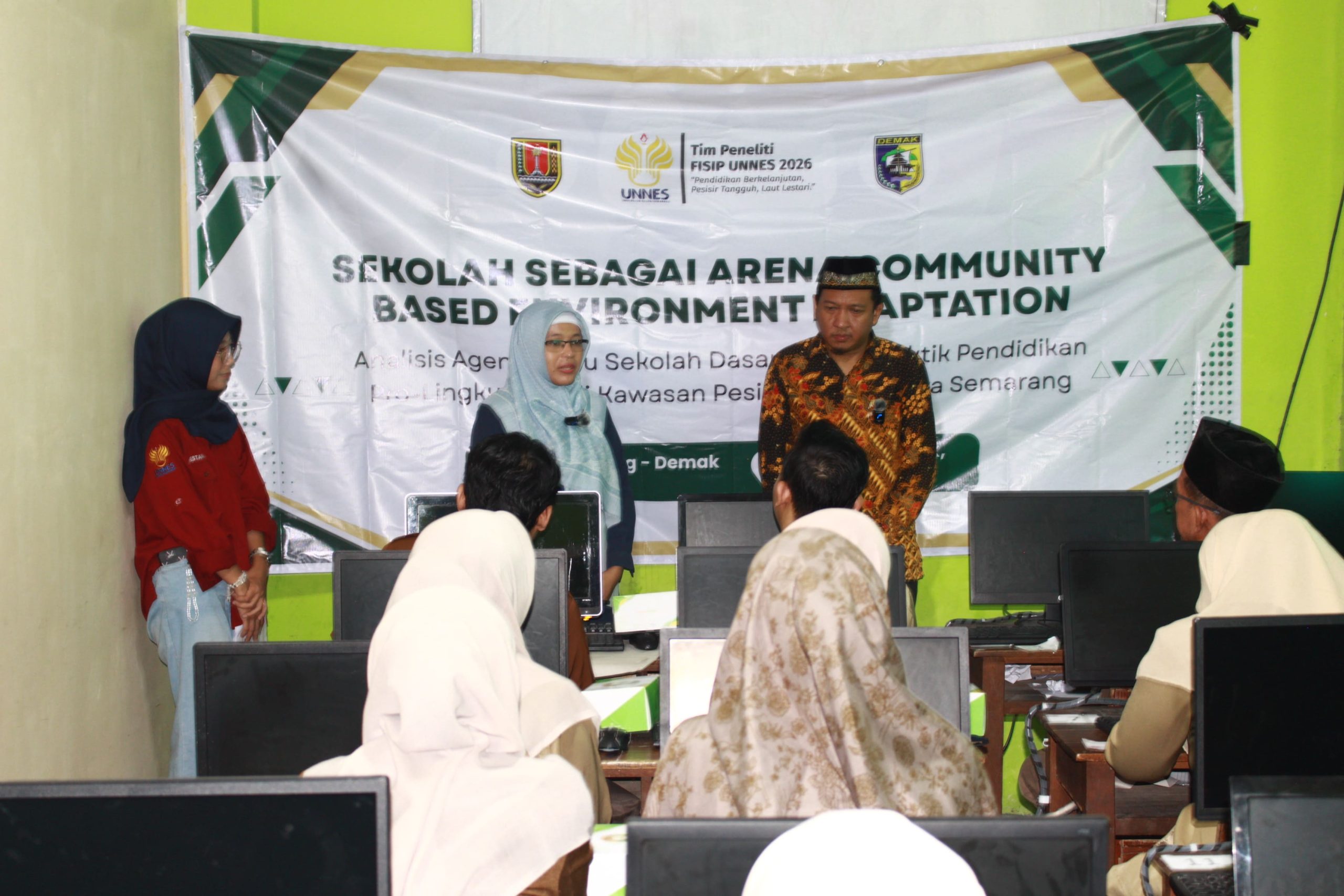
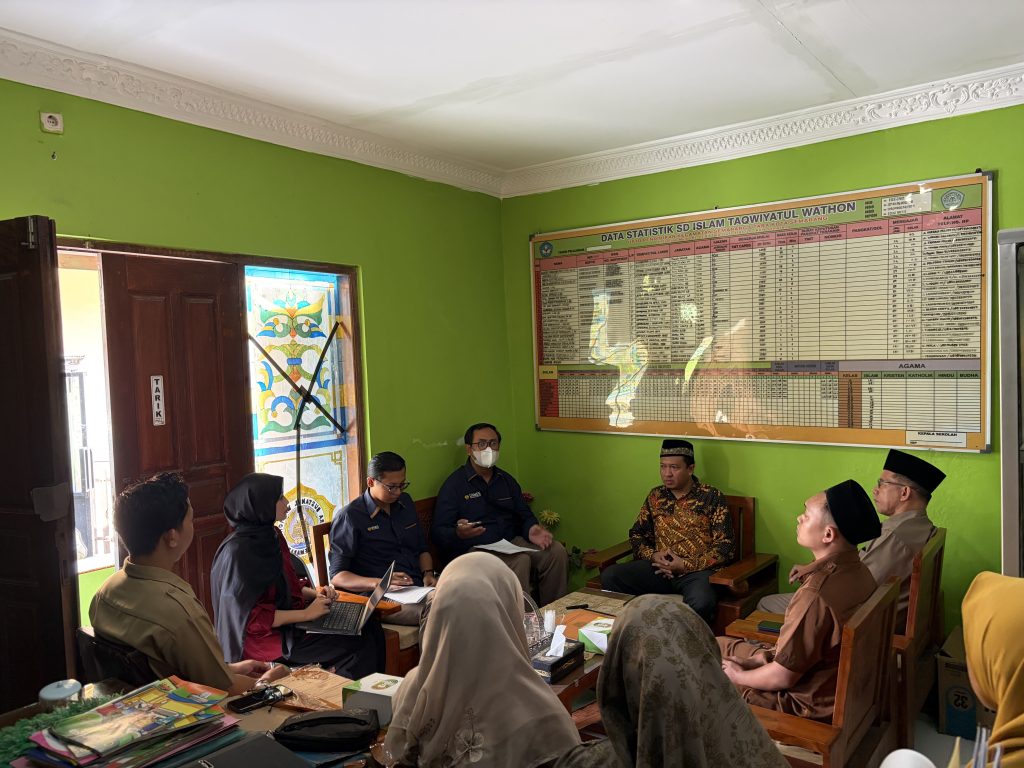
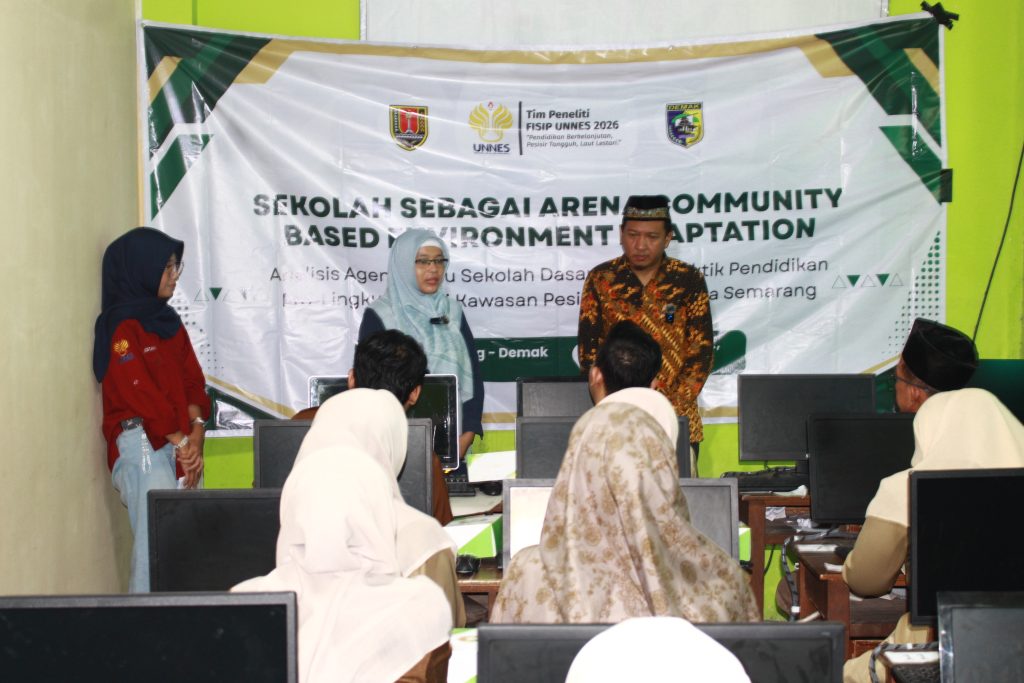
Semarang – Upaya memperkuat peran sekolah sebagai pusat pembelajaran sekaligus agen adaptasi lingkungan berbasis komunitas terus dilakukan oleh kalangan akademisi. Pada 25 Mei 2026, tim peneliti Fakultas Ilmu Sosial dan Ilmu Politik (FISIP) Universitas Negeri Semarang (UNNES) menyelenggarakan Focus Group Discussion (FGD) bertajuk “Sekolah sebagai Arena Community Based Environment Adaptation: Analisis Agensi Guru Sekolah Dasar dalam Praktik Pendidikan Pro-Lingkungan di Kawasan Pesisir Pantai Utara Semarang” di SDI Taqwiyatul Wathon, Tambak Mulyo, Semarang Utara. Kegiatan ini melibatkan seluruh guru mata pelajaran sebagai peserta utama untuk mendiskusikan praktik pendidikan lingkungan yang relevan dengan kondisi sosial-ekologis masyarakat pesisir.

FGD ini merupakan bagian dari penelitian dasar yang diketuai oleh Amrin Ma’ruf, S.Pd., M.Pd., bersama tim peneliti Dr. Nurul Fatimah, S.Pd., M.Si., Didi Pramono, S.Pd., M.Pd., serta melibatkan mahasiswa dan tenaga pendukung penelitian dari FISIP UNNES. Penelitian tersebut berangkat dari kondisi kawasan pesisir Pantai Utara Semarang yang menghadapi berbagai tantangan lingkungan seperti banjir rob, abrasi, dan penurunan muka tanah yang berdampak pada kehidupan sosial dan ekonomi masyarakat. Dalam konteks tersebut, sekolah dipandang memiliki posisi strategis sebagai ruang pembentukan kesadaran ekologis sekaligus penguatan ketahanan sosial masyarakat sejak usia dini.

Melalui diskusi kelompok terarah, para guru berbagi pengalaman mengenai bagaimana mereka mengintegrasikan isu-isu lingkungan pesisir ke dalam proses pembelajaran. Berbagai strategi pedagogis kontekstual dibahas, mulai dari pemanfaatan pengalaman sehari-hari siswa yang hidup di kawasan terdampak rob hingga penguatan nilai-nilai kepedulian lingkungan melalui aktivitas pembelajaran lintas mata pelajaran. FGD juga menjadi wadah untuk mengidentifikasi tantangan yang dihadapi guru dalam menerjemahkan kebijakan pendidikan lingkungan ke dalam praktik pembelajaran yang sesuai dengan kondisi lokal sekolah dan masyarakat pesisir.

Menurut tim peneliti, kegiatan ini bertujuan untuk memahami bagaimana guru sebagai aktor pendidikan memiliki agensi dalam mengembangkan pendidikan pro-lingkungan yang tidak hanya berorientasi pada transfer pengetahuan, tetapi juga pada pembentukan perilaku adaptif terhadap perubahan lingkungan. Hasil diskusi diharapkan dapat menjadi dasar dalam merumuskan model Community Based Environment Adaptation yang mampu memperkuat social resilience atau ketahanan sosial siswa dan masyarakat pesisir melalui pendidikan.

Pelaksanaan FGD ini sejalan dengan komitmen UNNES dalam mendukung pencapaian Sustainable Development Goals (SDGs). Pertama, SDG 4 (Quality Education) melalui penguatan pendidikan berkualitas yang kontekstual dan responsif terhadap tantangan lingkungan lokal. Kedua, SDG 11 (Sustainable Cities and Communities) melalui pengembangan kapasitas masyarakat pesisir dalam membangun komunitas yang tangguh terhadap risiko lingkungan. Ketiga, SDG 13 (Climate Action) melalui upaya meningkatkan kesadaran, pengetahuan, dan kemampuan adaptasi terhadap dampak perubahan iklim sejak tingkat pendidikan dasar.

Melalui kegiatan ini, FISIP UNNES menegaskan pentingnya kolaborasi antara sekolah, guru, komunitas, dan perguruan tinggi dalam membangun budaya pendidikan yang berorientasi pada keberlanjutan. Sekolah tidak hanya berfungsi sebagai institusi pendidikan formal, tetapi juga sebagai arena transformasi sosial yang mampu melahirkan generasi muda yang peduli lingkungan, adaptif terhadap perubahan, dan siap berkontribusi dalam pembangunan masyarakat pesisir yang berkelanjutan.
Related Posts

Leave a Reply

* Kode Akses Komentar:

* Tuliskan kode akses komentar diatas:

GDPR

  • Privacy Policy

Privacy Policy

At unnes.ac.id, the privacy of our visitors is of extreme importance to us. This privacy policy document outlines the types of personal information that is received and collected by unnes.ac.id and how it is used.

Log Files

Like many other Web sites, unnes.ac.id makes use of log files. The information inside the log files includes internet protocol (IP) addresses, type of browser, Internet Service Provider (ISP), date/time stamp, referring/exit pages, and number of clicks to analyze trends, administer the site, track user’s movement around the site, and gather demographic information. IP addresses and other such information are not linked to any information that is personally identifiable.

Cookies

unnes.ac.id uses cookies to store information about visitors’ preferences, to record user-specific information on which pages the site visitor accesses or visits, and to personalize or customize our web page content based upon visitors’ browser type or other information that the visitor sends via their browser.

Third-party ad servers or ad networks use technology in their respective advertisements and links that appear on unnes.ac.id and which are sent directly to your browser. They automatically receive your IP address when this occurs. Other technologies (such as cookies, JavaScript, or Web Beacons) may also be used by our site’s third-party ad networks to measure the effectiveness of their advertising campaigns and/or to personalize the advertising content that you see on the site.

unnes.ac.id has no access to or control over these cookies that are used by third-party advertisers.

You should consult the respective privacy policies of these third-party ad servers for more detailed information on their practices as well as for instructions about how to opt-out of certain practices. unnes.ac.id’s privacy policy does not apply to, and we cannot control the activities of, such other advertisers or web sites.

If you wish to disable cookies, you may do so through your individual browser options. More detailed information about cookie management with specific web browsers can be found at the browsers’ respective websites.

Consent

By using our website, you hereby consent to our privacy policy and agree to its terms.

Update

This Privacy Policy was last updated on: 2023-02-14. Should we update, amend or make any changes to our privacy policy, those changes will be posted here.

Contact Us

If you have any questions, comments, or concerns about our Privacy Policy or our practices with regards to your personal information, please feel free to contact us through the contact form on our website or by emailing us at humas[at]mail.unnes.ac.id.

This Privacy Policy is intended as a general guide to our practices in collecting and using information. If there is any inconsistency between this Privacy Policy and the terms of the Service Agreement or any other terms that may apply to specific services you use, then those specific service terms shall apply.

Terms of Use

By using our website, you agree to abide by this Privacy Policy. If you do not agree with this Privacy Policy, please do not use our website. We reserve the right to update this Privacy Policy from time to time without prior notice. Please review our Privacy Policy periodically to check for changes. Your continued use of our website following the posting of changes to this Privacy Policy means that you accept the changes.

Thank you for reading our Privacy Policy. We are committed to protecting the privacy of our website visitors and will continue to update our Privacy Policy to ensure optimal protection.