

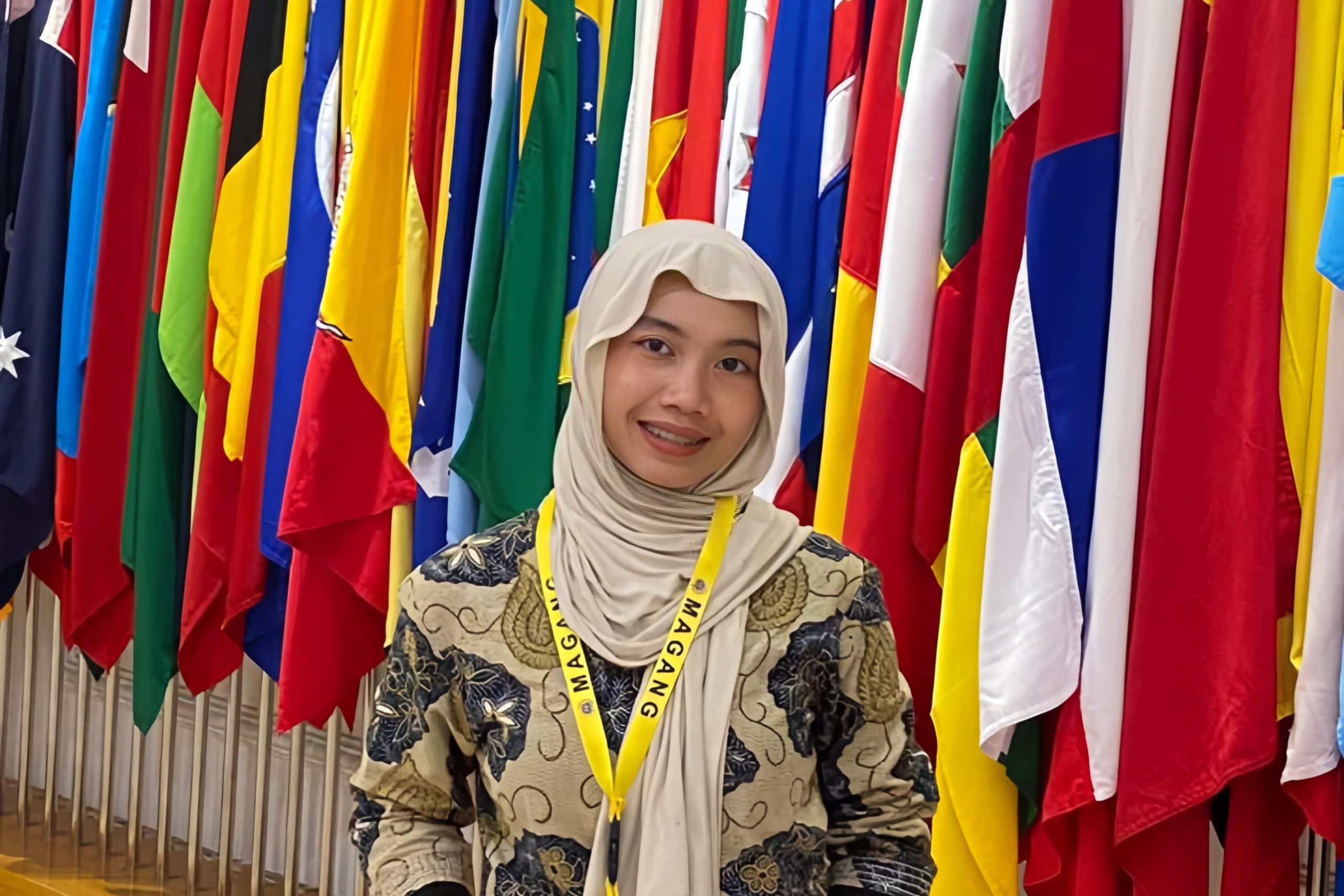
Rahma Danisa, an outstanding student of the Faculty of Social and Political Sciences (FISIP) in 2026, has spent more than two months undertaking an internship at the Directorate of Public Diplomacy, Subunit of Political and Security Affairs, Ministry of Foreign Affairs of the Republic of Indonesia. The History student admitted gaining a wide range of new experiences during her placement.
During the internship, Rahma participated in the Socialization of the Grand Strategy of Soft Power Diplomacy (GSDSP), attended by high-ranking officials from various ministries. The program aims to position soft power diplomacy as a strategic instrument to strengthen Indonesia’s global standing in a sustainable manner.
She was also involved in the Iftar Pejambon event, attended by Sugiono, ambassadors, diplomatic corps from partner countries, representatives of international organizations, and members of Commission I of the House of Representatives. In addition, Rahma took part in the “A Day with the Minister of Foreign Affairs” program, which brought together students and academic supervisors from various universities.
According to Rahma, her involvement in these activities provided direct insight into workflows and event management within the diplomatic environment. “I gained many new experiences during this internship, especially understanding how work processes operate in the Ministry of Foreign Affairs, including the execution of major events,” she said on Monday, April 6, 2026, at the ministry’s office in Pejambon, Jakarta.
In her daily assignments, Rahma was entrusted with compiling news reviews related to Indonesian diplomacy from both national and international sources. To date, she has produced hundreds of reviews covering foreign relations issues and Indonesia’s position in the global arena. Through this task, she realized the importance for diplomats to stay constantly updated on international developments.
Moreover, Rahma was trained to develop position papers—strategic documents outlining Indonesia’s official stance on specific international issues. These documents are typically used in conferences and periodic reports.
Her academic background in History has significantly supported her performance during the internship. Courses such as records management and digital archiving proved highly relevant to her tasks. She was directly involved in document digitization processes aimed at preserving archives, improving storage efficiency, and enhancing data accessibility.
Amid her internship commitments, Rahma frequently traveled between Semarang and Jakarta to participate in the university-level Outstanding Student selection. The selection process included psychological tests, portfolio presentations, interviews, evaluation of achievements, English proficiency tests, and creative idea presentations.
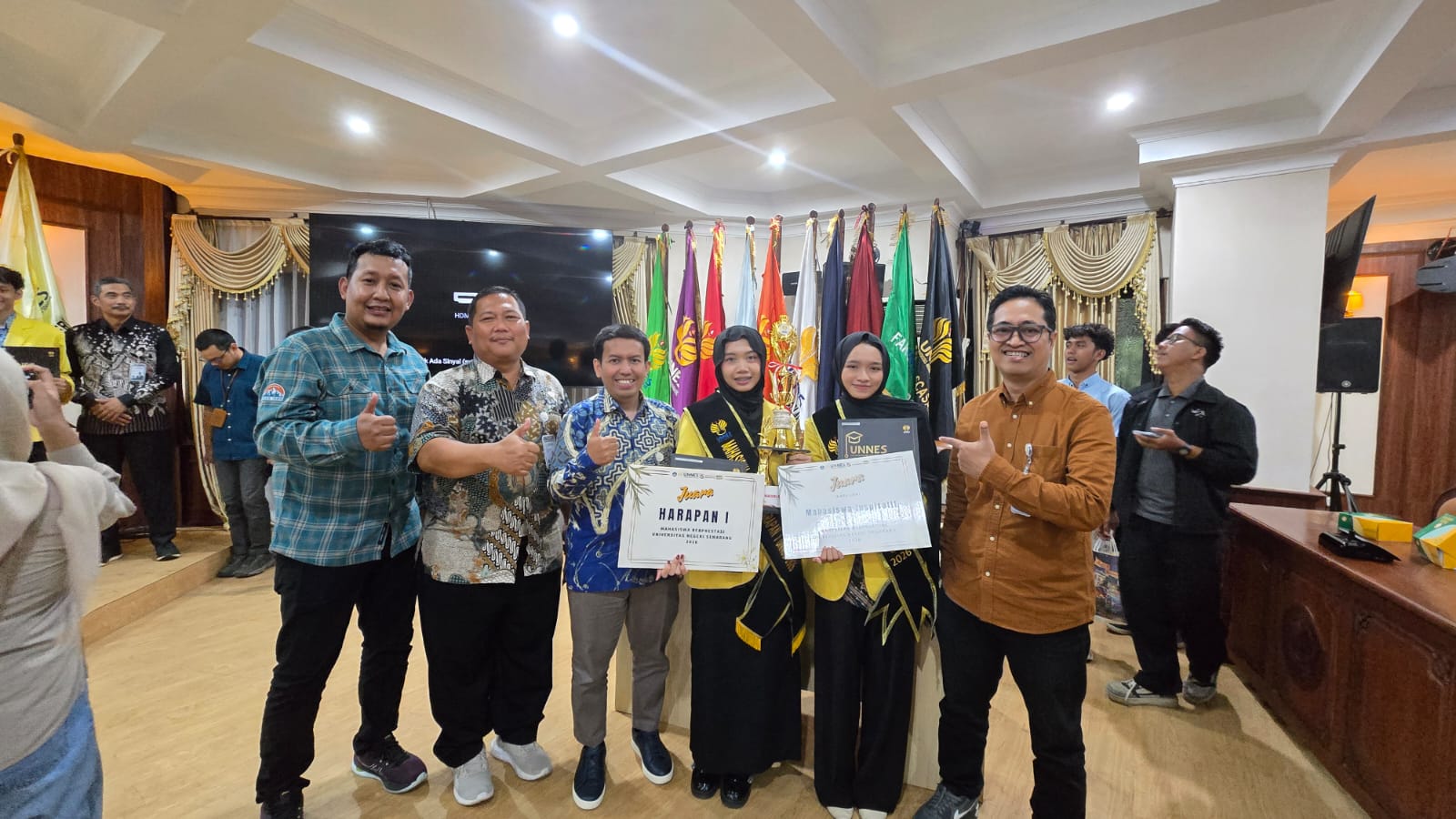
Her efforts paid off as she secured First Runner-Up in the Outstanding Student Competition at Universitas Negeri Semarang. “I didn’t expect to make it to the top six. When it was announced, I cried because it became a moment of proving myself and bringing pride to my department and faculty,” she said.
The Head of the History Study Program, Mukhamad Shokheh, Ph.D., expressed appreciation for Rahma’s achievement. “This is not the end, but the beginning of her journey in research and innovation. We hope this accomplishment inspires other students,” he stated.
He added that the program has developed a “performance incubator” to nurture high-potential students from an early stage, enabling them to achieve excellence at university and national levels. “Student achievement is the result of perseverance and consistency since the early stages of study,” he emphasized.
Furthermore, Rahma’s internship experience contributes to the achievement of the Sustainable Development Goals (SDGs), particularly Quality Education (SDG 4) and Partnerships for the Goals (SDG 17). By integrating academic learning with practical experience in a government institution, students not only gain professional competencies but also strengthen global collaboration capacity and readiness to face future workforce challenges.