

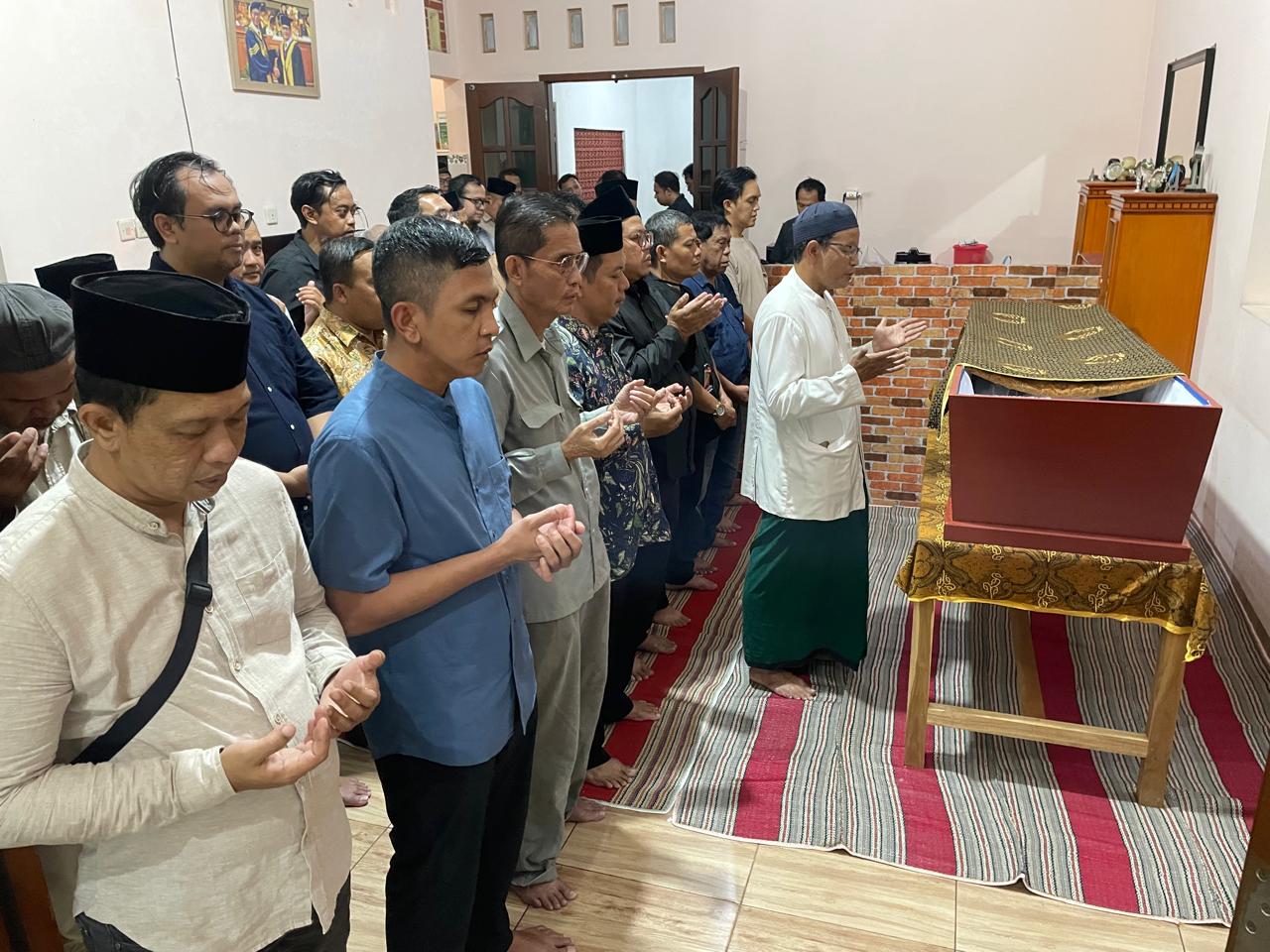
Cahyo Budi Utomo, a Professor of History Education, passed away at Dr. Kariadi Hospital in Semarang, Central Java, on Friday (January 23, 2026), after undergoing treatment for lung cancer for about a year. He is survived by his wife and three daughters. He was laid to rest in Pekalongan, Central Java, on Saturday (January 24, 2026), the city where he was born.
During his academic career, Cahyo Budi Utomo was widely known as an educator who consistently encouraged the renewal of history education. He repeatedly emphasized the importance of historical awareness as a foundation for understanding contemporary life. One of his frequently cited reflections stated that every individual and every nation has its own history, and that learning from the past is essential to avoid repeating historical mistakes.
According to Cahyo, history education in schools and universities tended to focus excessively on memorization and narratives of politics, power, and war. This approach, he argued, often distanced historical learning from students’ everyday realities. Teachers were frequently confined to delivering prescribed material, leaving little room for reflection, discussion, and critical engagement.
For this reason, he advocated a more humanistic and contextual approach to history education. History, in his view, should not be limited to accounts of political elites and major events, but should also encompass the social and cultural experiences of ordinary people. Through such an approach, history learning could move away from doctrinal instruction toward an academic process that prioritizes exploration, discussion, and discovery.
One of Cahyo’s central concerns was the marginalization of local history in formal education. He believed that before introducing students to national and global history, teachers should first explore historical potential within the students’ immediate environment. Contextualizing local history, he argued, could foster forms of patriotism rooted in everyday experience, such as solidarity, tolerance, honesty, discipline, and a willingness to make sacrifices for others.
In his research, Cahyo also interpreted patriotism in a broader sense. Patriotism, he suggested, does not arise solely from national symbols or grand historical narratives, but can grow from close environments such as family and community through emotional support and a sense of belonging. These values, he believed, could strengthen individual motivation and social participation.
He maintained that history learning enriched with local patriotism could only be achieved if three conditions were met: teachers must understand the historical potential of their surroundings; they must be capable of applying alternative and innovative learning models; and they must provide students with full autonomy to develop contextual critical thinking.
This perspective was also reflected in his teaching practice. Hani Muti’a Tanjung, a History Education student, recalled being taught by Cahyo in her early semesters, particularly in the Indonesian National Movement History course. According to Hani, his online classes were clear and required students to turn on their cameras throughout the session. The fast-paced lectures, she said, encouraged students to study more diligently.
Cahyo was also remembered by fellow academics as a scholar who was firm in his principles. Prof. Arif Purnomo, Dean of the Faculty of Social and Political Sciences, described him as a critical intellectual who consistently examined the foundations and practices of history education. Meanwhile, Prof. Suwito Eko Pramono noted that Cahyo demonstrated a strong commitment to understanding history both as factual knowledge and as an academic discipline, while clearly articulating its relevance for present and future life.
History Education lecturer Tsabit Azinar Ahmad added that Cahyo served as a reference point for younger lecturers, particularly in matters related to research methods and quality management in history education. He was also known for his close engagement with students.
Cahyo Budi Utomo’s passing leaves behind a body of thought that continues to underline the importance of history as a living discipline one that is human-centered, context-sensitive, and relevant to the challenges of contemporary society.