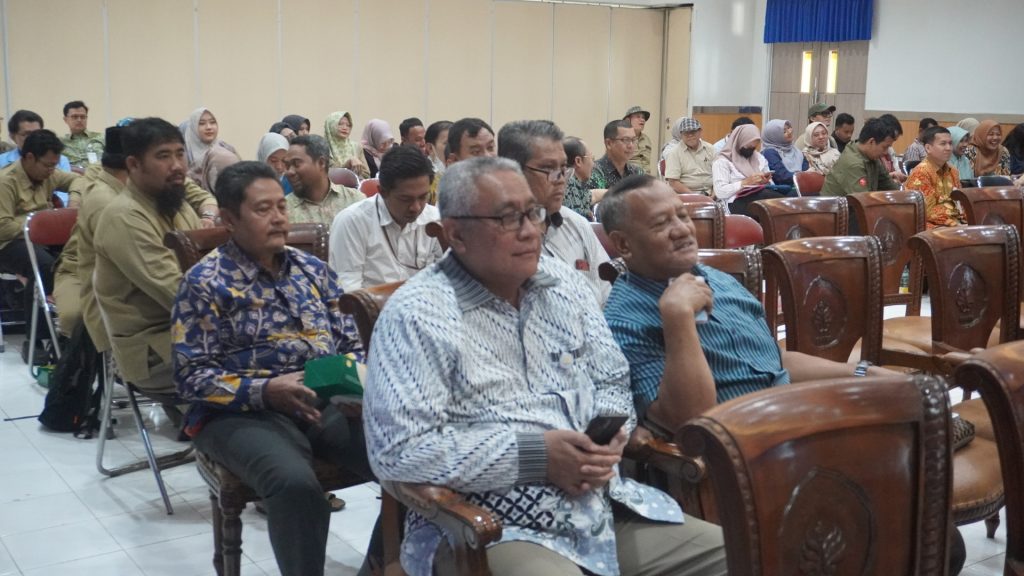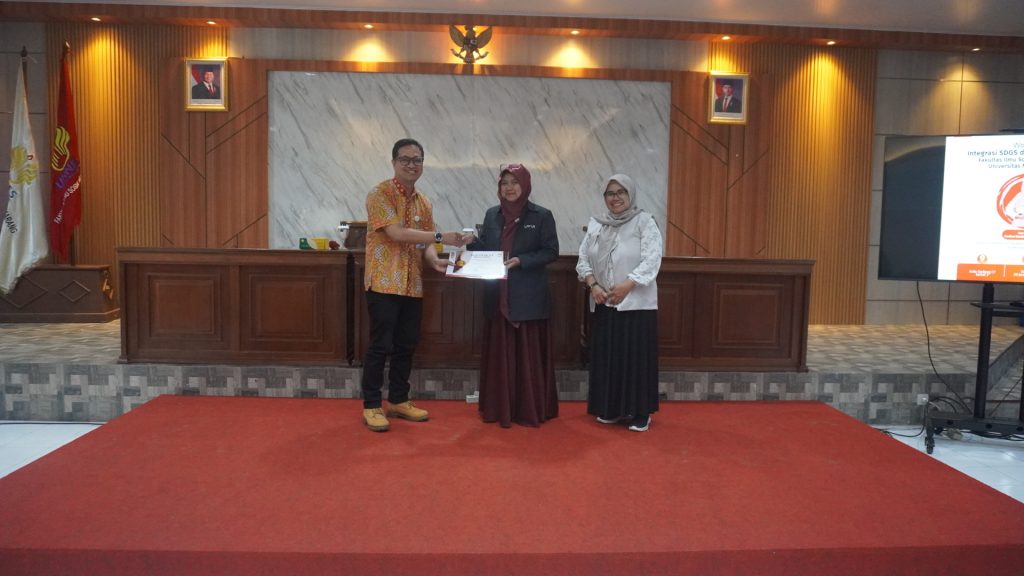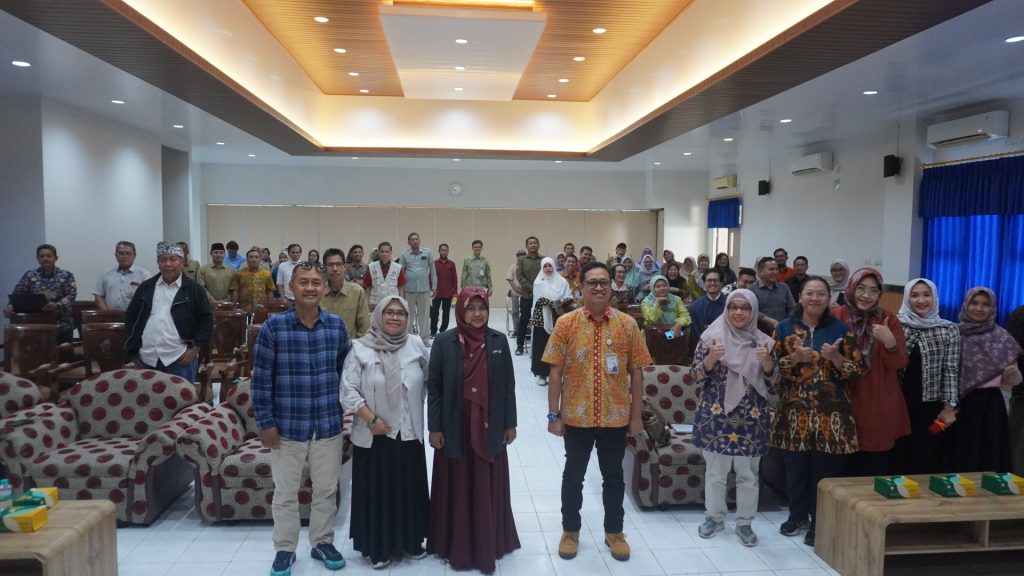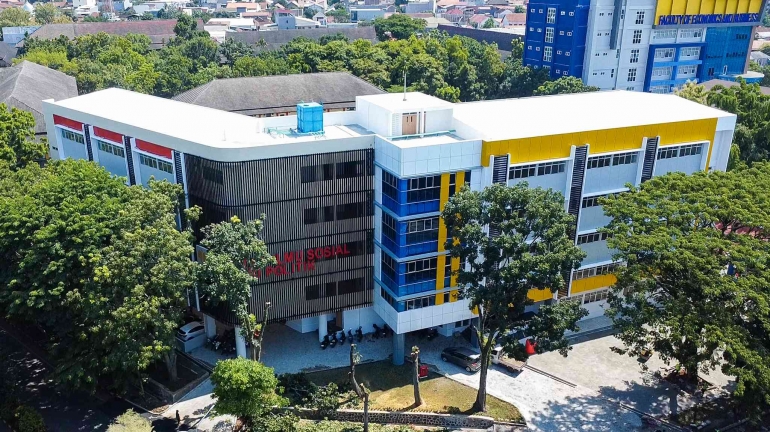


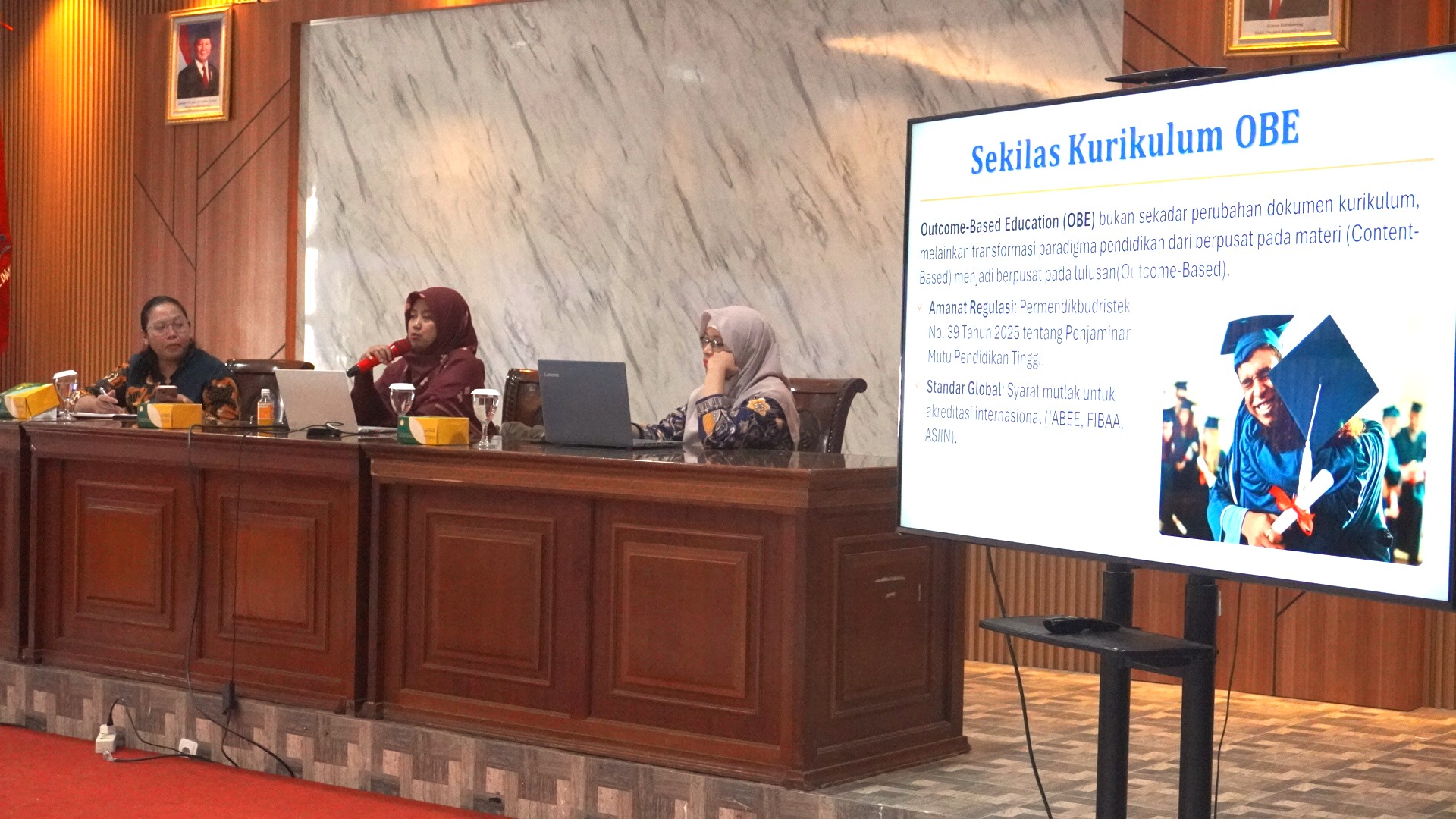
The Faculty of Social and Political Sciences of Universitas Negeri Semarang (FISIP UNNES) organized a Workshop on the Integration of the Sustainable Development Goals (SDGs) into the Outcome-Based Education (OBE) Curriculum on Tuesday, 20 January 2026, starting at 08:00 a.m. The event took place at the 3rd Floor Hall of Building C7, FISIP UNNES and was attended by faculty leaders, lecturers, and study program managers as part of a strategic effort to strengthen a sustainability-oriented curriculum.
The workshop featured Corina Karim, Head of the Subdirectorate for Educational Relevance Development at DIPP Universitas Brawijaya, as the keynote speaker. In her presentation, she emphasized the importance of systematically and measurably integrating the SDGs into the OBE curriculum, ensuring that higher education learning processes focus not only on academic outcomes but also on tangible contributions to sustainable development.
FISIP UNNES specifically focuses its curricular contributions on SDGs Goal 1 (No Poverty), Goal 3 (Good Health and Well-being), Goal 4 (Quality Education), Goal 5 (Gender Equality), Goal 14 (Life Below Water), and Goal 17 (Partnerships for the Goals). These goals are to be integrated across all study programs within FISIP UNNES. At the technical level, SDGs integration is implemented through the alignment of the Semester Learning Plan (Rencana Pembelajaran Semester/RPS) with OBE principles and articulated more specifically in the Sub–Course Learning Outcomes (CPMK).
Through this workshop, lecturers were encouraged to design CPMK that reflect not only disciplinary competencies and 21st-century skills, but also internalize values of sustainability, social care, health, equality, and cross-stakeholder collaboration. Consequently, classroom learning is expected to produce graduates who are adaptive, globally competitive, and socially responsible in addressing sustainable development challenges.
The implementation of the Workshop on Integrating the SDGs into the OBE Curriculum reaffirms FISIP UNNES’s commitment to advancing the global SDGs agenda through higher education. This initiative represents a concrete step by the faculty to ensure that its curriculum is not only academically relevant but also capable of delivering meaningful contributions to social, economic, and environmental challenges at local, national, and global levels.