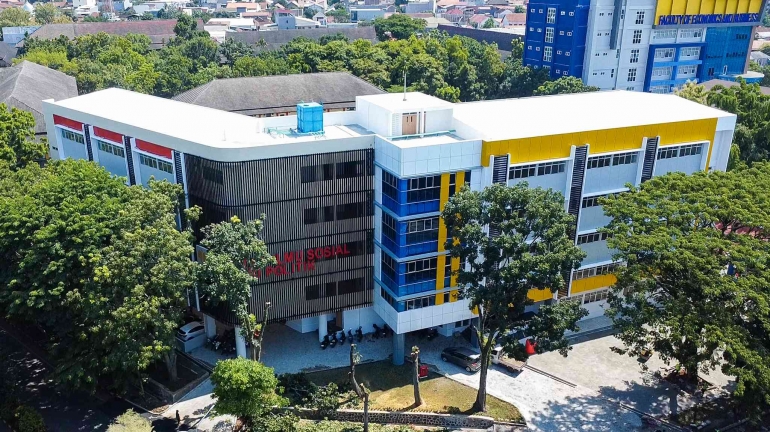


The Faculty of Social and Political Sciences (FISIP) is inviting academics to apply for positions as non–civil servant (Non-ASN) lecturers. The application period will remain open until 30 January 2026, leaving approximately ten days before the recruitment process closes.
In this recruitment round, FISIP is offering six lecturer positions across three study programs: one position in the Communication Studies Program, two positions in the Political Science Program, and three positions in the Geography Program.
Applicants for the undergraduate Communication Studies Program are required to hold both bachelor’s and master’s degrees in Communication Studies or Political Science. Meanwhile, candidates for the undergraduate Political Science Program must have completed bachelor’s and master’s degrees in Political Science or International Relations.
For the undergraduate Geography Program, the faculty has opened three positions with distinct academic qualifications. The first position is intended for applicants holding bachelor’s and master’s degrees in Cartography and Remote Sensing or Geography. The second position requires bachelor’s and master’s degrees in Geography with a concentration in Physical Geography, Physics, or Geophysics. The third position is open to candidates with bachelor’s and master’s degrees in Geography or Urban and Regional Planning.
Dean of FISIP, Prof. Arif Purnomo, stated that the recruitment aims to meet teaching needs in the Communication Studies, Political Science, and Geography programs to ensure an ideal lecturer-to-student ratio.
“We hope to recruit lecturers who are both academically qualified and possess strong character in line with the specific needs of each study program,” Prof. Arif said on Tuesday (20/1/2026) in Sekaran, Gunungpati, Semarang.
Martien Herna Susanti, Coordinator of the Political Science Program, highlighted several strengths of the program, including a broad range of alumni career profiles spanning political practitioners, researchers, political consultants, mediators, journalists, policy analysts, and entrepreneurs.
She also emphasized that the learning process is supported by academically competent lecturers and enriched through the involvement of national and international practitioners. Adequate human resources and facilities further support inclusive learning for students from diverse backgrounds.
In 2025, interest in the Political Science Program remained high, with 325 applicants through the SNBP admission track, 430 through SNBT, and approximately 1,000 applicants via the independent admission pathway. Of the 250 available seats, 231 students were admitted.
Meanwhile, Rahma Hayati, Coordinator of the Geography Program, noted that the program holds international accreditation from AQAS as well as an “Excellent” accreditation status from LAMSAMA. The learning environment is further strengthened by 11 active sub-laboratories and extensive national and international collaboration networks.
Student interest in the Geography Program has remained relatively strong, with 1,602 applicants recorded in 2023, 1,211 in 2024, and 1,320 in 2025. In 2025, a total of 210 students were admitted, all of whom have completed their registration.
Detailed information regarding available positions, eligibility requirements, selection stages, and the recruitment timeline can be accessed through the official recruitment website at rekrutmen.unnes.ac.id.