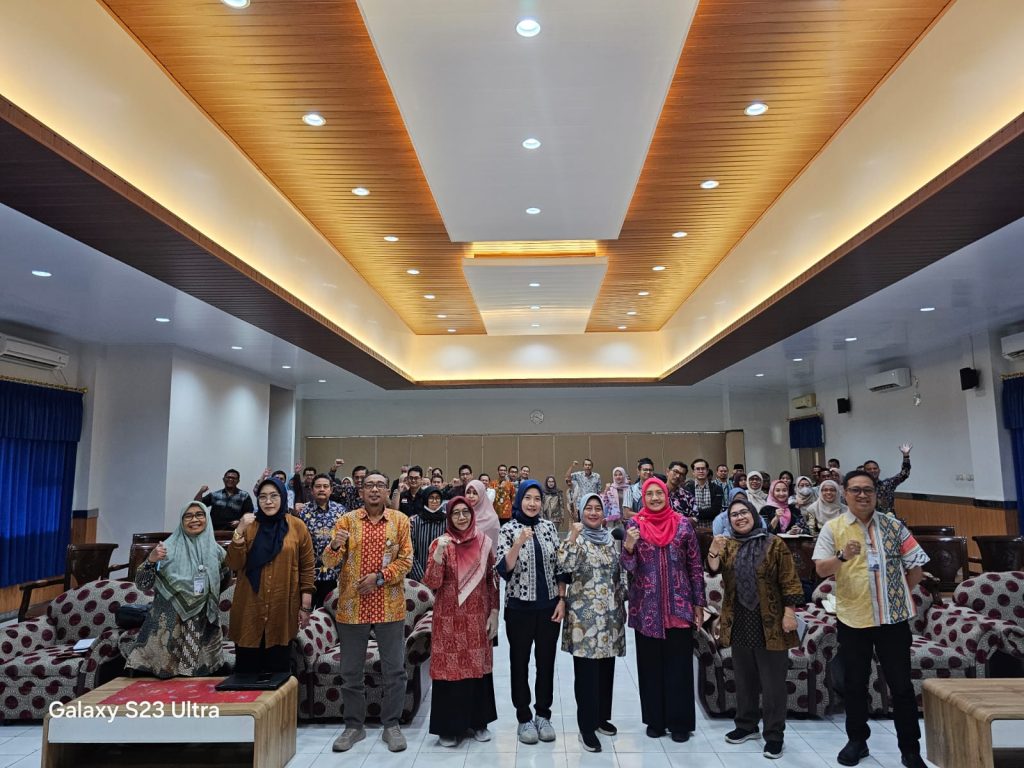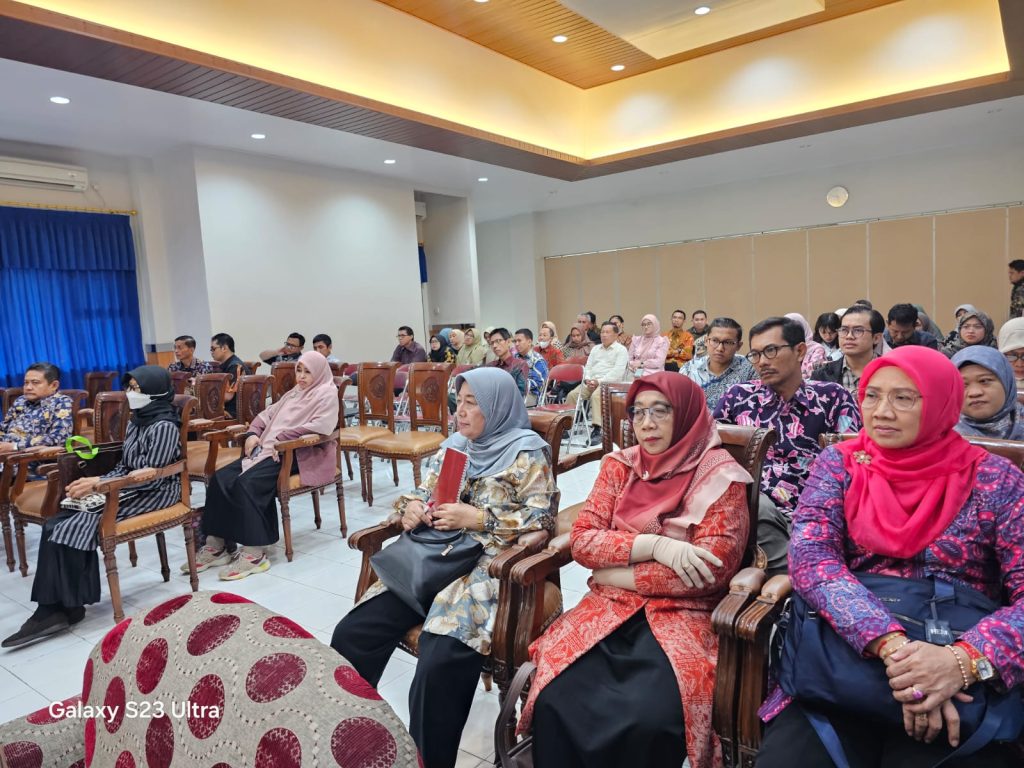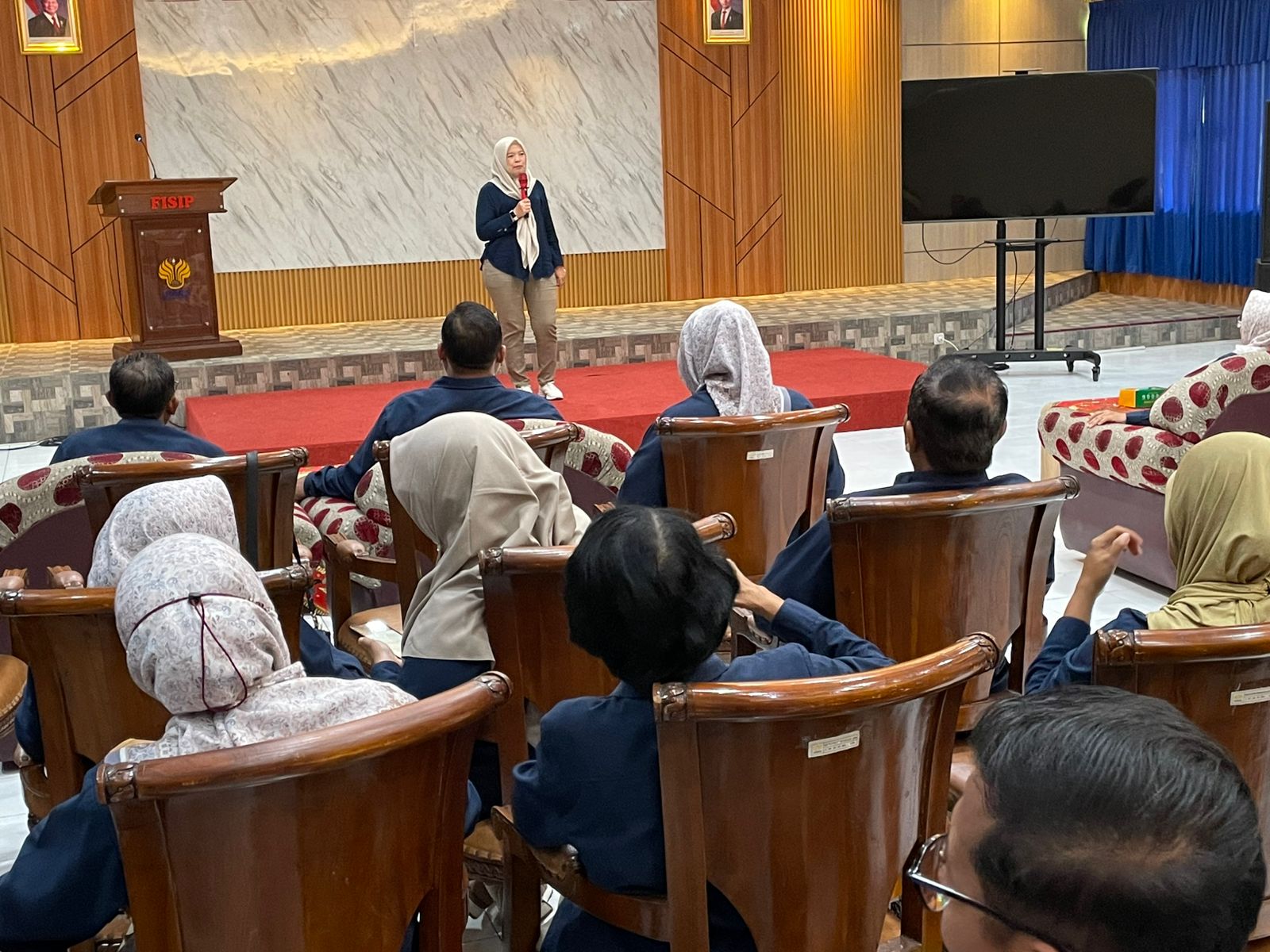


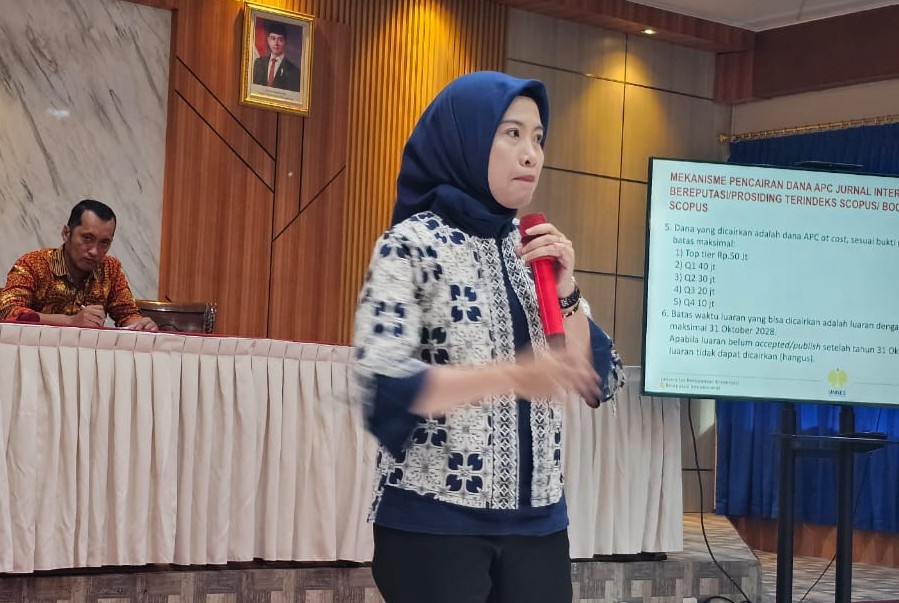
The Faculty of Social and Political Sciences, Universitas Negeri Semarang (FISIP UNNES), organized the Socialization of the 2026 DPA LPPM Research and Community Service Program on Thursday, 15 January 2026. The activity took place at the 3rd Floor Hall of Building C7, FISIP UNNES, and was attended by lecturers and members of the academic community within FISIP UNNES. This event served as a strategic effort to enhance the quality of research and community service with tangible impacts on society.
The socialization session featured Widya Hary Cahyati, as the main speaker. In her presentation, she comprehensively explained the policies, funding schemes, and implementation mechanisms for research and community service programs managed by LPPM UNNES through the 2026 DPA fund. She emphasized that all research and community service proposals are required to integrate the Sustainable Development Goals (SDGs) as well as the Asta Cita of the President of the Republic of Indonesia, reflecting UNNES’s strong commitment to supporting the global sustainable development agenda.
Prof. Widya highlighted that the DPA LPPM UNNES program is not solely oriented toward increasing the number of academic publications, but also toward improving the quality and relevance of research and community service outcomes in addressing real societal challenges. A wide range of schemes were introduced, including basic research, national and international collaborative research, applied research, innovation downstreaming, strategic policy studies, and community empowerment–based service programs. All these schemes are designed to contribute directly to the achievement of various SDGs targets, such as poverty reduction, quality education, institutional strengthening, and sustainable development driven by innovation.
Through this socialization activity, FISIP UNNES encourages lecturers and researchers to design research and community service proposals that not only meet rigorous academic standards but also generate measurable social, economic, and environmental impacts. Student involvement in research and community service teams was also emphasized as a key element in strengthening the capacity of young generations to actively support the achievement of the SDGs.
With the successful implementation of the Socialization of the 2026 DPA LPPM Research and Community Service Program, FISIP UNNES reaffirms its commitment as a higher education institution that plays an active role in producing knowledge, innovation, and concrete actions to support sustainable development, in line with UNNES’s vision as a conservation-oriented university with a global outlook.