MU–NU Not Always at Odds, Study by PIPS Doctoral Student Reveals

Universitas Negeri Semarang > Faculty of Social Sciences and Political Science > News > MU–NU Not Always at Odds, Study by PIPS Doctoral Student Reveals

Differences in religious practices among mosque youth communities in Semarang City do not automatically lead to conflict. Instead, the shared values and close social ties between Muhammadiyah (MU) and Nahdlatul Ulama (NU) are seen as key factors in maintaining harmony among Islamic communities.

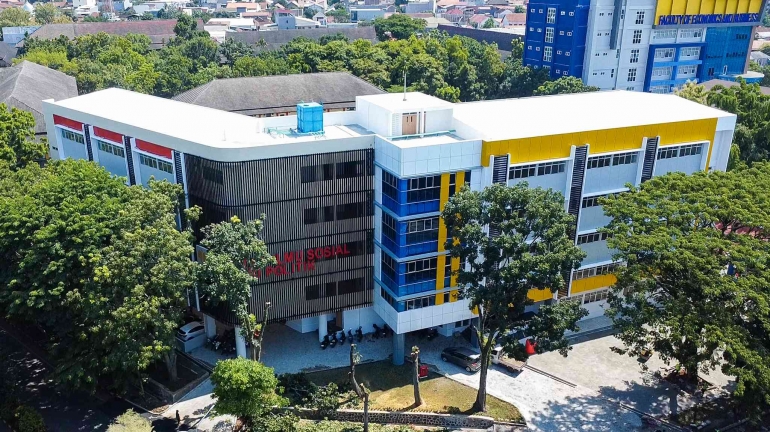
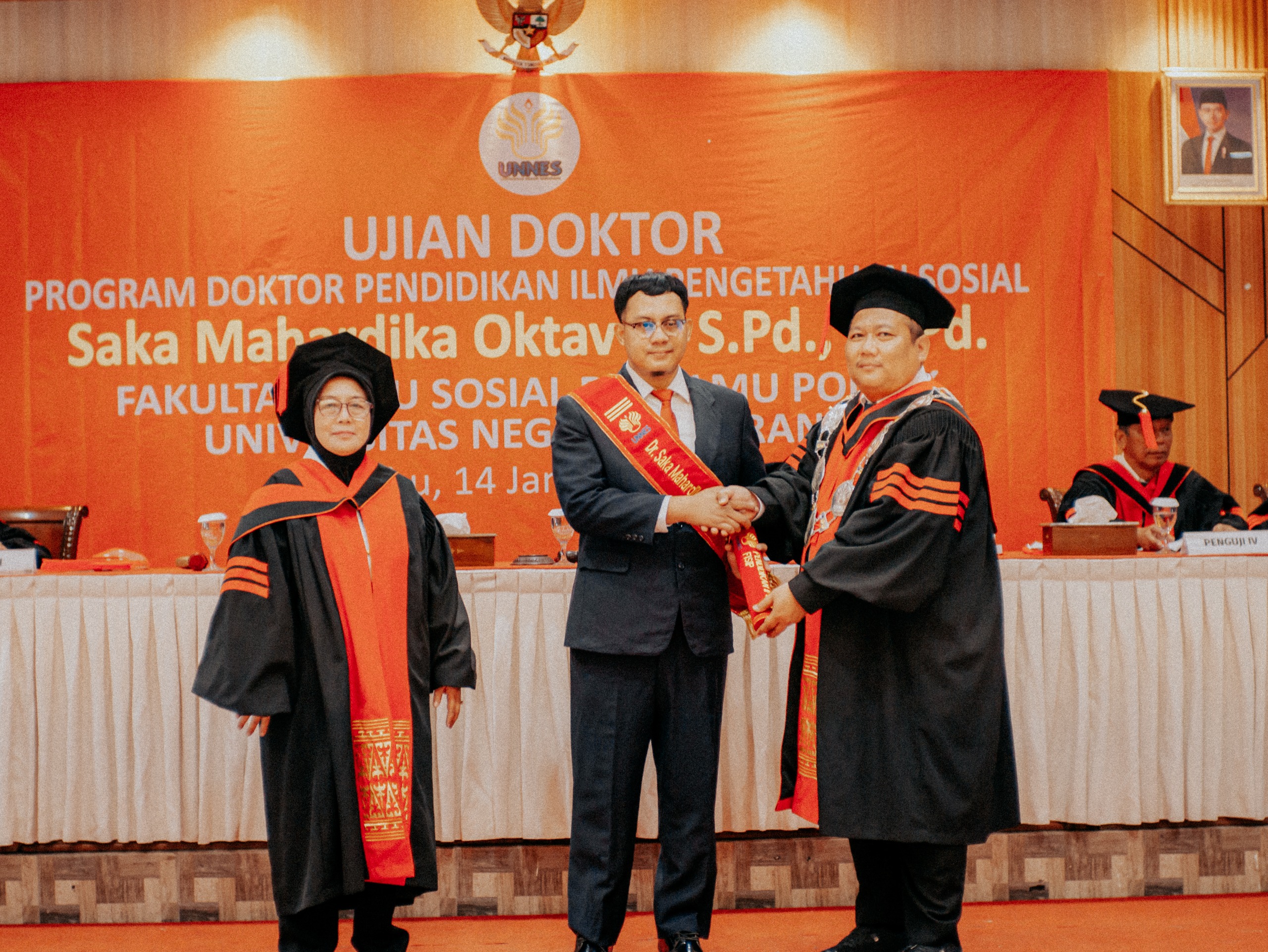
This finding was revealed in the doctoral dissertation of Saka Mahardika Oktav Nugraha, a PhD student in the Social Studies Education (PIPS) Program at the Graduate School of Universitas Negeri Semarang (Unnes). The dissertation was presented at an open doctoral defense held on Wednesday (Jan 14) at Aula C7, Faculty of Social and Political Sciences (FISIP), Unnes, Gunungpati, Semarang.

Saka’s research examines the religious lives of four mosque youth communities: Muhammadiyah, NU, Jamaah Tabligh, and the Indonesian Islamic Propagation Institute (LDII). The study shows that although differences exist in worship practices, lifestyles, and religious symbols, open conflict among these groups is relatively rare.

“Muhammadiyah and NU share strong social and cultural closeness. Differences are not perceived as threats, but as variations in religious expression,” Saka said during his presentation.

In terms of worship, differences such as the recitation of basmalah in prayer, the use of qunut, and the number of tarawih prayer cycles serve as markers of each community’s identity. However, Saka noted that potential conflict more often arises from shallow religious understanding among lay youth, rather than from cadres or elites with strong religious literacy.

“The closeness between Muhammadiyah and NU is reflected in mutual respect in social spaces. Jurisprudential differences are not brought into a blame-oriented discourse,” he explained.

From a lifestyle perspective, mosque youth also display differences in fashion, consumption patterns, and social activities. Nevertheless, these differences tend to function as identity symbols rather than sources of conflict. Tension emerges only when religious symbols are interpreted rigidly and exclusively.

The study also identifies two communication models effective in mitigating potential conflict: formal communication through discussions, seminars, and inter-community forums, and informal communication through everyday interactions, peer preaching, and humor.

Cross-organizational collaboration is also evident in social movements such as Germas Berkat in Semarang, which involves members of NU, Muhammadiyah, and LDII. “Organizational identities are set aside. The focus is on combating social ills, not on sectarian differences,” Saka said.

Chair of the Board of Examiners and Dean of FISIP Unnes, Prof. Arif Purnomo, announced that Saka had passed the examination and was officially awarded the title of Doctor of Education. Saka is recorded as the eighth doctoral graduate of FISIP Unnes, completing his studies in four years and five months.

“The dissertation received an A grade, with a cumulative GPA of 3.96 and a distinction of with highest honors,” Prof. Arif stated.

Dissertation supervisor Prof. Juhadi, M.Si., praised Saka’s sensitivity to humanitarian values, tolerance, and diversity. According to him, religious differences among mosque youth should be viewed not as threats, but as contextual learning resources for Social Studies Education.

“This is reflective and relevant Social Studies education in response to national challenges. Do not stop at the dissertation—develop it further into public policy formulation,” he advised.

Meanwhile, Saka expressed his gratitude to lecturers, family members, and colleagues for their support throughout his academic journey. “Life must bring benefits to others. This doctoral degree is a moral responsibility to continue strengthening dialogue and tolerance,” he concluded.
Related Posts

Leave a Reply

* Kode Akses Komentar:

* Tuliskan kode akses komentar diatas:

GDPR

  • Privacy Policy

Privacy Policy

At unnes.ac.id, the privacy of our visitors is of extreme importance to us. This privacy policy document outlines the types of personal information that is received and collected by unnes.ac.id and how it is used.

Log Files

Like many other Web sites, unnes.ac.id makes use of log files. The information inside the log files includes internet protocol (IP) addresses, type of browser, Internet Service Provider (ISP), date/time stamp, referring/exit pages, and number of clicks to analyze trends, administer the site, track user’s movement around the site, and gather demographic information. IP addresses and other such information are not linked to any information that is personally identifiable.

Cookies

unnes.ac.id uses cookies to store information about visitors’ preferences, to record user-specific information on which pages the site visitor accesses or visits, and to personalize or customize our web page content based upon visitors’ browser type or other information that the visitor sends via their browser.

Third-party ad servers or ad networks use technology in their respective advertisements and links that appear on unnes.ac.id and which are sent directly to your browser. They automatically receive your IP address when this occurs. Other technologies (such as cookies, JavaScript, or Web Beacons) may also be used by our site’s third-party ad networks to measure the effectiveness of their advertising campaigns and/or to personalize the advertising content that you see on the site.

unnes.ac.id has no access to or control over these cookies that are used by third-party advertisers.

You should consult the respective privacy policies of these third-party ad servers for more detailed information on their practices as well as for instructions about how to opt-out of certain practices. unnes.ac.id’s privacy policy does not apply to, and we cannot control the activities of, such other advertisers or web sites.

If you wish to disable cookies, you may do so through your individual browser options. More detailed information about cookie management with specific web browsers can be found at the browsers’ respective websites.

Consent

By using our website, you hereby consent to our privacy policy and agree to its terms.

Update

This Privacy Policy was last updated on: 2023-02-14. Should we update, amend or make any changes to our privacy policy, those changes will be posted here.

Contact Us

If you have any questions, comments, or concerns about our Privacy Policy or our practices with regards to your personal information, please feel free to contact us through the contact form on our website or by emailing us at humas[at]mail.unnes.ac.id.

This Privacy Policy is intended as a general guide to our practices in collecting and using information. If there is any inconsistency between this Privacy Policy and the terms of the Service Agreement or any other terms that may apply to specific services you use, then those specific service terms shall apply.

Terms of Use

By using our website, you agree to abide by this Privacy Policy. If you do not agree with this Privacy Policy, please do not use our website. We reserve the right to update this Privacy Policy from time to time without prior notice. Please review our Privacy Policy periodically to check for changes. Your continued use of our website following the posting of changes to this Privacy Policy means that you accept the changes.

Thank you for reading our Privacy Policy. We are committed to protecting the privacy of our website visitors and will continue to update our Privacy Policy to ensure optimal protection.