

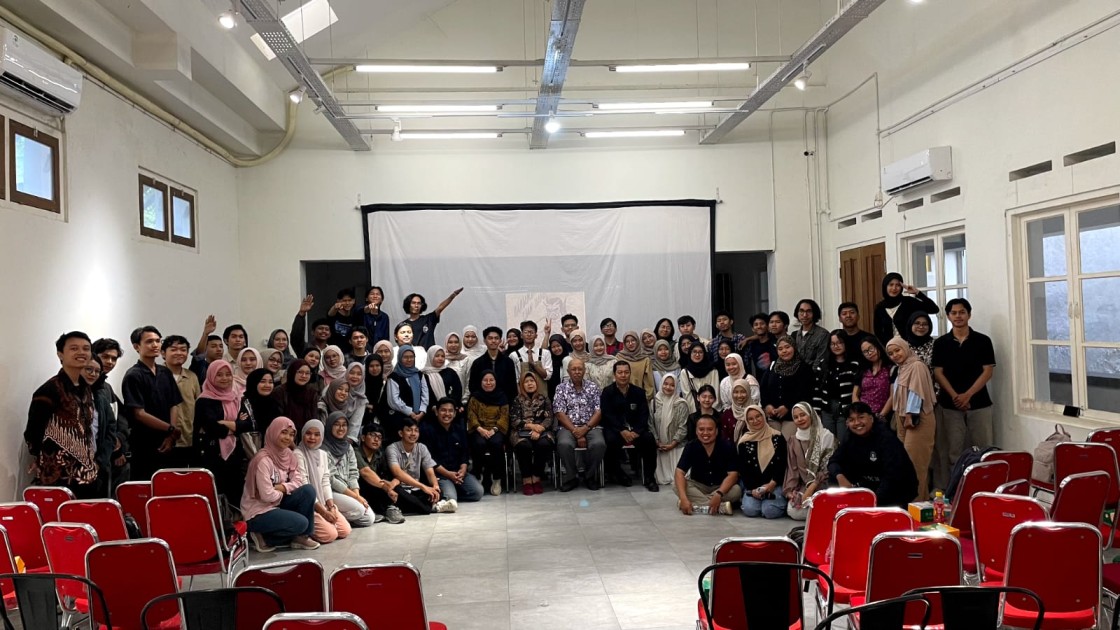
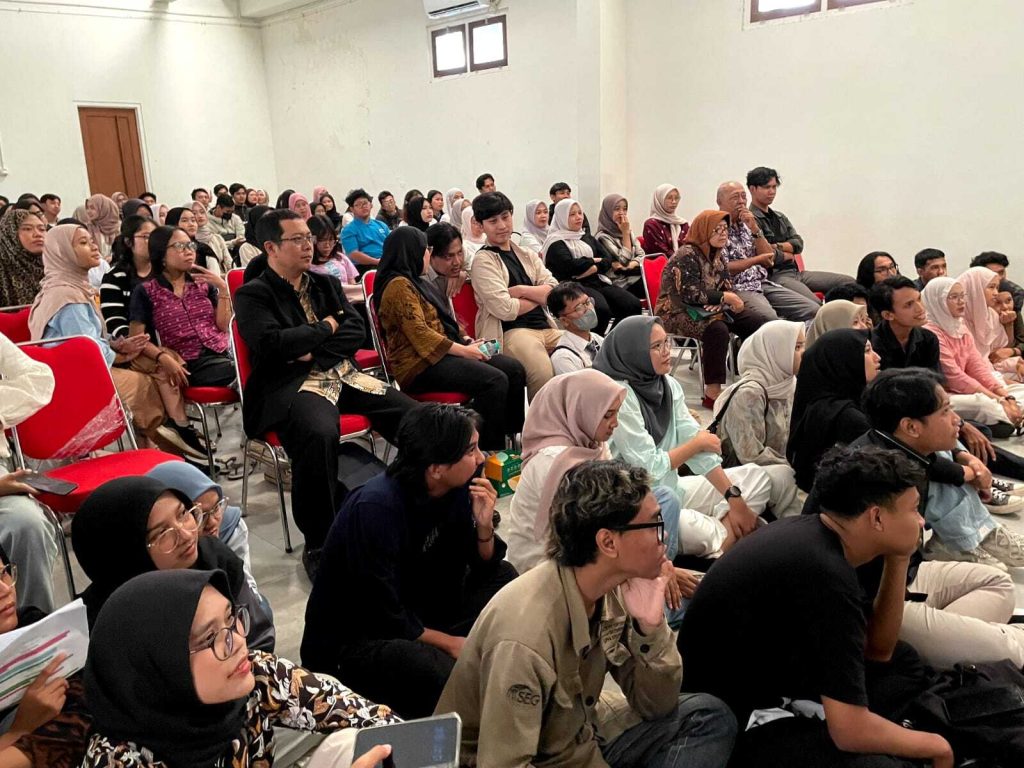
The Department of History organized History On Screen, a screening of short historical drama films produced by students, at Rumah Po Han in Semarang’s Old Town last Friday. The event was attended by around one hundred participants, including students and members of the general public.
History On Screen served as a meeting point between academia and the wider public through the medium of film. Public History lecturer Bambang Rakhmanto described the screening as a form of knowledge dissemination from classroom learning. According to him, film is a medium that is close to the public and therefore effective in introducing history to a broader audience.
“Through film, history is not only read but also felt. This makes it easier for the public to engage with and understand their own national history,” Bambang said.
Appreciation also came from Titiek Suliyati, a retired history lecturer, who congratulated the History Department of UNNES on the quality and courage of the students’ works. “The films are well-made and deeply moving,” she remarked.
Two historical drama films were screened during the event: Napak and Methuk. Napak, directed by Shelly, tells the story of a worker from Java who migrates to Sumatra in search of a better life. Instead of prosperity, he encounters discrimination—ironically not from foreigners, but from fellow Indonesians.
Shelly presents the issue of discrimination in a subtle manner through gestures, dismissive glances, and degrading language. She emphasizes that problems of social integration and ethnic differences—meant to be sources of national richness—continue to leave deep scars from the colonial period to the present day.
Meanwhile, Methuk, directed by Abrar Rizq Ramadhan, takes audiences back to Pemalang in 1943 during the Japanese military occupation. The film highlights the systematic deception of village women who were recruited as Jugun Ianfu. Without exploiting graphic violence, Methuk reveals how oppression operated through lies and the involvement of local power structures.
“Women are often excluded from the main stage of history,” Abrar said, stressing the importance of presenting perspectives that have long been marginalized.
Through History On Screen, students of the History Department at UNNES demonstrate that history can be communicated in ways that are reflective, critical, and deeply relevant to contemporary social issues.