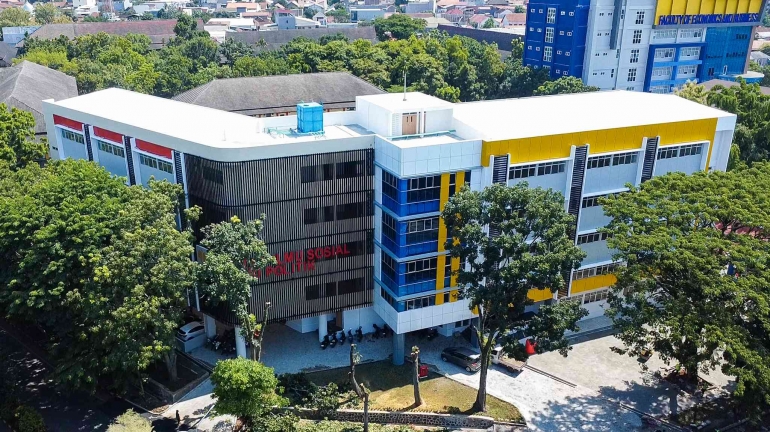


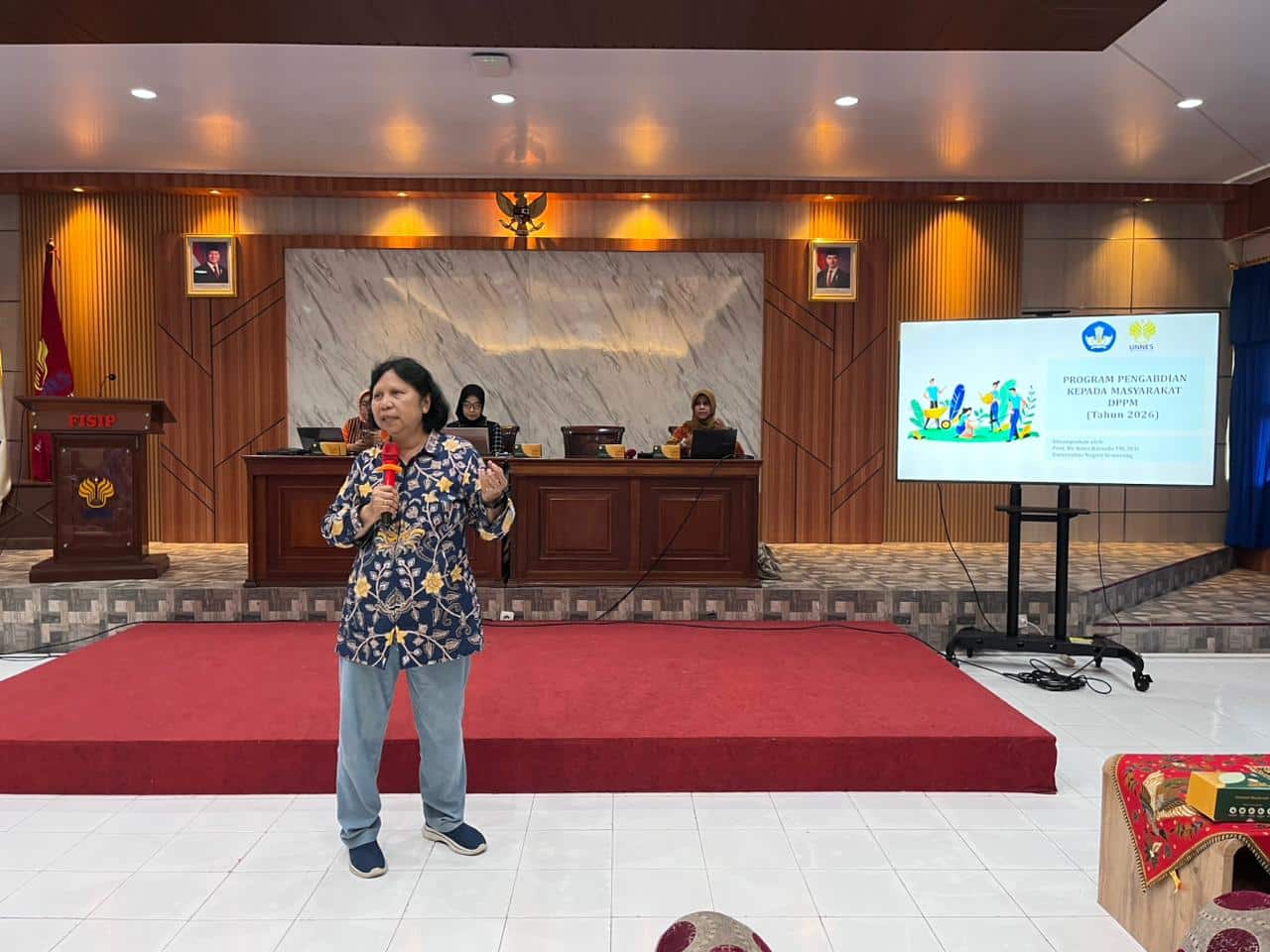
The Faculty of Social and Political Sciences (FISIP) of Universitas Negeri Semarang hosted the Socialization of the 2026 Research and Community Service Guidelines, funded by DPA LPPM UNNES and DPPM Kemdiktisaintek, on Wednesday, 19 November 2025, from 09.00 to 11.00 WIB at the C7 Building Hall, 3rd Floor, FISIP UNNES.
The event featured three speakers from the Institute for Research and Community Service (LPPM) UNNES: Prof. Dr. Nana Kariada Tri Martuti, M.Si.; Prof. Dr. Niken Subekti, M.Si.; dan Prof. Dr. Widya Hary Cahyati, S.KM., M.Kes.
During the session, the speakers presented the latest provisions for research and community service schemes, including proposal submission mechanisms, eligibility requirements for research teams, institutional obligations, mandatory outputs, and funding rules based on the official guidelines of DPA LPPM UNNES and DPPM Kemdiktisaintek. The discussion also highlighted important aspects such as proposal evaluation criteria, strategies for developing high-quality proposals, and efforts to strengthen a research culture aimed at producing reputable international publications and impactful innovation outcomes.
The program was attended by lecturers and academic staff preparing to submit research and community service proposals for the 2026 fiscal year. This socialization became a strategic step to ensure that all UNNES academics understand the latest funding regulations and are able to develop competitive, relevant, and policy-aligned proposals.
Aligned with the goals of the Sustainable Development Goals (SDGs), the socialization contributes to several global targets, including: (1) SDG 4 (Quality Education): by enhancing lecturers’ capacity in conducting research and community service based on scientific excellence; (2) SDG 9 (Industry, Innovation, and Infrastructure): by encouraging innovative research, prototype development, and knowledge dissemination to society; dan (3) SDG 16 (Peace, Justice, and Strong Institutions): by reinforcing transparent, accountable, and integrity-based governance of research and community service.
Through this initiative, UNNES reaffirms its commitment to strengthening academic excellence, enhancing research productivity, and ensuring meaningful contributions to sustainable development and community advancement.