Clean Water Innovation Offers Solution Amid Global Water Crisis

Universitas Negeri Semarang > Faculty of Social Sciences and Political Science > News > Clean Water Innovation Offers Solution Amid Global Water Crisis


Technological innovation that produces drinking water from air, known as the Atmospheric Water Maker (AWM), is seen as a strategic solution to help achieve Sustainable Development Goal 6 (SDG 6) ensuring universal access to clean water and adequate sanitation.

Around two billion people worldwide still lack access to safe drinking water, while 447 million students remain without proper clean water facilities. On Java Island, the availability of freshwater is becoming increasingly alarming.

According to Prof. Samsudin Anis, the inventor of AWM, the Earth’s atmosphere estimated to contain 13,000 km³ of water vapor offers vast potential for water generation through condensation. “The AWM works by drawing in humid air, cooling it below its dew point so that the vapor condenses into liquid, and then filtering the water to make it safe for drinking,” explained Prof. Anis.


“This technology performs best in hot and humid climates, where high vapor content and a dew point close to air temperature make condensation more efficient,” he added.

Key components of the system include a vapor compression refrigeration cycle, cooling coils, an air-intake fan, a collection tank, and dual air-and-water filtration units. The final water quality depends on the performance of each component and the efficiency of the purification system.

The AWM has undergone several development phases: Proto-1 (2019) focused on basic research, Proto-2 (2021) tested performance, Proto-3 (2022) measured water-production quality, and since 2023, the project has entered field-application and dissemination stages.

The technology contributes directly to SDG 6 targets, providing new water sources in drought-stricken or contaminated areas, offering sustainable alternatives to depleting freshwater supplies, and ensuring reliable drinking water during emergencies or supply disruptions.

With Java projected to face severe water scarcity where annual water availability per capita could drop from 1,169 m³ to just 476 m³ by 2040 innovations like AWM have become increasingly relevant.

Beyond AWM, other clean-water conservation technologies are also advancing, such as solar desalination systems, bimetallic nanoparticles for heavy-metal removal, IoT based irrigation and water management, and weather-modification techniques.

Meanwhile, Prof. Dewi Liesnoor Setyowati highlighted the importance of water conservation technology to maintain resource resilience amid climate change. Her research explores innovations such as rain harvesting, sensor-based smart irrigation, solar desalination, and integrated water management using GIS data. “Water conservation cannot rely solely on high-tech systems it must involve communities in sustainable water governance,” Prof. Dewi emphasized.

She noted that science-based and community-based approaches are crucial to mitigate the impacts of global warming, shifting rainfall patterns, and extreme droughts caused by El Niño and La Niña phenomena. “Technologies like AWM and smart-water systems are not just scientific tools; they are part of our national resilience strategy against the water crisis,” she added.

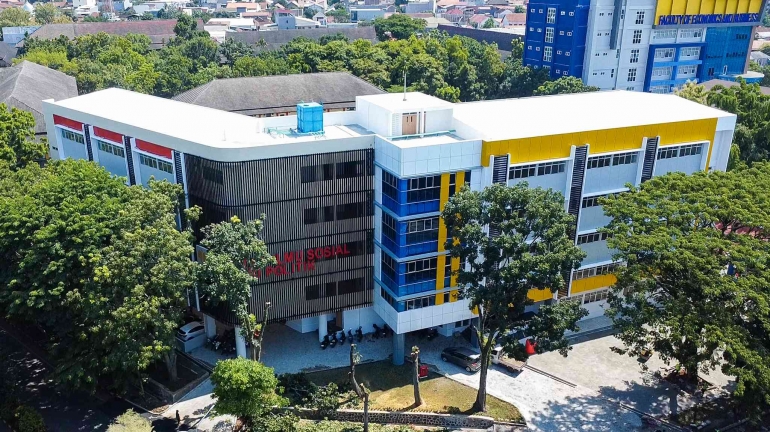
Both professors presented their research findings at the Water Symposium hosted by the Faculty of Social and Political Sciences (FISIP) of Universitas Negeri Semarang (UNNES) on Wednesday at the FISIP Auditorium, Gunungpati, Central Java.

The symposium brought together 82 research projects focusing on water sustainability, underscoring academia’s commitment to developing real-world solutions for Indonesia’s clean-water future.

Related Posts

Leave a Reply

* Kode Akses Komentar:

* Tuliskan kode akses komentar diatas:

GDPR

  • Privacy Policy

Privacy Policy

At unnes.ac.id, the privacy of our visitors is of extreme importance to us. This privacy policy document outlines the types of personal information that is received and collected by unnes.ac.id and how it is used.

Log Files

Like many other Web sites, unnes.ac.id makes use of log files. The information inside the log files includes internet protocol (IP) addresses, type of browser, Internet Service Provider (ISP), date/time stamp, referring/exit pages, and number of clicks to analyze trends, administer the site, track user’s movement around the site, and gather demographic information. IP addresses and other such information are not linked to any information that is personally identifiable.

Cookies

unnes.ac.id uses cookies to store information about visitors’ preferences, to record user-specific information on which pages the site visitor accesses or visits, and to personalize or customize our web page content based upon visitors’ browser type or other information that the visitor sends via their browser.

Third-party ad servers or ad networks use technology in their respective advertisements and links that appear on unnes.ac.id and which are sent directly to your browser. They automatically receive your IP address when this occurs. Other technologies (such as cookies, JavaScript, or Web Beacons) may also be used by our site’s third-party ad networks to measure the effectiveness of their advertising campaigns and/or to personalize the advertising content that you see on the site.

unnes.ac.id has no access to or control over these cookies that are used by third-party advertisers.

You should consult the respective privacy policies of these third-party ad servers for more detailed information on their practices as well as for instructions about how to opt-out of certain practices. unnes.ac.id’s privacy policy does not apply to, and we cannot control the activities of, such other advertisers or web sites.

If you wish to disable cookies, you may do so through your individual browser options. More detailed information about cookie management with specific web browsers can be found at the browsers’ respective websites.

Consent

By using our website, you hereby consent to our privacy policy and agree to its terms.

Update

This Privacy Policy was last updated on: 2023-02-14. Should we update, amend or make any changes to our privacy policy, those changes will be posted here.

Contact Us

If you have any questions, comments, or concerns about our Privacy Policy or our practices with regards to your personal information, please feel free to contact us through the contact form on our website or by emailing us at humas[at]mail.unnes.ac.id.

This Privacy Policy is intended as a general guide to our practices in collecting and using information. If there is any inconsistency between this Privacy Policy and the terms of the Service Agreement or any other terms that may apply to specific services you use, then those specific service terms shall apply.

Terms of Use

By using our website, you agree to abide by this Privacy Policy. If you do not agree with this Privacy Policy, please do not use our website. We reserve the right to update this Privacy Policy from time to time without prior notice. Please review our Privacy Policy periodically to check for changes. Your continued use of our website following the posting of changes to this Privacy Policy means that you accept the changes.

Thank you for reading our Privacy Policy. We are committed to protecting the privacy of our website visitors and will continue to update our Privacy Policy to ensure optimal protection.