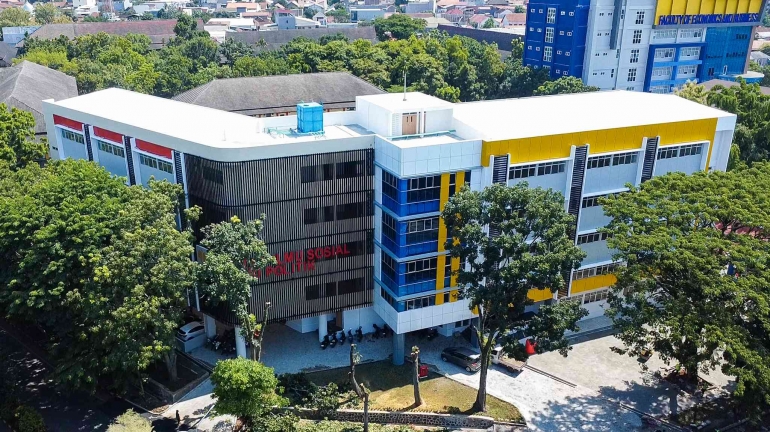


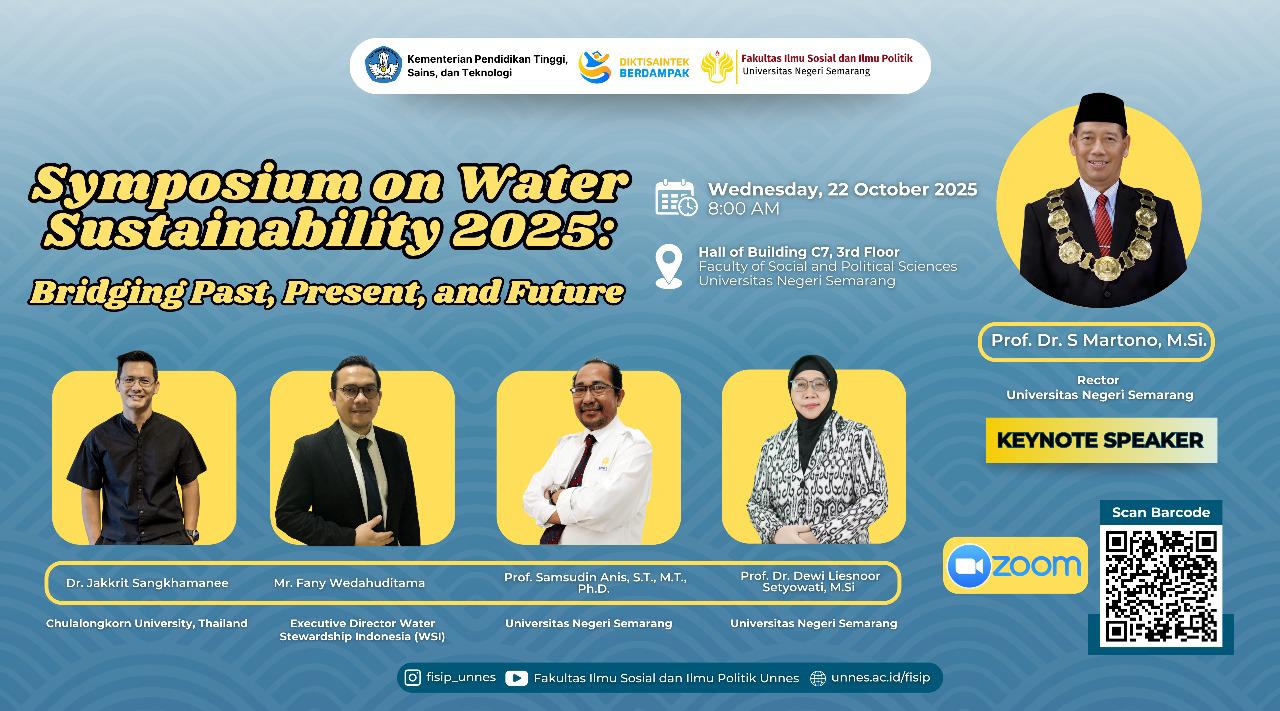
Water is not only the source of life but also a defining factor in the rise of human civilizations throughout history. Recognizing the vital role of sustainable water management, the Symposium on Water Sustainability 2025: Bridging Past, Present, and Future will take place at the C8 Hall, Faculty of Social and Political Sciences (FISIP), Universitas Negeri Semarang (UNNES), on Wednesday (October 22, 2025).
Carrying the theme “Bridging Past, Present, and Future,” the symposium gathers 82 researchers from across Indonesia and abroad to present their studies connecting water issues with various disciplines including social sciences, environmental studies, and public policy.
The organizing committee chair, Tsabit Azinar Ahmad, explained that the symposium features eight main thematic areas: Women’s Engagement in Water Usage, Water and Local Wisdom, Politics of Water Resources, Water, Disaster, and Climate Change, Water Sustainability, Water Access and Social Justice, Water History, and Water and Environmental Education. “The morning session will be dedicated to plenary discussions with keynote speakers, followed by parallel presentations in the afternoon,” Tsabit said on Tuesday (October 21, 2025).
Dean of FISIP UNNES, Prof. Arif Purnomo, described the symposium as a scholarly gathering that strengthens collaboration and highlights academic contributions toward achieving the Sustainable Development Goals (SDGs), particularly Goal 6 on clean water and sustainable sanitation.
“This symposium creates an interdisciplinary dialogue, enabling researchers to demonstrate how social sciences, politics, and public policy can contribute to fair and sustainable water governance,” he noted.
The symposium also features an international guest speaker, Jakkrit Sangkhamanee from Chulalongkorn University, Thailand, and Fany Wedahuditama, Executive Director of Water Stewardship Indonesia (WSI). Both will share insights on Southeast Asia’s water management challenges amid climate change and social inequality.
The outcomes of the symposium will be compiled into a scholarly volume to be published by an international publisher, serving as a lasting contribution to global efforts in promoting inclusive and sustainable water governance.