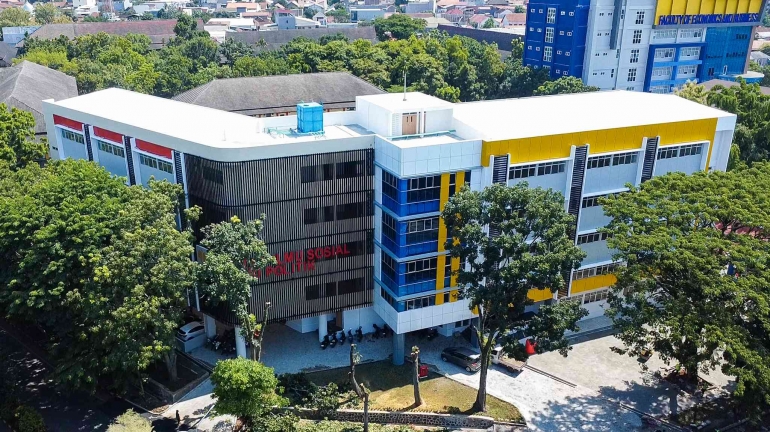


A total of 91 students and four lecturers from the Social Studies Education Program (PIPS), Faculty of Social Sciences and Political Science, Universitas Negeri Semarang (UNNES), carried out the Social Phenomenon Study I at the Banyu Bening Rainwater School in Yogyakarta on Wednesday, October 15, 2025. This activity served as a form of community-based learning that emphasizes environmental conservation and the preservation of local wisdom.
The group was warmly welcomed by the founder of the Rainwater School, who introduced the concept of “A school by the people, for the people” — a community education initiative that utilizes rainwater as a source of life and a symbol of harmony between humans and nature. The accompanying lecturers expressed appreciation for the warm welcome and reaffirmed that the activity aligns with UNNES’s vision as a conservation-oriented university. “Students are encouraged to learn directly from communities that have implemented meaningful water conservation practices in simple yet effective ways,” said one of the lecturers.

The program began with the Indonesian national anthem, a joint prayer, and a presentation on rainwater management practices at the Banyu Bening community. Students then participated in interactive discussions about rainwater utilization, from purification processes to social acceptance among residents. The hosts explained that successful water conservation depends not only on technology but also on ecological awareness and a shift in mindset toward nature.
During the practical session, students learned about rainwater therapy procedures, including collection, filtration, and quality testing. They also had the opportunity to taste the purified rainwater and simulate its use in daily activities such as handwashing, gargling, and watering plants. Many expressed surprise that rainwater could become clean and refreshing when processed properly.
The visit concluded with a group photo and a cheerful chant, “Rainwater Blessings, Blessings, Blessings!” symbolizing collaboration between students and the local community. Through this activity, UNNES students not only broadened their social and ecological perspectives but also practiced the university’s core values of conservation. This initiative aligns with the Conservation Vision of UNNES and contributes to the achievement of the Sustainable Development Goals (SDGs), particularly Goal 6 (Clean Water and Sanitation) and Goal 13 (Climate Action).