

Rector of Universitas Negeri Semarang (UNNES) Prof. S. Martono officially inaugurated 27 smart classrooms spread across all faculties and the Graduate School. The ceremony was held virtually from the Sekaran Campus, Gunungpati, Semarang.
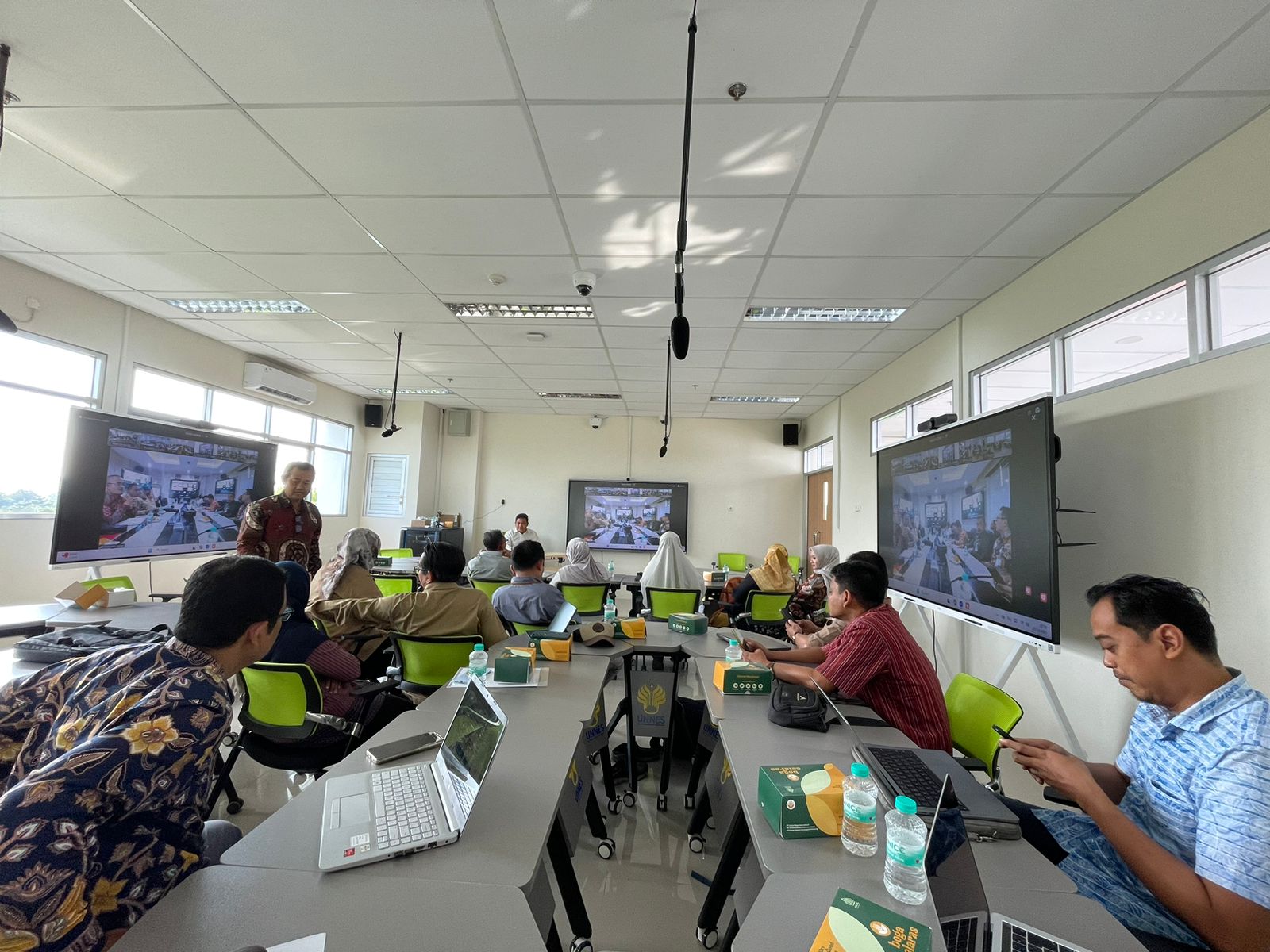
Among the newly launched facilities, the Faculty of Social and Political Sciences (FISIP) operates two smart classrooms and one collaborative smart classroom. The collaborative room is equipped with advanced learning tools, including an interactive smart board, eight cameras, and four microphones. These facilities support on-site, synchronous, and remote learning modes.
Prof. Martono emphasized that the new facilities should be fully utilized to enhance the quality of teaching and learning. He said the university expects every faculty to make the most of the innovation, adding, “Make the best use of these tools for teaching and learning. If the collaborative smart classroom operates well this year, we will continue to expand the program,” on Tuesday (October 7, 2025).
The smart classrooms are designed to promote interactive and dynamic learning. Students can engage through smart board presentations that are interconnected across classrooms, allowing simultaneous discussions between locations. The microphone system enables every participant’s voice to be clearly heard, ensuring effective communication and collaborative learning experiences.
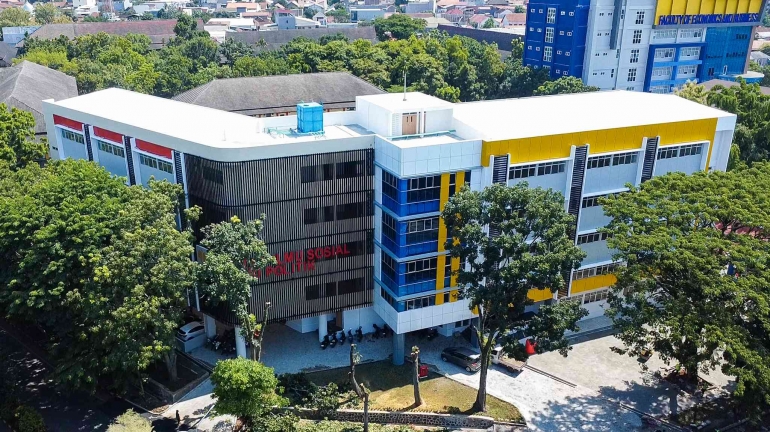
Located on the fifth floor of Building C8 in Sekaran, Gunungpati, the FISIP smart classroom can accommodate up to 30 students. The person in charge, Dimas Anggoro, explained that the room can be used by all study programs within the faculty. He noted that, “The number of smart classrooms is still limited, so lecturers who wish to use them must make a booking in advance.”
According to Dimas, the collaborative smart classroom connects different classes in real time, allowing question-and-answer sessions across locations. This creates a more immersive and equitable learning atmosphere for students.
Prof. Martono added that all smart classrooms across UNNES are now operational and ready to support the university’s blended learning approach. He explained that these facilities are part of a broader effort to establish an interactive learning ecosystem based on digital technology and data-driven education. He also said that if the current implementation proves successful, the university plans to increase the number each year, targeting 50 percent of all classrooms to become smart classrooms.
Through these innovations, UNNES aims to create a modern and competitive academic environment that integrates technology and learning excellence on an international scale.