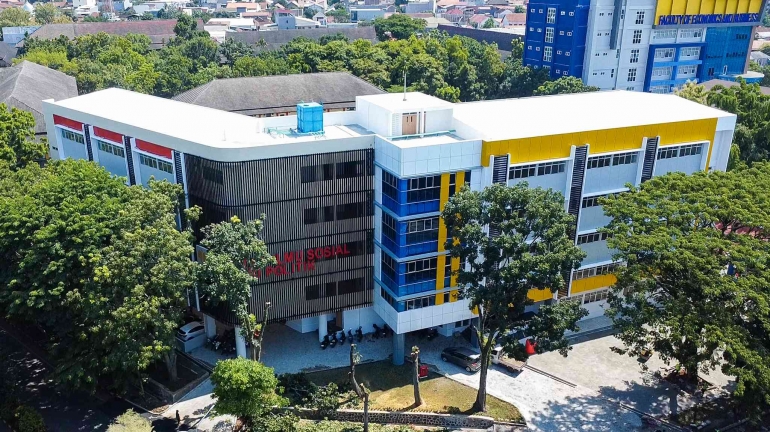


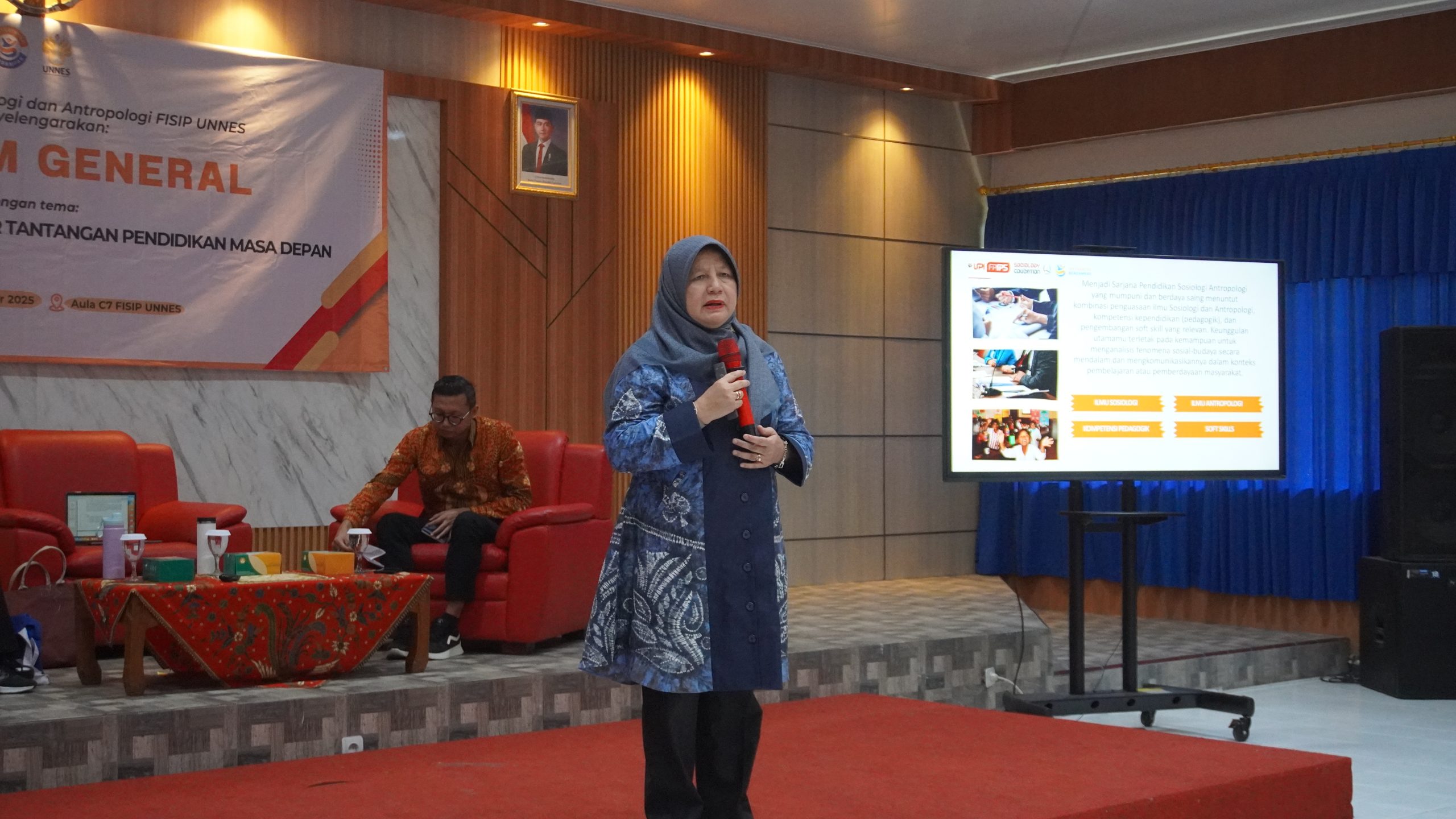
Semarang, October 2, 2025 – The Faculty of Social Sciences and Political Science (FISIP), Universitas Negeri Semarang (UNNES), hosted a Public Lecture in conjunction with the National Congress of the Indonesian Association of Sociology Educators and Researchers (AP3SI). Carrying the theme “Teachers and Generation Alpha: Measuring the Challenges of Future Education,” the event took place at the C7 Auditorium, 3rd Floor, FISIP UNNES. Two distinguished speakers, Prof. Dr. Elly Malihah, M.Si. from Universitas Pendidikan Indonesia and Endah Septiani, S.Pd., M.Pd., shared their insights with academics, students, and education practitioners on the role of teachers in navigating the evolving landscape of digital-era education.
In her presentation, Prof. Elly Malihah emphasized the importance of equipping prospective graduates of Sociology and Anthropology Education with strong academic, pedagogical, and soft skills to remain competitive. “The main strength of Sociology and Anthropology graduates lies in their ability to critically analyze socio-cultural phenomena while connecting them with real learning contexts in society,” she explained. She also underlined the need for graduates to master research methodology, develop digital-based learning innovations, and build professional networks to stay relevant in an ever-changing world.

Meanwhile, Endah Septiani highlighted the unique characteristics of Generation Alpha—the future learners born into the digital ecosystem. She stressed that teachers must go beyond being mere educators to become coaches and role models. “Future teachers cannot rely solely on textbooks. Generation Alpha needs teachers who can serve as a compass amid the rapid currents of change — and that compass might just be in your hands,” she remarked passionately. According to her, technological disruption, the digital divide, and the social-emotional challenges of Gen Alpha require teachers to be adaptive, human-centered, and technologically literate, seeing technology as a partner rather than a threat in education.
The event underscored the urgency of developing a new paradigm of education that not only prepares students for employment but also contributes to the formation of civilization. The synergy among lecturers, students, and education practitioners in this forum is expected to produce innovative strategies for addressing the increasing complexity of modern education. With AP3SI serving as a professional platform, academic discussions such as this play a crucial role in cultivating globally competitive educators grounded in national values.
This activity also aligns with the Sustainable Development Goals (SDGs), particularly Goal 4: Quality Education, by strengthening teachers’ competencies to meet the needs of the digitally native future generation. Moreover, the collaboration between universities and professional associations reflects Goal 17: Partnerships for the Goals, emphasizing the importance of cross-institutional cooperation in promoting inclusive, relevant, and sustainable education. Thus, this event serves not only as an academic forum but also as a tangible contribution to the global development agenda.