Emansipasi Perempuan dalam Surat-Surat Kartini

Universitas Negeri Semarang > Faculty of Social Sciences and Political Science > News > Emansipasi Perempuan dalam Surat-Surat Kartini

“Tuhan! Tuhan! Tuhan! Haruskah keadaan seperti ini berlangsung selamanya? Haruskah perempuan dengan demikian selamanya, selamanya direndahkan dan diinjak-injak? Tidak! Tidak! Itu harus berakhir. Satu awal dari “akhir harus dibuat”, harus!”

Penggalan kalimat di atas merupakan kutipan surat dari Pahlawan Nasional Raden Ajeng Kartini untuk  sahabat penanya yang Bernama Mr. Jacques Henrij (JH) Abendanon. Kartini menuangkan pemikirannya dalam surat yang ditulisnya pada tujuh Oktober 1900.

Dalam surat itu, dia ingin memperjuangkan emansipasi Wanita di tanah kelahirannya. “Saya akan mati dengan bahagia, karena jalan itu sudah terbuka, dan aku telah membantu mendobrak jalan menuju kebebasan dan kemerdekaan perempuan Pribumi.” tulis Kartini.

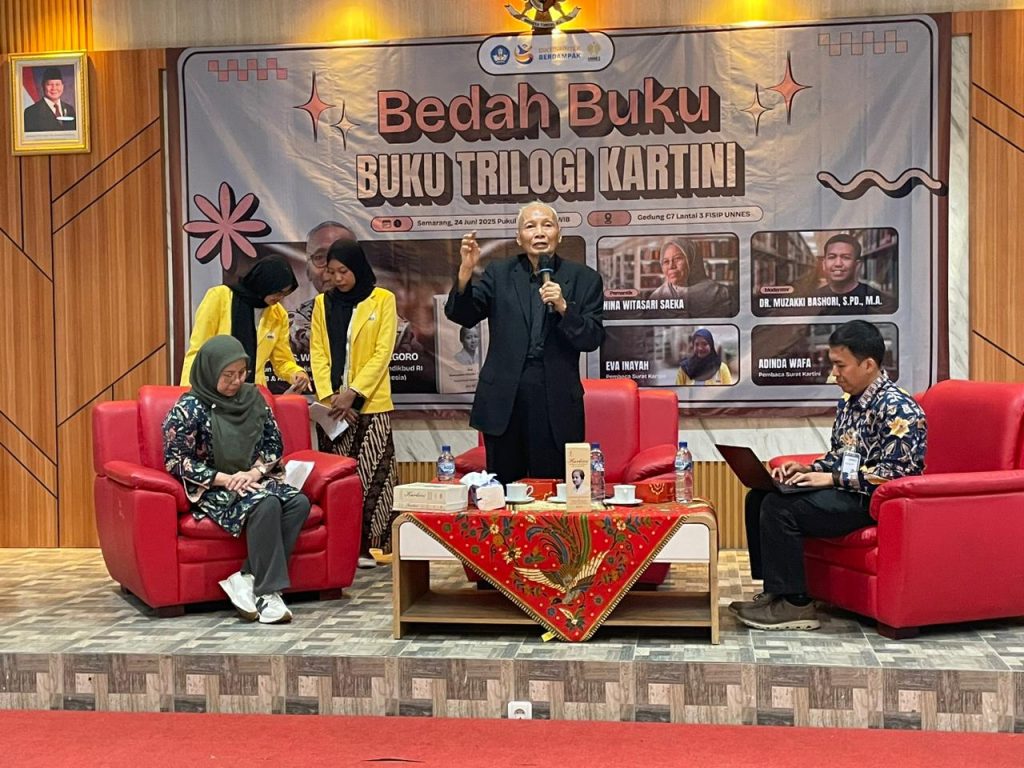
Kutipan surat Kartini itu dibacakan oleh Adinda Wafa, mahasiswi Sejarah semester dua, dalam acara Bedah Buku Trilogi Kartini terbitan Buku Obor, di Aula FISIP UNNES, Sekaran, Gunungpati, Semarang, Selasa, 24 Juni 2025. Kegiatan tersebut diselenggarakan S2 Kajian Sejarah, dan Ilmu Sejarah FISIP UNNES.
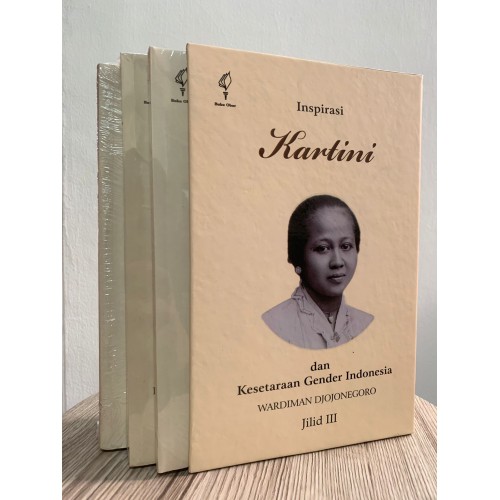
Semasa hidup, Kartini diperkirakan telah menulis sekitar 400 pucuk surat yang diantaranya dikirim untuk sahabat-sahabat penanya yang tinggal di Belanda.  Dari surat-surat yang telah ditulis Kartini itu, 179 surat berhasil dikumpulkan dan disusun dalam buku Trilogi Kartini  oleh Menteri Pendidikan dan Kebudayaan 1993-1998 Wardiman Djojonegoro.

 Wardiman saat ini memecahkan rekor membukukan surat-surat Kartini ini dalam jumlah paling banyak. “Jumlah ini paling banyak dibandingkan dengan buku yang ada di Belanda, dan ada surat-surat yang belum dipublikasikan di sana,” ucap Wardiman, yang baru memasuki usia 91 tahun pada 22 Juni lalu.

Sebelumnya surat-surat Kartini juga telah dipublikasikan oleh penerima surat Kartini yaitu Mr. JH Abendanon pada 1911. Kumpulan surat itu diberi judul Door Duisternis Tot Licht: Gedachten over en voor het Javaanische volk, dalam bahasa Indonesia yaitu  Habis Gelap Terbitlah Terang: Renungan Tentang dan mengenai bangsa Jawa.

Buku Kumpulan surat-surat kartini tersebut diminati banyak orang, sehingga dicetak ulang Kembali pada  1912. Jumlah surat yang terdapat dalam buku tersebut lebih sedikit dari koleksi Wardiman yaitu sebanyak 105 surat.

Dosen S2 Kajian Sejarah dan Ilmu Sejarah, Nina Witasari Saeka, mengatakan surat-surat Kartini tersebut dapat dijadikan sumber sejarah.  “Surat-surat (Kartini) bukan sekedar sumber pengetahuan tapi juga menjelaskan kerangka berpikirnya dalam memahami rakyat bumiputra.” kata Nina.

Dalam kesempata itu, Dekan FISIP UNNES, Prof. Arif Purnomo menyampaikan setiap masa memiliki tokohnya masing-masing. “Di masa awal 1900 ada, Raden Ajeng Kartini yang memerpjuangkan persamaan hak untuk Perempuan,” kata Prof. Arif.

Wardiman menceritakan butuh waktu dua tahun untuk menerjemahkan surat-surat Kartini dari bahasa Belanda ke bahasa Indonesia. Untuk mendapatkan  surat-surat itu, Wardiman  mencarinya langsung ke negeri kincir angin.

Selama riset di Belanda, Wardiman menemukan surat Kartini yang masih tercecer di Arsip Nasional Belanda. Surat yang ditemukannya itu berjumlah sebanyak sembilan pucuk surat yang ditujukan kepada Mien Bosch Djajadiningrat. Kemudian sepucuk surat lagi di KITLV yang ditujukan kepada HH van Kol.
Related Posts

Leave a Reply

* Kode Akses Komentar:

* Tuliskan kode akses komentar diatas:

GDPR

  • Privacy Policy

Privacy Policy

At unnes.ac.id, the privacy of our visitors is of extreme importance to us. This privacy policy document outlines the types of personal information that is received and collected by unnes.ac.id and how it is used.

Log Files

Like many other Web sites, unnes.ac.id makes use of log files. The information inside the log files includes internet protocol (IP) addresses, type of browser, Internet Service Provider (ISP), date/time stamp, referring/exit pages, and number of clicks to analyze trends, administer the site, track user’s movement around the site, and gather demographic information. IP addresses and other such information are not linked to any information that is personally identifiable.

Cookies

unnes.ac.id uses cookies to store information about visitors’ preferences, to record user-specific information on which pages the site visitor accesses or visits, and to personalize or customize our web page content based upon visitors’ browser type or other information that the visitor sends via their browser.

Third-party ad servers or ad networks use technology in their respective advertisements and links that appear on unnes.ac.id and which are sent directly to your browser. They automatically receive your IP address when this occurs. Other technologies (such as cookies, JavaScript, or Web Beacons) may also be used by our site’s third-party ad networks to measure the effectiveness of their advertising campaigns and/or to personalize the advertising content that you see on the site.

unnes.ac.id has no access to or control over these cookies that are used by third-party advertisers.

You should consult the respective privacy policies of these third-party ad servers for more detailed information on their practices as well as for instructions about how to opt-out of certain practices. unnes.ac.id’s privacy policy does not apply to, and we cannot control the activities of, such other advertisers or web sites.

If you wish to disable cookies, you may do so through your individual browser options. More detailed information about cookie management with specific web browsers can be found at the browsers’ respective websites.

Consent

By using our website, you hereby consent to our privacy policy and agree to its terms.

Update

This Privacy Policy was last updated on: 2023-02-14. Should we update, amend or make any changes to our privacy policy, those changes will be posted here.

Contact Us

If you have any questions, comments, or concerns about our Privacy Policy or our practices with regards to your personal information, please feel free to contact us through the contact form on our website or by emailing us at humas[at]mail.unnes.ac.id.

This Privacy Policy is intended as a general guide to our practices in collecting and using information. If there is any inconsistency between this Privacy Policy and the terms of the Service Agreement or any other terms that may apply to specific services you use, then those specific service terms shall apply.

Terms of Use

By using our website, you agree to abide by this Privacy Policy. If you do not agree with this Privacy Policy, please do not use our website. We reserve the right to update this Privacy Policy from time to time without prior notice. Please review our Privacy Policy periodically to check for changes. Your continued use of our website following the posting of changes to this Privacy Policy means that you accept the changes.

Thank you for reading our Privacy Policy. We are committed to protecting the privacy of our website visitors and will continue to update our Privacy Policy to ensure optimal protection.