Sejarah sebagai Jalan Memahami Identitas Diri dan Kolektif

Universitas Negeri Semarang > Faculty of Social Sciences and Political Science > News > Sejarah sebagai Jalan Memahami Identitas Diri dan Kolektif

Ada berbagai cara untuk mendekatkan pelajaran sejarah dengan peserta didik. Diantaranya menghapus jarak pelajaran tersebut dengan upaya mencari hubungan mereka dengan sejarah yang dipelajari.


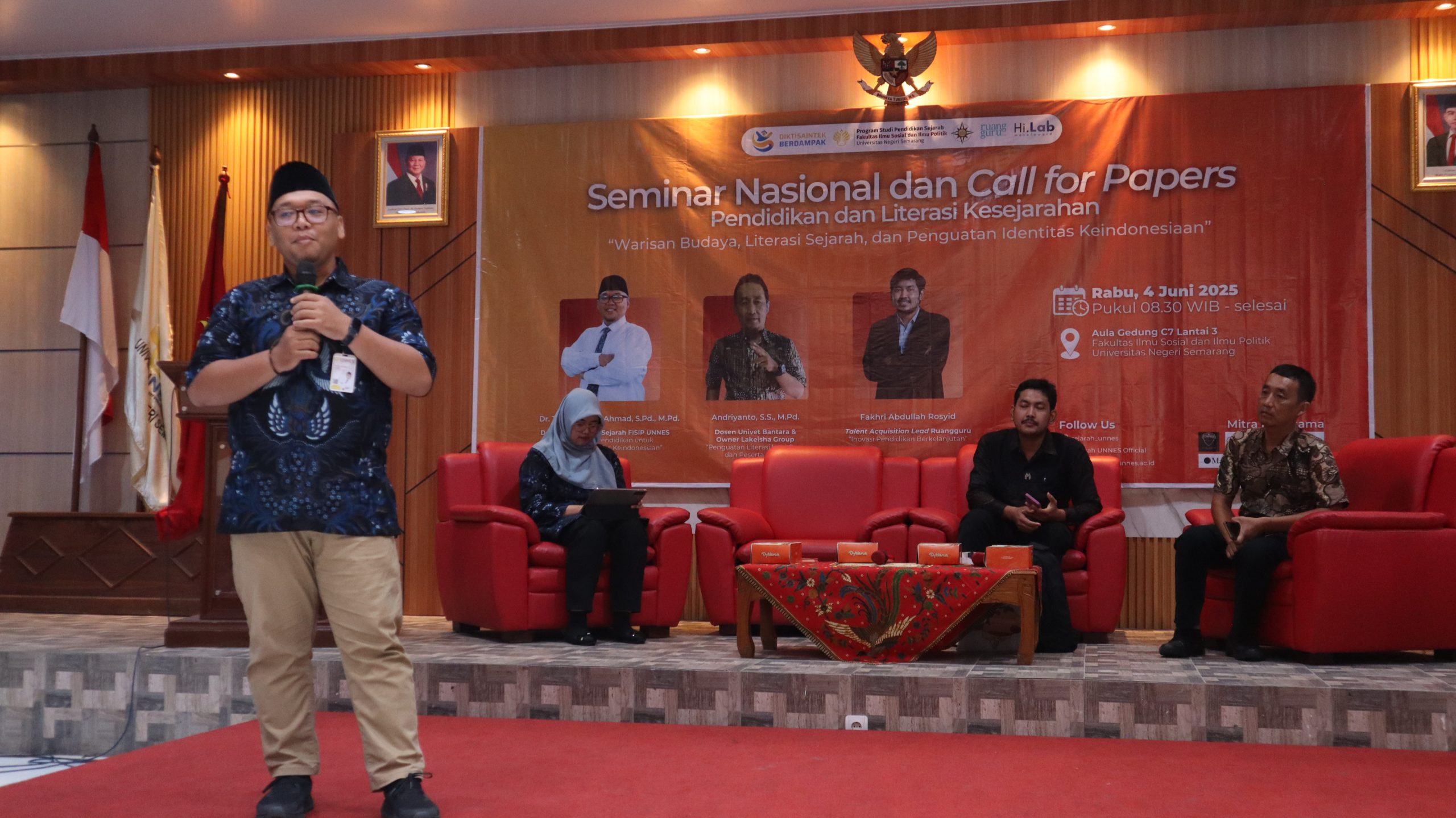
Tsabith Azinar Ahmad, dosen Pendidikan Sejarah FISIP memliki cara agar peserta didik tertarik untuk belajar sejarah.”Sejarah tidak hanya mencatat masa lalu, tetapi menyingkap siapa kita dan kemana arah kita melangkah.” kata Tsabith, dalam Seminar Nasional Pendidikan dan Literasi Kesejarahan, di Aula FISIP, Semarang, Rabu, 4 Juni 2025.


Sejarah adalah representasi identitas sebuah kesadaran bahwa “saya ada” dan diakui keberadaannya. Ia menekankan, kesadaran kolektif atas keberagaman dan nilai-nilai bangsa Indonesia menjadi fondasi penting dalam merancang masa depan bersama.


Pengetahuan Sejarah juga dapat diperkuat dengan peristiwa yang terjadi di masa lau.“Sejarah berperan sebagai landasan memori kolektif. Ia membentuk imagined communities, mengikat kebersamaan dalam simbol-simbol seperti Sumpah Pemuda, proklamasi, dan para pahlawan nasional.” tutur Tsabith.


Menurutnya, sejarah Indonesia tidak semata dimulai pada 17 Agustus 1945, melainkan jauh sebelumnya. “Indonesia sudah eksis sejak masa prasejarah. Maka sejarah punya tugas penting untuk mengenalkan siapa sejatinya kita,” terang lulusan S3 Universitas Pendidikan Indonesia (UPI) ini.


Sementara itu, peran literasi sejarah dalam dunia pendidikan turut digaris bawahi oleh Andriyanto, pendiri Lakeisha Group—sebuah penerbit yang fokus pada pengembangan sumber belajar. “Penerbit berperan strategis dalam penguatan literasi sejarah, mulai dari produksi konten hingga penyediaan akses pengetahuan yang inklusif dan kontekstual,” ujarnya.


Andriyanto menilai, buku pelajaran sejarah seharusnya tidak bersifat tunggal dan seragam. Sebaliknya, harus menghadirkan keberagaman perspektif melalui pendekatan lokalitas. “Kami mendorong sumber belajar yang relevan, baik dalam bentuk cetak, digital, maupun berbasis sejarah lokal. Tujuannya agar siswa bisa meningkatkan kemampuan membaca, menulis, dan berpikir kritis,” tutur dia.


Ia menambahkan, inklusif berarti melibatkan banyak pihak dalam produksi konten, sementara kontekstual berarti relevan dengan kurikulum dan dinamika lokal yang hidup. “Kami ingin literasi sejarah menjadi alat transformasi pendidikan,” ucapnya.


Pandangan serupa disampaikan Fakhri Abdullah Rosyid, Talent Acquisition Lead di Ruangguru. Menurutnya, pendidikan abad ke-21 menuntut guru berperan sebagai fasilitator, bukan lagi pusat pengetahuan. “Melalui pendekatan project-based learning, guru mendorong siswa untuk aktif dan kreatif menyelesaikan masalah. ,” kata Fakhri.


Ia menegaskan pentingnya motivasi belajar dalam penggunaan teknologi digital dalam strategi mengajar yang efektif. “Motivasi menjadi kunci utama dalam keberhasilan belajar. Kalau siswa tidak termotivasi, maka teknologi secanggih apapun tidak akan berdampak.”ucapnya.


Dekan FISIP Prof. Arif Purnomo menegaskan sejarah penting penting bagi semuanya. “Sejarah jangan hanya dijadikan legitimasi, ketika ada masalah sejarah dijadikan legitimiasi, sejarah jalan kita menuju masa yang akan datang, jangan sampai kita jatuh pada masalah yang sama untuk ke dua kali.” tegasnya.


Dalam rangkaian kegiatan tersebut juga diadakan pendandatangan surat kerjasama Pendidikan Sejarah FISIP UNNES dengan Ruangguru. Isi kerjasamanya yaitu dalam bidang pengembangan pendidikan dan rekrutmen SDM.


Kegiatan seminar nasional itu ditutup dengan pemaparan oleh peserta yang telah mendftarkan mekalahnya dalam kegiatan tersebut. Jumlah penelitian yang terdaftar sebanyak 60 judul. Seluruhnya nanti akan dibuat menjadi Kumpulan publikasi ilmiah dalam bentuk prosiding.
Related Posts

Leave a Reply

* Kode Akses Komentar:

* Tuliskan kode akses komentar diatas:

GDPR

  • Privacy Policy

Privacy Policy

At unnes.ac.id, the privacy of our visitors is of extreme importance to us. This privacy policy document outlines the types of personal information that is received and collected by unnes.ac.id and how it is used.

Log Files

Like many other Web sites, unnes.ac.id makes use of log files. The information inside the log files includes internet protocol (IP) addresses, type of browser, Internet Service Provider (ISP), date/time stamp, referring/exit pages, and number of clicks to analyze trends, administer the site, track user’s movement around the site, and gather demographic information. IP addresses and other such information are not linked to any information that is personally identifiable.

Cookies

unnes.ac.id uses cookies to store information about visitors’ preferences, to record user-specific information on which pages the site visitor accesses or visits, and to personalize or customize our web page content based upon visitors’ browser type or other information that the visitor sends via their browser.

Third-party ad servers or ad networks use technology in their respective advertisements and links that appear on unnes.ac.id and which are sent directly to your browser. They automatically receive your IP address when this occurs. Other technologies (such as cookies, JavaScript, or Web Beacons) may also be used by our site’s third-party ad networks to measure the effectiveness of their advertising campaigns and/or to personalize the advertising content that you see on the site.

unnes.ac.id has no access to or control over these cookies that are used by third-party advertisers.

You should consult the respective privacy policies of these third-party ad servers for more detailed information on their practices as well as for instructions about how to opt-out of certain practices. unnes.ac.id’s privacy policy does not apply to, and we cannot control the activities of, such other advertisers or web sites.

If you wish to disable cookies, you may do so through your individual browser options. More detailed information about cookie management with specific web browsers can be found at the browsers’ respective websites.

Consent

By using our website, you hereby consent to our privacy policy and agree to its terms.

Update

This Privacy Policy was last updated on: 2023-02-14. Should we update, amend or make any changes to our privacy policy, those changes will be posted here.

Contact Us

If you have any questions, comments, or concerns about our Privacy Policy or our practices with regards to your personal information, please feel free to contact us through the contact form on our website or by emailing us at humas[at]mail.unnes.ac.id.

This Privacy Policy is intended as a general guide to our practices in collecting and using information. If there is any inconsistency between this Privacy Policy and the terms of the Service Agreement or any other terms that may apply to specific services you use, then those specific service terms shall apply.

Terms of Use

By using our website, you agree to abide by this Privacy Policy. If you do not agree with this Privacy Policy, please do not use our website. We reserve the right to update this Privacy Policy from time to time without prior notice. Please review our Privacy Policy periodically to check for changes. Your continued use of our website following the posting of changes to this Privacy Policy means that you accept the changes.

Thank you for reading our Privacy Policy. We are committed to protecting the privacy of our website visitors and will continue to update our Privacy Policy to ensure optimal protection.