

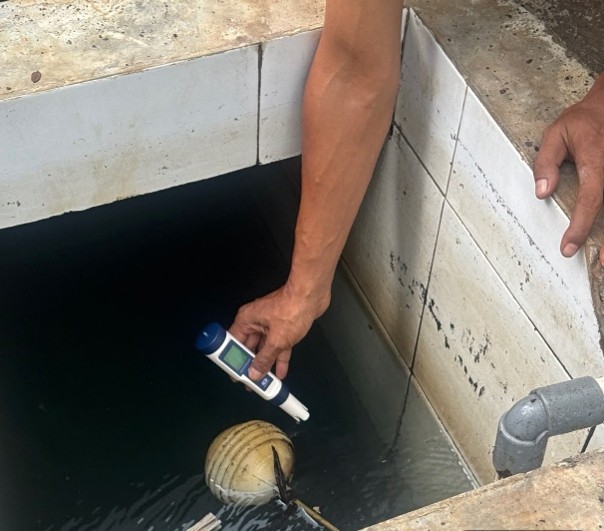
The environmental management team of the Faculty of Languages and Arts (FBS) at Universitas Negeri Semarang (UNNES) carried out a water quality monitoring activity on 17 September 2025. The initiative forms part of FBS’s ongoing efforts to maintain environmental quality while reducing the risk of pollution that could affect soil and groundwater sources around the campus.
In its implementation, FBS faces a particular challenge as it currently lacks specialized technology for waste treatment. Nevertheless, institutionally, FBS has established policies, processes, and practices related to waste disposal that remain a shared concern. Various measures have been taken to ensure environmental management continues to align with conservation principles, including the formation of a team to manage environmental issues, a waste sorting program, and regular water quality monitoring.
The water quality monitoring aims to reduce the danger of toxic contamination of soil and groundwater. Through routine monitoring, FBS can assess water quality conditions, identify potential pollution, and determine necessary preventive measures. This activity also embodies the rector’s regulation with conservation characteristics, ensuring that environmental management is not merely a technical responsibility but also part of the institutional culture at UNNES.
Dr. Burhanudin, S.S., M.A., Vice Dean II of FBS UNNES, expressed his appreciation and support for the water quality monitoring conducted by the environmental management team. According to him, this activity is an essential part of FBS’s commitment to implementing conservation principles in practice, not just in discourse. “This water quality monitoring is a manifestation of our responsibility toward the environment. Although we do not yet have advanced waste treatment technology, small steps such as waste sorting and periodic water quality monitoring serve as important foundations to ensure the campus environment remains healthy and safe. This is also our form of support for the SDGs, particularly clean water and proper sanitation,” he stated.
He also added that good environmental management requires the involvement of the entire academic community. “We hope this activity does not stop at monitoring alone but also becomes an educational tool for students and all members of the FBS community to care more about the environment. Conservation is a character we must bring to life together,” he added.
Furthermore, this activity represents concrete support for the Sustainable Development Goals (SDGs), particularly Goal 6 on clean water and sanitation. Through water quality monitoring and better-organized waste management, FBS UNNES strives to ensure the availability of safe and sustainable water for the entire academic community and the surrounding society.
FBS UNNES is committed to continuously strengthening environmental management through policies, programs, and practices that align with the spirit of conservation. In doing so, efforts to maintain water quality and sanitation become not only an institutional agenda but also a tangible contribution to creating a healthy, clean, and sustainable campus environment.