


Through the DAAD-funded Global Teacher Education Plus (Go-TEd+) programme, UNNES joins an international network that compares teacher-education approaches, supports collaborative research, and develops and disseminates sustainable teaching practices aligned with the SDGs.
Universitas Negeri Semarang (UNNES) strengthened its international contribution to sustainable teacher education in 2025 through the Global Teacher Education Plus (Go-TEd+) programme with Julius-Maximilians-Universität Würzburg (JMU), Germany. The programme is funded by the German Academic Exchange Service (DAAD) for 2025–2029 and connects twelve universities from twelve countries, with UNNES serving as the sole partner from Indonesia.
The partnership builds on academic collaboration in mathematics education coordinated at UNNES by Dr. Adi Nur Cahyono and Prof. Dr. Hans-Stefan Siller of Universität Würzburg. What began as an academic partnership has developed into an institutional collaboration involving wider opportunities for joint academic programmes, collaborative research, co-publications, student and faculty exchange, and exploration of double-degree pathways.
From international partnership to comparative learning
Go-TEd+ is designed not only to promote mobility, but also to create structured opportunities for universities in different countries to learn from one another’s teacher-education systems, teaching concepts, and educational contexts. Through international meetings, workshops, training activities, and research networks, participating institutions can examine how different approaches respond to shared challenges in teacher education and identify practices that can be adapted across contexts.
This comparative international perspective is particularly relevant to the Sustainable Development Goals because teacher education influences how future generations understand global challenges, sustainability, inclusion, intercultural competence, and responsible citizenship. By connecting international teacher-education systems, Go-TEd+ provides a platform for reviewing approaches, exchanging evidence, and adapting successful practices rather than treating educational models as one-size-fits-all solutions.
Go-TEd+ framework: from exchange to international best practice
| Go-TEd+ pillar | Contribution to SDG-oriented international best practice |
| CONNECT | International exchange of teaching materials, didactic concepts, experiences, and best practices across partner institutions. |
| MEET | Joint workshops, schools, and conferences where participants explore teaching concepts in different school and university contexts. |
| SUSTAIN | Long-term cooperation to develop curricula and projects together, including integration of local SDG topics into teaching and regular evaluation of outcomes. |
| PUBLISH | International research networks, collaborative publications, and open-access dissemination of research results and best-practice examples. |
Collaborative research and best-practice development
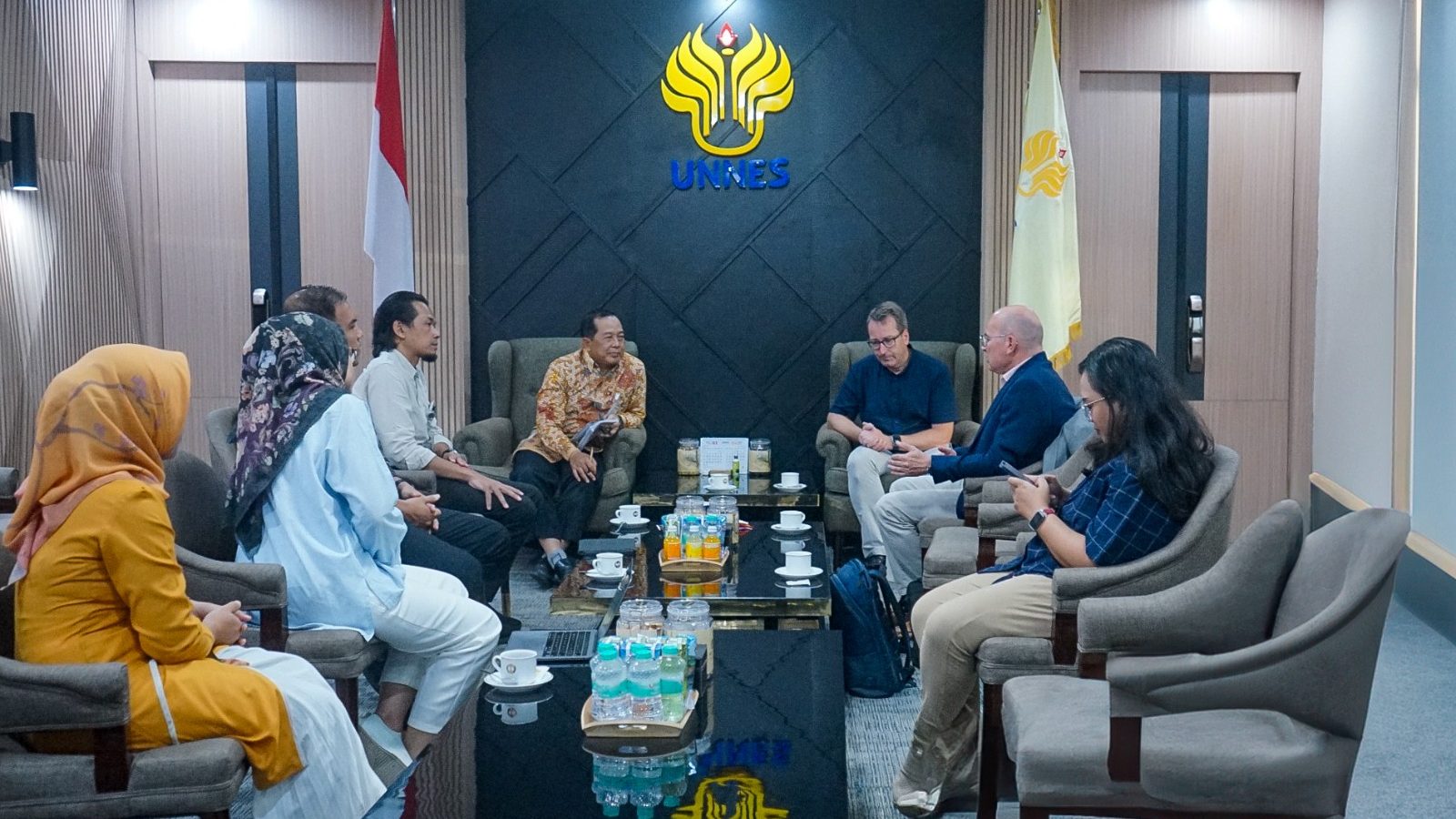
The 2025 visit by the Würzburg delegation opened discussions with UNNES leaders and vice deans on cross-disciplinary academic programmes, joint research, student and faculty exchange, and collaborative initiatives that can be implemented through the Go-TEd+ consortium. The programme’s research component is designed to establish international research groups on current issues in teacher education and to publish both scientific findings and practice-oriented examples.
For UNNES, this creates a mechanism to contribute Indonesian perspectives to an international teacher-education network while also reviewing approaches developed in other national contexts. The resulting exchange can support the adaptation of teaching strategies, curriculum ideas, and educational practices that are relevant to local conditions while remaining connected to global sustainability goals.
| Go-TEd+ links international comparison, collaborative research, curriculum development, ongoing evaluation, and open dissemination of best-practice examples—providing a clear pathway from global exchange to practical SDG-oriented teacher education. |
Advancing SDG 4 and SDG 17
The partnership directly contributes to SDG 4 (Quality Education) by strengthening teacher education, international learning, research collaboration, and the development of innovative teaching approaches. Its SUSTAIN pillar explicitly incorporates the Sustainable Development Goals into long-term cooperation, including the integration of local SDG topics into lessons and curriculum development.
The programme also advances SDG 17 (Partnerships for the Goals) by creating a sustained international network for joint research, knowledge exchange, curriculum collaboration, mobility, and publication. Through Go-TEd+, UNNES participates in a global platform that supports comparative learning and the development and dissemination of international best practices for addressing shared educational and sustainability challenges.
UNNES as Indonesia’s partner in a global teacher-education network
As the only Indonesian university in the twelve-country Go-TEd+ consortium, UNNES is positioned to contribute evidence, educational experience, and local SDG perspectives to international discussions while bringing global lessons back into Indonesian teacher education. This reciprocal process strengthens the role of universities as partners in developing education systems that are locally relevant, internationally informed, and responsive to sustainable development.