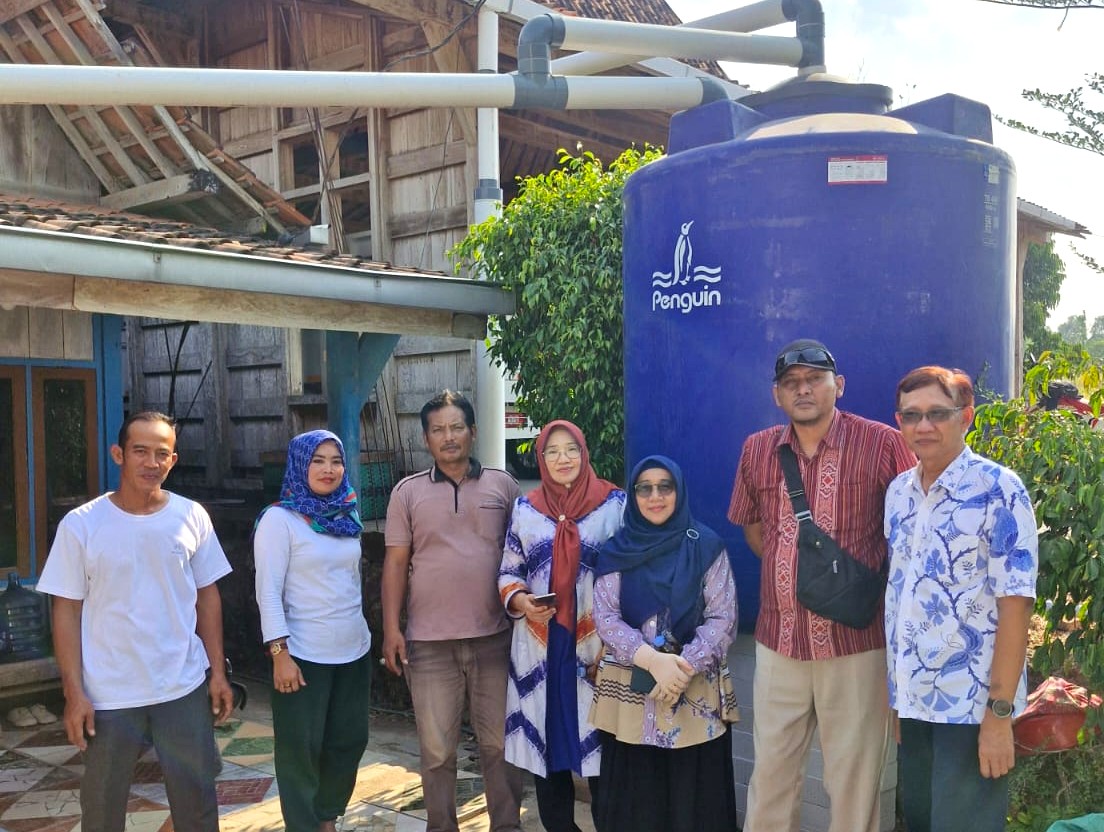
Universitas Negeri Semarang (UNNES) is committed to providing an inclusive academic environment where individuals and groups with different perspectives can engage in open, constructive, and evidence-based discussions on public issues. Through its academic freedom policies and community engagement initiatives, UNNES encourages dialogue involving academics, government representatives, public oversight institutions, civil society, and local communities.
This commitment is grounded in Rector’s Regulation No. 136 of 2024, as amended by Rector’s Regulation No. 138 of 2024, concerning Academic Freedom, Academic Expression, and Scientific Autonomy. These regulations establish an institutional framework that supports the freedom to express academic opinions, exchange ideas, and participate in scholarly discussions responsibly and independently.
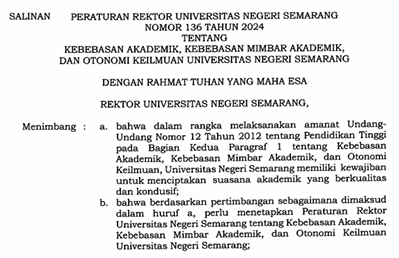
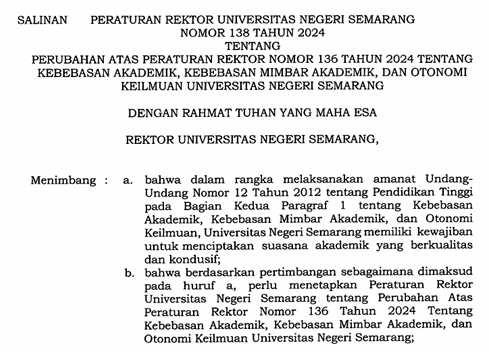
In 2025, UNNES demonstrated this commitment through academic participation in a multi-stakeholder evaluation of Central Java’s government programmes and a community dialogue with young people in Sayung, Demak. These initiatives provided opportunities for different stakeholders to express their perspectives, discuss public challenges, and exchange recommendations without partisan political endorsement.
Facilitating Multi-Stakeholder Dialogue on Central Java’s Government Performance
On June 3, 2025, Dr. Cahyo Seftyono, S.Sos., M.A., a lecturer in Political Science at FISIP UNNES, contributed to a public evaluation forum examining the first 100 days of the Central Java Governor and Vice Governor’s administration.
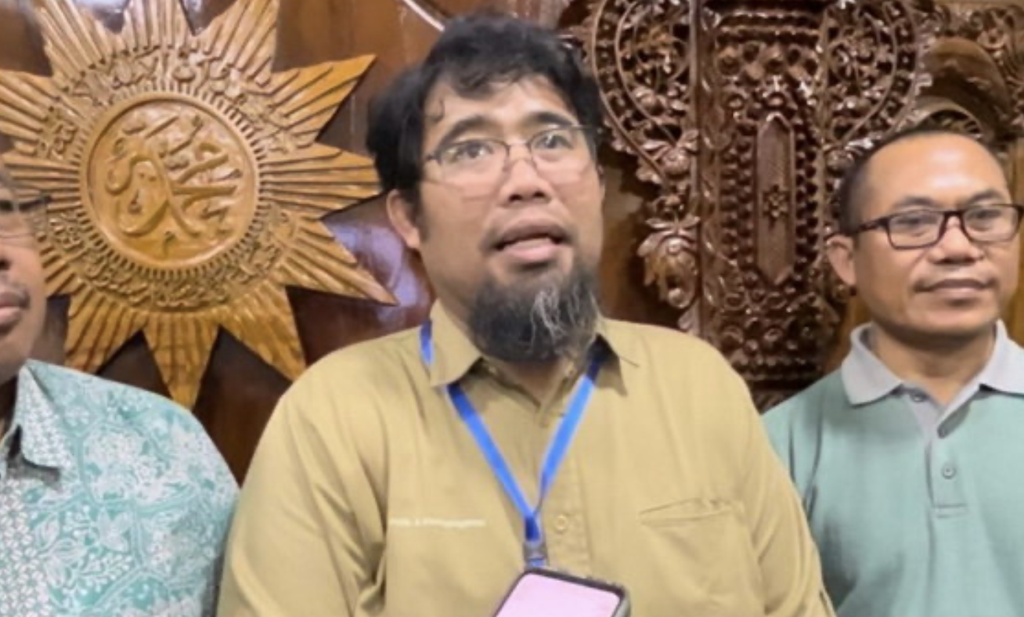
The forum was organized by the Institute for Public Policy and Wisdom (Lembaga Hikmah dan Kebijakan Publik/LHKP) of the Central Java Muhammadiyah Regional Leadership. It brought together academic and civil society perspectives with representatives of government and public oversight institutions, including Dr. Zulkifli, Head of the Central Java Regional Development Acceleration Team (TPPD); Siti Farida, Head of the Central Java Ombudsman Representative Office; and Yusuf Hidayat, a member of the Central Java Provincial DPRD.
The discussion was informed by a public evaluation survey involving 529 respondents aged 17–65, which examined public perceptions of the provincial government’s 11 priority development programmes. The findings provided a basis for discussing programme implementation, public service performance, education, governance, and the accessibility of government information.
Dr. Cahyo contributed an academic perspective by highlighting the importance of education policy and good governance, as well as the need for government institutions to communicate programme achievements through accessible digital channels. Meanwhile, representatives of the Regional Development Acceleration Team and public oversight institutions provided perspectives on programme implementation, government performance, and areas requiring further attention.
The forum enabled academic analysis, public survey findings, government responses, and oversight perspectives to be discussed within the same space. It also demonstrated how evidence-based dialogue can provide constructive feedback on public policies and strengthen communication between government institutions and society.
Providing an Open Dialogue Space for Youth and Coastal Communities in Sayung, Demak
UNNES also facilitated direct community dialogue through an initiative organized by FISIP UNNES on July 30, 2025, at Purwosari Village Hall, Sayung District, Demak Regency.
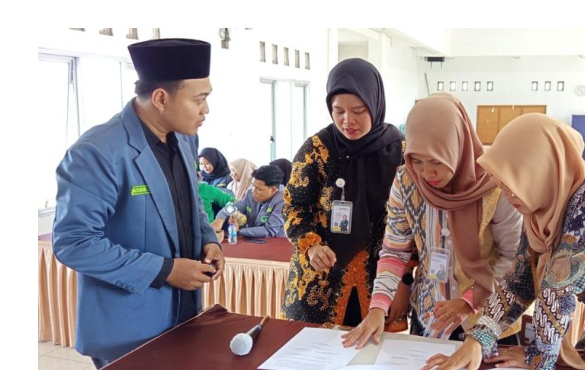
The activity, entitled “Strengthening the Organizational Capacity of IPNU-IPPNU Sayung in Political Participation and Environmental Advocacy,” brought together the FISIP UNNES academic team, students, and members of the Nahdlatul Ulama Student Association (IPNU-IPPNU) in Sayung.
The forum focused on the environmental challenges experienced by coastal communities, particularly tidal flooding (rob), coastal erosion, and the resulting effects on land use and residents’ livelihoods.
Through facilitated discussions, participants were encouraged to express their concerns, exchange perspectives, and explore ways to communicate community needs to relevant stakeholders. The discussion also addressed the role of young people in public participation, freedom of expression, civic engagement, and environmental advocacy.
One of the issues raised by participants concerned land affected by tidal flooding that could no longer be utilized effectively but continued to create difficulties for local residents. This discussion allowed community members to bring practical experiences and local concerns into an academic dialogue on environmental and social challenges.
The FISIP UNNES team encouraged participants to use student organizations, public discussions, social media, and direct communication with government institutions as channels for expressing community aspirations. The activity concluded with the signing of an Implementation of Agreement (IA) between the Political Science Study Programme of FISIP UNNES and IPNU-IPPNU Sayung, establishing a basis for continued collaboration and community engagement.
This initiative demonstrates UNNES’s role in facilitating an inclusive space where young people can raise sensitive local issues, discuss different perspectives, and develop constructive approaches to public participation without being directed toward partisan political positions.
Upholding Academic Freedom and Nonpartisan Dialogue
UNNES’s commitment to open and constructive discussion is supported by its institutional framework on academic freedom, academic expression, and scientific autonomy.
Rector’s Regulation No. 136 of 2024, as amended by Rector’s Regulation No. 138 of 2024, provides the legal foundation for academic community members to express scientific opinions, exchange ideas, and participate in academic discussions independently and responsibly.
Through this framework, UNNES recognizes the importance of protecting diverse academic perspectives while maintaining scientific integrity, mutual respect, and professional ethics. The university’s engagement in the 2025 policy evaluation forum and the Sayung youth dialogue illustrates how these principles can be reflected in discussions involving government officials, public oversight institutions, academics, and community organizations.
These initiatives demonstrate UNNES’s contribution to creating an academic environment where different perspectives can be heard, public challenges can be discussed openly, and constructive dialogue can support informed civic participation.
Through its commitment to academic freedom and inclusive stakeholder engagement, UNNES continues to support SDG 16, particularly by providing opportunities for fair, open, and evidence-based discussions on public policy and community challenges.