

Tim Peneliti FMIPA UNNES Kembangkan Katalis Berbasis Grafena untuk Mendukung Teknologi Hidrogen Hijau

Universitas Negeri Semarang/Faculty of Mathematics and Natural Sciences/Berita/Tim Peneliti FMIPA UNNES Kembangkan Katalis Berbasis Grafena untuk Mendukung Teknologi Hidrogen Hijau
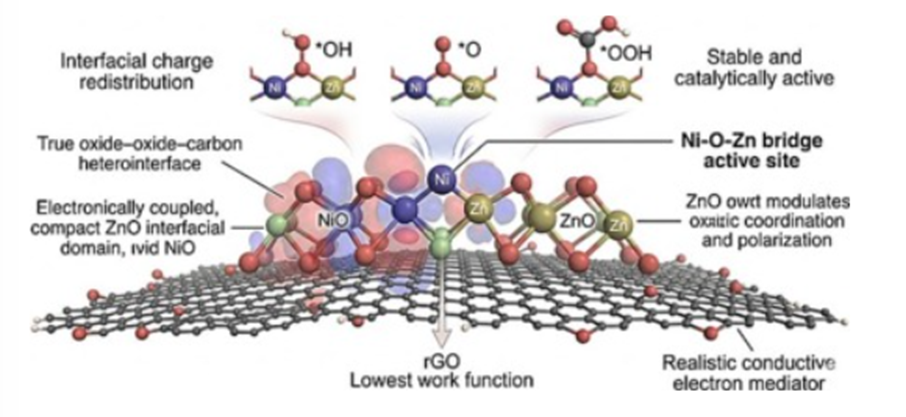
Diagram model molekul berlatar putih yang menampilkan lembaran kisi karbon rGO di bagian bawah menopang gugus atom NiO dan ZnO dengan ilustrasi zat antara reaksi OH, O, dan OOH di bagian atas.

Pengembangan energi bersih menjadi salah satu kebutuhan penting dalam mendukung transisi energi dan mengurangi ketergantungan terhadap bahan bakar fosil. Menjawab tantangan tersebut, Dr. Nuni Widiarti bersama tim peneliti FMIPA Universitas Negeri Semarang (UNNES) mengembangkan desain material katalis berbasis grafena yang berpotensi mendukung teknologi produksi hidrogen hijau melalui elektrolisis air.

Penelitian tersebut menghasilkan dua publikasi pada jurnal internasional bereputasi tahun 2026, yaitu “Interfacial Charge Redistribution and Catalytic Activation in rGO-Supported NiO–ZnO Heterostructures” dalam jurnal Results in Chemistry dan “Site-Selective Anchoring and Defect-Engineered NiOOH Active-Site Formation in NiO–ZnO/rGO Heterointerfaces for Oxygen Evolution Reaction” dalam jurnal Chemical Physics Impact.
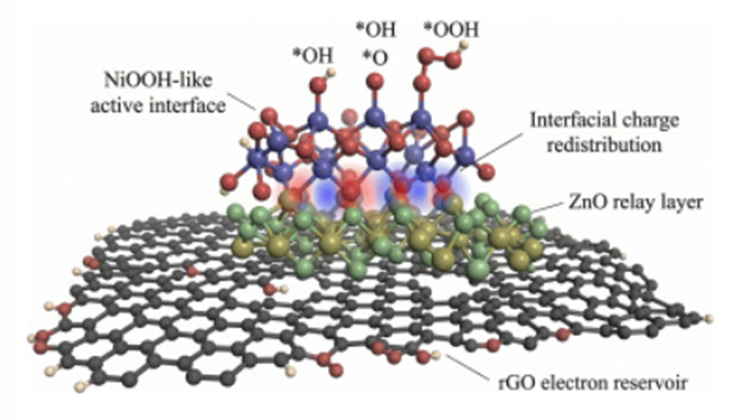
Kedua penelitian memanfaatkan pendekatan komputasi Density Functional Theory (DFT) untuk menganalisis karakteristik material katalis berbasis nikel oksida (NiO), seng oksida (ZnO), dan reduced graphene oxide (rGO). Material tersebut dikaji untuk mendukung oxygen evolution reaction (OER), yaitu reaksi pembentukan oksigen yang menjadi salah satu tahapan penting dalam proses elektrolisis air untuk menghasilkan hidrogen.

Penelitian pertama menunjukkan bahwa kombinasi NiO–ZnO/rGO memiliki struktur antarmuka yang stabil dengan energi ikat sebesar −30,13 eV. Namun, kestabilan struktur tersebut belum menghasilkan aktivitas OER terbaik karena interaksi yang terlalu kuat dengan zat antara reaksi. Temuan ini menjadi dasar penting untuk memahami hubungan antara struktur material dan kinerja katalitik.

Pada penelitian kedua, tim peneliti mengembangkan pendekatan rekayasa cacat struktur dan pembentukan situs aktif menyerupai NiOOH. Hasil simulasi menunjukkan bahwa dua konfigurasi katalis terbaik memiliki overpotensial teoretis sebesar 0,17 volt, yang menunjukkan potensi pengurangan kebutuhan tegangan tambahan dalam reaksi pembentukan oksigen.

Dampak positif penelitian ini adalah tersedianya landasan ilmiah untuk pengembangan katalis yang lebih efisien dalam teknologi elektrolisis air. Pendekatan komputasi juga memungkinkan identifikasi kandidat material sebelum dilakukan pengujian laboratorium, sehingga penelitian lanjutan dapat lebih terarah. Pengembangan katalis tersebut berpotensi mendukung produksi hidrogen hijau apabila diterapkan pada sistem elektrolisis yang menggunakan listrik dari energi terbarukan.

Penelitian ini berkontribusi terhadap Sustainable Development Goals (SDGs), terutama SDG 7 (Energi Bersih dan Terjangkau) melalui pengembangan material pendukung teknologi hidrogen hijau, SDG 9 (Industri, Inovasi, dan Infrastruktur) melalui inovasi rekayasa material maju, serta SDG 13 (Penanganan Perubahan Iklim) melalui potensi dukungannya terhadap pengembangan teknologi energi rendah karbon.

Melalui kedua publikasi tersebut, tim peneliti FMIPA UNNES menunjukkan kontribusi dalam pengembangan ilmu material untuk mendukung teknologi energi masa depan. Meskipun masih berada pada tahap simulasi komputasi dan memerlukan validasi eksperimental, hasil penelitian ini diharapkan menjadi dasar pengembangan katalis elektrolisis air yang lebih efisien serta memperkuat kontribusi perguruan tinggi terhadap transisi energi berkelanjutan.
Related Posts

Leave a Reply

* Kode Akses Komentar:

* Tuliskan kode akses komentar diatas:

GDPR

  • Privacy Policy

Privacy Policy

At unnes.ac.id, the privacy of our visitors is of extreme importance to us. This privacy policy document outlines the types of personal information that is received and collected by unnes.ac.id and how it is used.

Log Files

Like many other Web sites, unnes.ac.id makes use of log files. The information inside the log files includes internet protocol (IP) addresses, type of browser, Internet Service Provider (ISP), date/time stamp, referring/exit pages, and number of clicks to analyze trends, administer the site, track user’s movement around the site, and gather demographic information. IP addresses and other such information are not linked to any information that is personally identifiable.

Cookies

unnes.ac.id uses cookies to store information about visitors’ preferences, to record user-specific information on which pages the site visitor accesses or visits, and to personalize or customize our web page content based upon visitors’ browser type or other information that the visitor sends via their browser.

Third-party ad servers or ad networks use technology in their respective advertisements and links that appear on unnes.ac.id and which are sent directly to your browser. They automatically receive your IP address when this occurs. Other technologies (such as cookies, JavaScript, or Web Beacons) may also be used by our site’s third-party ad networks to measure the effectiveness of their advertising campaigns and/or to personalize the advertising content that you see on the site.

unnes.ac.id has no access to or control over these cookies that are used by third-party advertisers.

You should consult the respective privacy policies of these third-party ad servers for more detailed information on their practices as well as for instructions about how to opt-out of certain practices. unnes.ac.id’s privacy policy does not apply to, and we cannot control the activities of, such other advertisers or web sites.

If you wish to disable cookies, you may do so through your individual browser options. More detailed information about cookie management with specific web browsers can be found at the browsers’ respective websites.

Consent

By using our website, you hereby consent to our privacy policy and agree to its terms.

Update

This Privacy Policy was last updated on: 2023-02-14. Should we update, amend or make any changes to our privacy policy, those changes will be posted here.

Contact Us

If you have any questions, comments, or concerns about our Privacy Policy or our practices with regards to your personal information, please feel free to contact us through the contact form on our website or by emailing us at humas[at]mail.unnes.ac.id.

This Privacy Policy is intended as a general guide to our practices in collecting and using information. If there is any inconsistency between this Privacy Policy and the terms of the Service Agreement or any other terms that may apply to specific services you use, then those specific service terms shall apply.

Terms of Use

By using our website, you agree to abide by this Privacy Policy. If you do not agree with this Privacy Policy, please do not use our website. We reserve the right to update this Privacy Policy from time to time without prior notice. Please review our Privacy Policy periodically to check for changes. Your continued use of our website following the posting of changes to this Privacy Policy means that you accept the changes.

Thank you for reading our Privacy Policy. We are committed to protecting the privacy of our website visitors and will continue to update our Privacy Policy to ensure optimal protection.