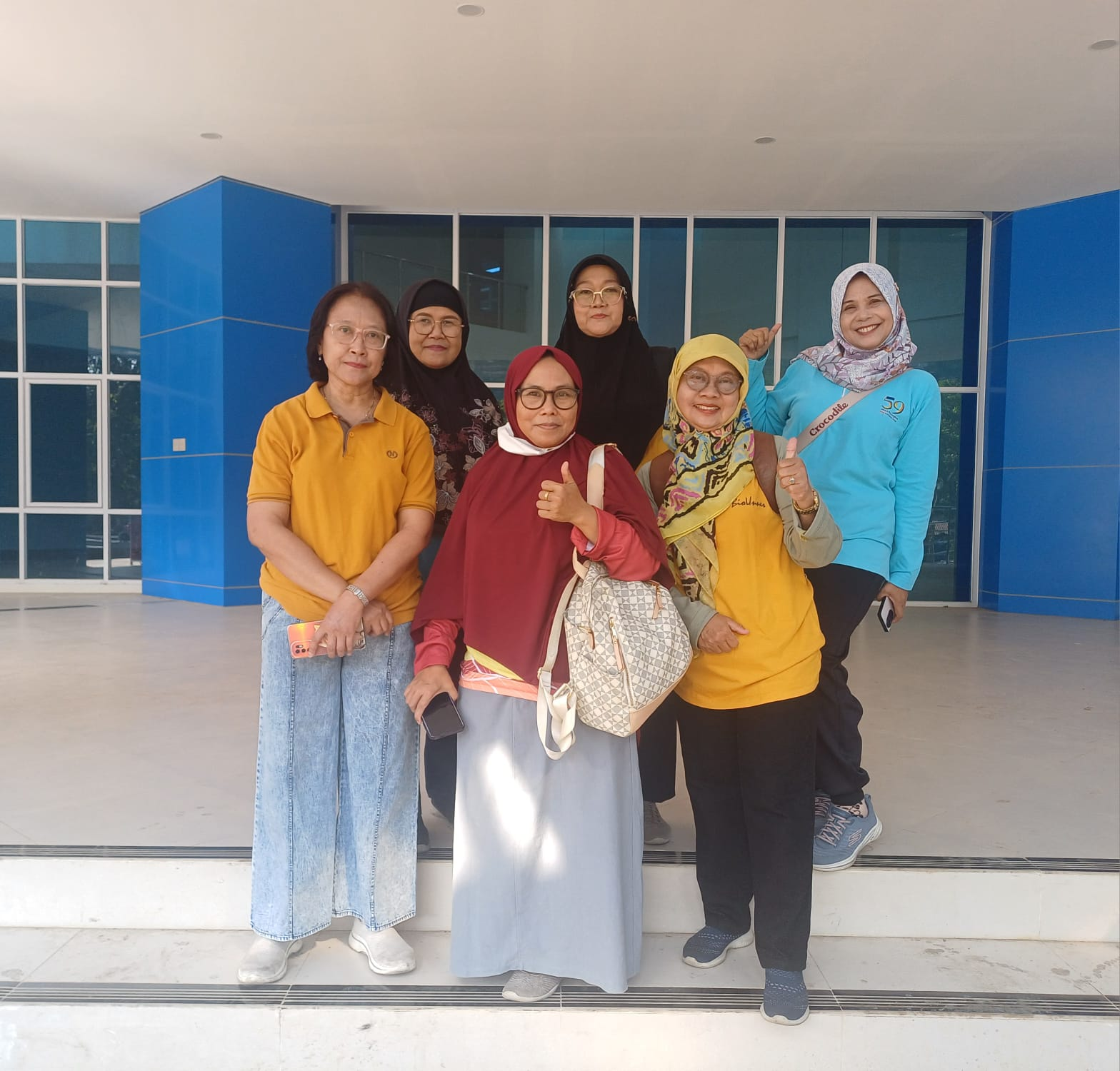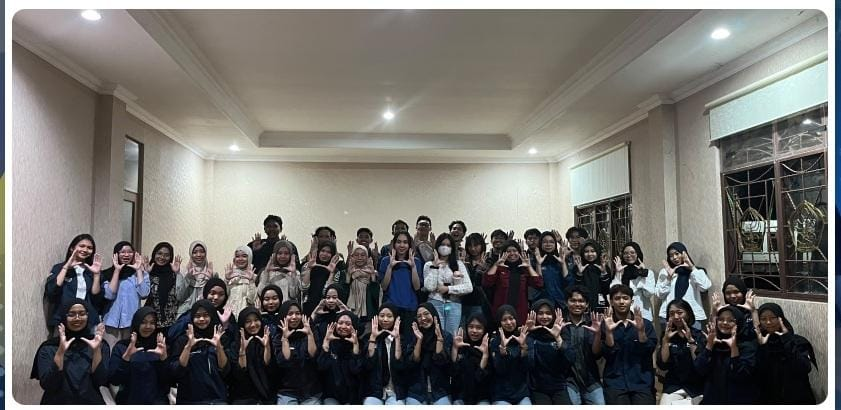




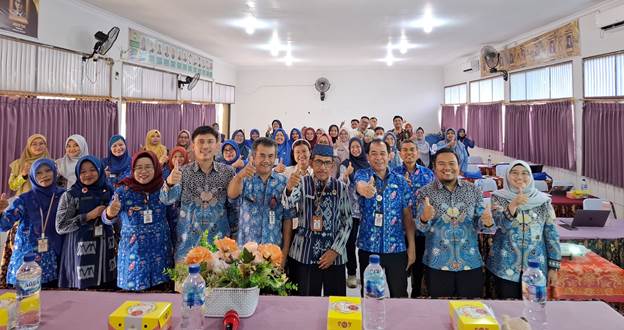
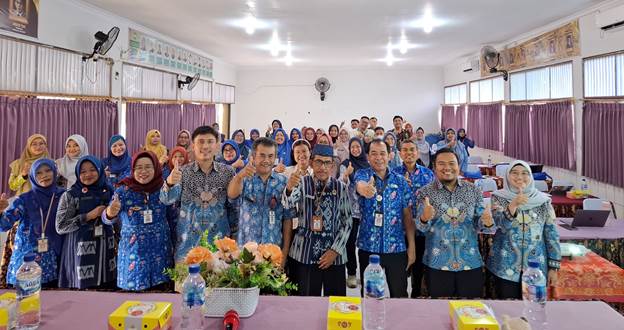
The FMIPA UNNES community service team, consisting of Arif Widiyatmoko, S.Pd., M.Pd., Ph.D. (Science Education Program), Septiko Aji, M.Pd. (Science Education Program), and Rifa’atunnisa, S.Hut., M.Si., Ph.D. (Environmental Science Program), is working to improve the research competence of science teachers. This activity is carried out in collaboration with the Science Subject Teachers’ Association (MGMP) of Semarang City and was held on Tuesday, May 19, 2026, at SMP Negeri 27 Semarang. The activity was attended by 40 participants, all of whom are junior high school science teachers in Semarang City.
The event began with an inspirational presentation by Ms. Rifa’atunnisa on “Education for Sustainable Development (ESD) and Environmental Problems in Everyday Life.” In her presentation, she explained that science learning is not only focused on mastering concepts and theories, but also plays an important role in raising students’ awareness of various environmental issues around them. Through the ESD approach, students are encouraged to understand the interconnection between science, environment, society, and daily life so that learning becomes more contextual and meaningful. In addition, teachers are expected to stimulate students to think critically, creatively, and innovatively in finding solutions to environmental problems such as waste management, pollution, climate change, and the use of sustainable energy. Thus, science learning can become a means of shaping a generation that cares about the environment and is able to make responsible decisions for a sustainable future.
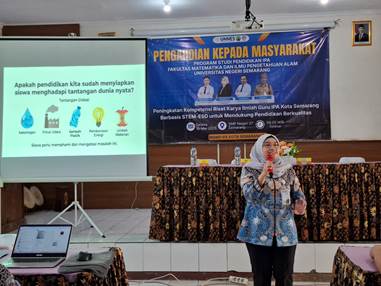
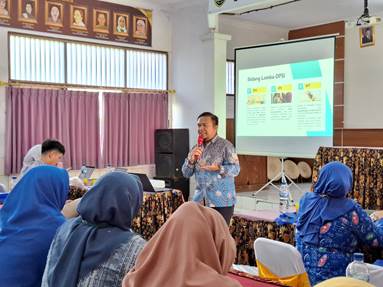
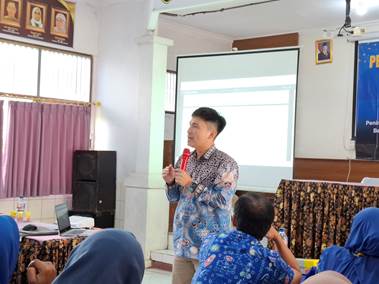
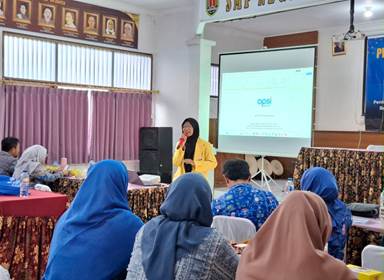
Pn the next session, Mr. Septiko Aji delivered a presentation on “Scientific Research Competitions on Environmental Issues.” He explained that there are various scientific research competitions that junior high school students can participate in as a platform to develop creativity, scientific thinking skills, and problem-solving abilities based on real issues in their environment. The speaker also discussed common challenges faced in scientific writing competitions, as well as tips for preparing systematic scientific reports according to the requirements. In this session, participants were also introduced to the general framework and regulations of the Indonesian Student Research Olympiad (OPSI), including proposal structure, selection stages, and strategies for guiding students to produce high-quality and competitive research work.
The third presentation was delivered by Mr. Arif Widiyatmoko on “The Role of STEM-ESD in Enhancing Teachers’ Research Competence.” He explained that the integration of STEM (Science, Technology, Engineering, and Mathematics) with Education for Sustainable Development (ESD) can be an effective strategy to improve science teachers’ research competence. This approach encourages teachers to develop learning activities that are not only based on scientific concepts but also oriented toward innovative and sustainable real-world problem solving. Teachers are encouraged to connect local environmental issues with scientific investigation processes, the use of technology, simple engineering design, and science- and mathematics-based data analysis. After the presentation sessions, the activity continued with group practice in developing scientific research ideas. Teachers identified various environmental problems in schools and communities, analyzed innovative STEM-ESD-based solutions, and formulated them into scientific research frameworks. The participants were very enthusiastic during the activity, actively discussing, exchanging ideas, and presenting creative ideas that have the potential to be developed into student research projects. Many participants found the activity beneficial as they gained new insights into strategies for guiding scientific research relevant to environmental issues and 21st-century learning needs.
At the end of the session, there was a reinforcement on scientific writing delivered by students from the Science Education Study Program, FMIPA UNNES, who are members of the community service team. This session explained in detail the structure of scientific writing, particularly OPSI proposals. The students presented the important parts of a proposal, from Chapter I to Chapter III, along with the key points that must be included in each section. In addition, participants were given examples of well-structured proposals to help them better understand the flow of scientific writing according to competition standards.
Through this community service activity, science teachers are expected to improve their research competence and ability to supervise student scientific work so that they are better prepared to guide students in various scientific competitions. Furthermore, this activity is also expected to foster a research culture in schools, improve the quality of science learning through a more innovative and contextual STEM-ESD approach, and contribute to the achievement of the Sustainable Development Goals (SDGs), particularly in improving the quality of education.