

SEMARANG – Pelatuk Bird Study Club, a student organization in the Biology Department of the Faculty of Mathematics and Natural Sciences (FMIPA), Universitas Negeri Semarang (UNNES), continues to encourage increased awareness of biodiversity through birdwatching activities both within the campus environment and in natural habitats.

Universitas Negeri Semarang/Faculty of Mathematics and Natural Sciences/Berita/SEMARANG – Pelatuk Bird Study Club, a student organization in the Biology Department of the Faculty of Mathematics and Natural Sciences (FMIPA), Universitas Negeri Semarang (UNNES), continues to encourage increased awareness of biodiversity through birdwatching activities both within the campus environment and in natural habitats.
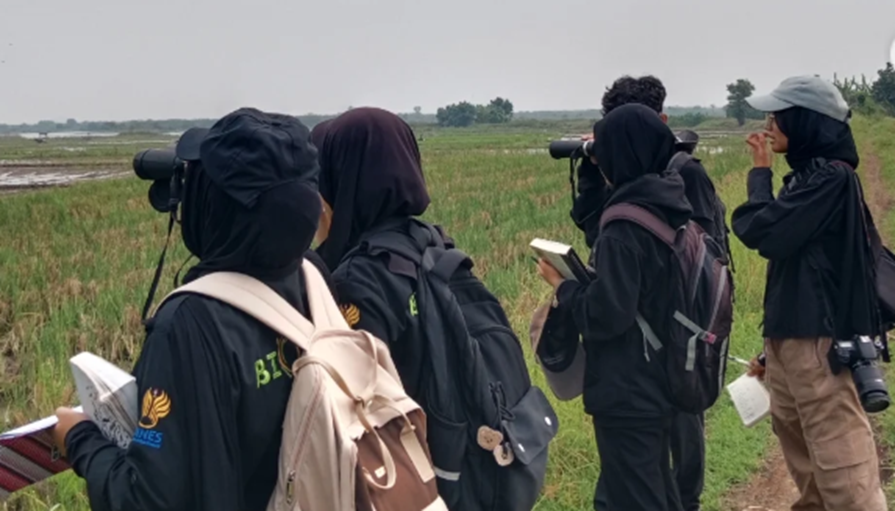
Five Biology students of FMIPA UNNES in black jackets observing birds through binoculars while carrying field notebooks in a wide grassy wetland area.

This effort was realized through two activities: Bird Field Exploration 2026, held on April 18, 2026, in Mangkang Kulon, and Campus Bird Monitoring on May 1, 2026, around Building F1 of the Faculty of Sports Science (FIK) UNNES and Building G1 of the Faculty of Engineering (FT) UNNES.
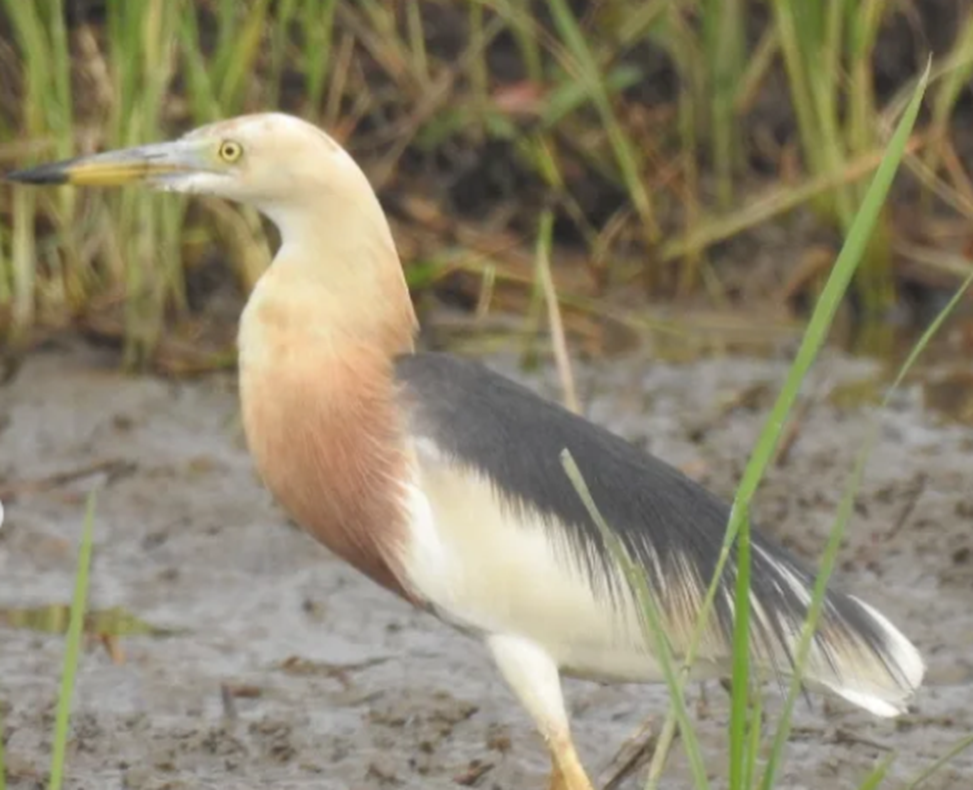
Bird Field Exploration 2026 served as a platform for students to get to know bird diversity directly in its natural habitat. During this activity, participants successfully encountered 31 bird species, including the cave swiftlet (Collocalia linchi), blue-tailed bee-eater (Merops philippinus), sooty-headed bulbul (Pycnonotus aurigaster), fulvous-breasted woodpecker (Dendrocopos macei), white-breasted woodswallow (Artamus leucorynchus), black-capped kingfisher (Halcyon pileata), white-headed munia (Lonchura maja), scaly-breasted munia (Lonchura punctulata), barn swallow (Hirundo rustica), Pacific swallow (Hirundo tahitica), glossy ibis (Plegadis falcinellus), cerulean kingfisher (Alcedo coerulescens), great egret (Ardea alba), little egret (Egretta garzetta), Oriental darter (Anhinga melanogaster), Javan pond heron (Ardeola speciosa), zebra dove (Geopelia striata), plain prinia (Prinia inornata), house swift (Apus nipalensis), plaintive cuckoo (Cacomantis merulinus), white-throated kingfisher (Halcyon smyrnensis), cattle egret (Bubulcus ibis), buff-banded rail (Gallirallus philippensis), Javan munia (Lonchura leucogastroides), Eurasian tree sparrow (Passer montanus), pheasant-tailed jacana (Hydrophasianus chirurgus), grey heron (Ardea cinerea), Javan myna (Acridotheres javanicus), Javan plover (Charadrius javanicus), yellow bittern (Ixobrychus sinensis), and purple heron (Ardea purpurea). These findings provided field experience for students in recognizing the characteristics of various bird species while understanding their relationship with habitat conditions.

Furthermore, through the Campus Bird Monitoring activity, participants observed and documented bird diversity within the UNNES campus environment. Several species successfully encountered included the scarlet-headed flowerpecker (Dicaeum trochileum), sooty-headed bulbul (Pycnonotus aurigaster), yellow-vented bulbul (Pycnonotus goiavier), and collared kingfisher (Todiramphus chloris), along with several other species.

Both activities hold significant value for biodiversity conservation efforts. Birds play various ecological roles, including aiding pollination, seed dispersal, and insect population control. The presence and diversity of birds also provide information regarding habitat conditions and the environmental quality of an area.

In the context of the campus environment, Campus Bird Monitoring has the potential to become part of periodic biodiversity monitoring. Information regarding bird species and distribution can serve as baseline data to support green open space management, vegetation maintenance, and habitat protection that sustains wildlife in the UNNES area.

Meanwhile, the exploration in Mangkang Kulon broadened students’ experience in understanding bird diversity outside the campus environment. This activity also introduced students to the importance of various habitat types in supporting bird presence, including vegetated areas, open land, and aquatic environments. This experience is expected to strengthen knowledge, identification skills, and awareness of the importance of preserving natural habitats.

This series of activities also supports the achievement of the Sustainable Development Goals (SDGs), particularly SDG 15 (Life on Land) by raising awareness of biodiversity and wildlife habitat protection. Additionally, these activities support SDG 4 (Quality Education) through field-based experiential learning and strengthening students’ environmental literacy, as well as SDG 11 (Sustainable Cities and Communities) by increasing attention to green open spaces and biodiversity in urban environments, including campus areas.

Through Bird Field Exploration and Campus Bird Monitoring, Pelatuk Bird Study Club hopes that more students will get involved in bird observation, documentation, and education activities. This effort serves as a step toward building a scientific culture while fostering awareness that biodiversity conservation can begin in one’s immediate surroundings.

Related Posts

Leave a Reply

* Kode Akses Komentar:

* Tuliskan kode akses komentar diatas:

GDPR

  • Privacy Policy

Privacy Policy

At unnes.ac.id, the privacy of our visitors is of extreme importance to us. This privacy policy document outlines the types of personal information that is received and collected by unnes.ac.id and how it is used.

Log Files

Like many other Web sites, unnes.ac.id makes use of log files. The information inside the log files includes internet protocol (IP) addresses, type of browser, Internet Service Provider (ISP), date/time stamp, referring/exit pages, and number of clicks to analyze trends, administer the site, track user’s movement around the site, and gather demographic information. IP addresses and other such information are not linked to any information that is personally identifiable.

Cookies

unnes.ac.id uses cookies to store information about visitors’ preferences, to record user-specific information on which pages the site visitor accesses or visits, and to personalize or customize our web page content based upon visitors’ browser type or other information that the visitor sends via their browser.

Third-party ad servers or ad networks use technology in their respective advertisements and links that appear on unnes.ac.id and which are sent directly to your browser. They automatically receive your IP address when this occurs. Other technologies (such as cookies, JavaScript, or Web Beacons) may also be used by our site’s third-party ad networks to measure the effectiveness of their advertising campaigns and/or to personalize the advertising content that you see on the site.

unnes.ac.id has no access to or control over these cookies that are used by third-party advertisers.

You should consult the respective privacy policies of these third-party ad servers for more detailed information on their practices as well as for instructions about how to opt-out of certain practices. unnes.ac.id’s privacy policy does not apply to, and we cannot control the activities of, such other advertisers or web sites.

If you wish to disable cookies, you may do so through your individual browser options. More detailed information about cookie management with specific web browsers can be found at the browsers’ respective websites.

Consent

By using our website, you hereby consent to our privacy policy and agree to its terms.

Update

This Privacy Policy was last updated on: 2023-02-14. Should we update, amend or make any changes to our privacy policy, those changes will be posted here.

Contact Us

If you have any questions, comments, or concerns about our Privacy Policy or our practices with regards to your personal information, please feel free to contact us through the contact form on our website or by emailing us at humas[at]mail.unnes.ac.id.

This Privacy Policy is intended as a general guide to our practices in collecting and using information. If there is any inconsistency between this Privacy Policy and the terms of the Service Agreement or any other terms that may apply to specific services you use, then those specific service terms shall apply.

Terms of Use

By using our website, you agree to abide by this Privacy Policy. If you do not agree with this Privacy Policy, please do not use our website. We reserve the right to update this Privacy Policy from time to time without prior notice. Please review our Privacy Policy periodically to check for changes. Your continued use of our website following the posting of changes to this Privacy Policy means that you accept the changes.

Thank you for reading our Privacy Policy. We are committed to protecting the privacy of our website visitors and will continue to update our Privacy Policy to ensure optimal protection.