

Related to SDGs
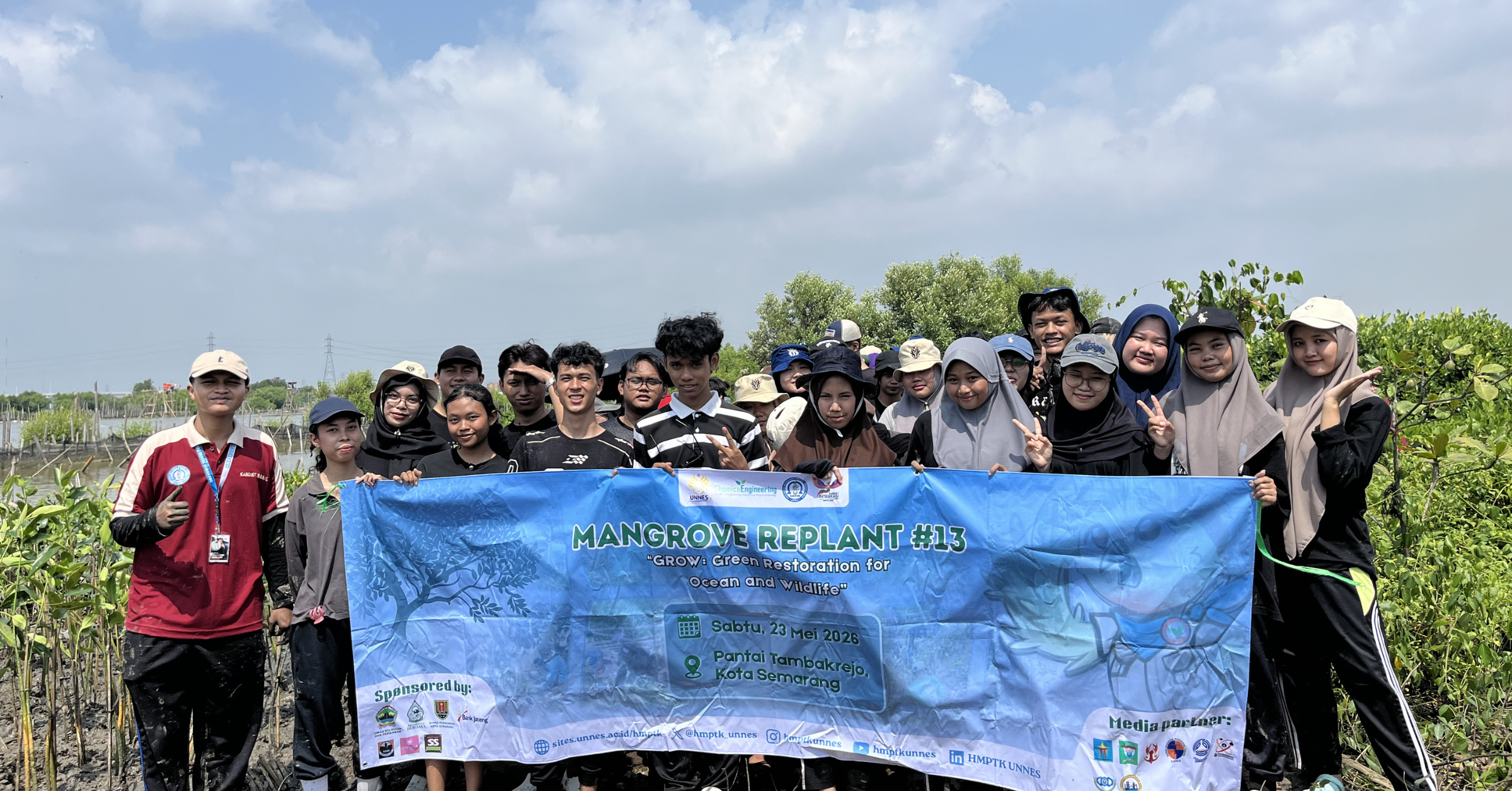
The Chemical Engineering Student Association (HMPTK) of the Faculty of Engineering, Universitas Negeri Semarang (FT UNNES), organized Mangrove Replant #13 on Saturday, May 23, 2026, at the coastal area of Tambakrejo, Semarang. The activity represents a concrete effort by students to support sustainable coastal ecosystem preservation.
Carrying the theme “GROW: Green Restoration for Ocean and Wildlife,” the program aims to raise environmental awareness while conducting real action through mangrove planting. This initiative is an annual agenda of HMPTK FT UNNES, reflecting its ongoing commitment to protecting coastal ecosystems.
The activity began with an opening session at the Faculty of Engineering UNNES, followed by travel to the mangrove planting site in Tambakrejo. Upon arrival, participants directly engaged in planting mangroves as part of environmental restoration efforts.
In addition to the planting activity, the program included evaluation and learning sessions for participants. “This activity is not only intended to increase mangrove vegetation cover, but also to build environmental awareness among students and the community,” said HMPTK advisor Hanif Ardhiansyah.
Mangrove planting plays a crucial role in maintaining coastal ecosystem balance by mitigating climate change through carbon absorption and protecting coastal areas from abrasion. Mangroves also serve as habitats for diverse marine species, supporting biodiversity.
Through this initiative, HMPTK FT UNNES remains committed to contributing to sustainable development and environmental conservation. The Mangrove Replant program is expected to bring long-term positive impacts on coastal ecosystems and surrounding communities.
This activity supports the Sustainable Development Goals (SDGs), particularly SDG 13 (Climate Action), SDG 14 (Life Below Water), and SDG 15 (Life on Land).