

Semarang Regency, August 23, 2026 — The Cooking Therapy Community Service Team of Universitas Negeri Semarang (UNNES) continued its community empowerment program through a pilot marketing activity for featured local products in Ketapang Village, Susukan District, Semarang Regency. The activity, which constituted the fourth meeting in the program series, was conducted in conjunction with the Memerti Desa Ketapang event on Sunday, August 23, 2026. The community service program was funded by DP2M as part of its support for community empowerment and capacity-building initiatives. This activity served as a continuation of the learning and mentoring provided during previous sessions. While earlier meetings focused on strengthening participants’ knowledge and skills in business management and marketing strategies, the fourth meeting provided participants with an opportunity to directly practice marketing their featured products within the community.
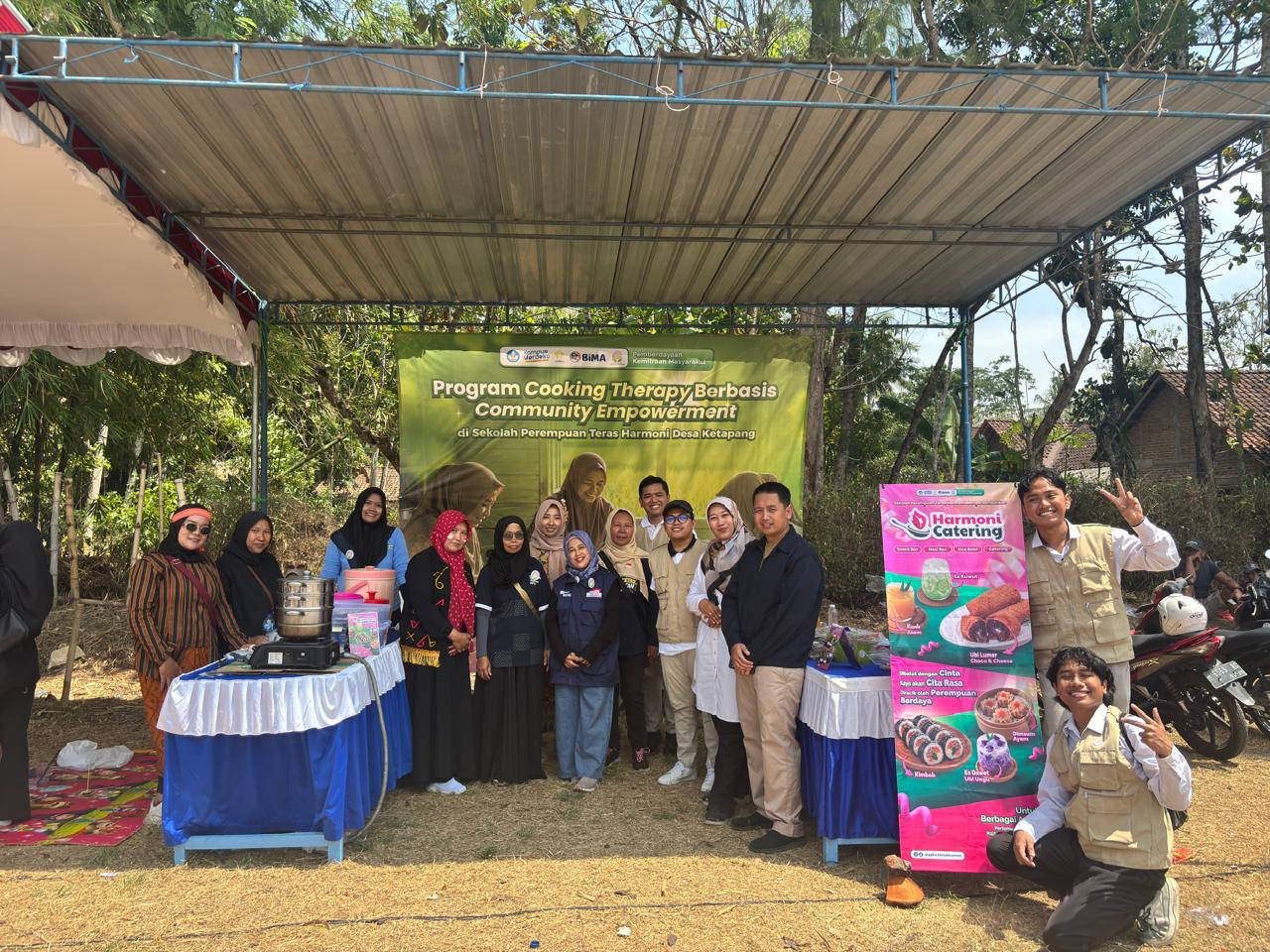
Through the Memerti Desa Ketapang event, participants not only learned marketing strategies theoretically but also began implementing them in a real-world setting by interacting directly with potential consumers. During the pilot activity, the featured products that had been developed were introduced and marketed to members of the community attending the event. This provided participants with an opportunity to assess how their products were received by the public while gaining practical experience in presenting products, communicating with consumers, and observing market responses firsthand.
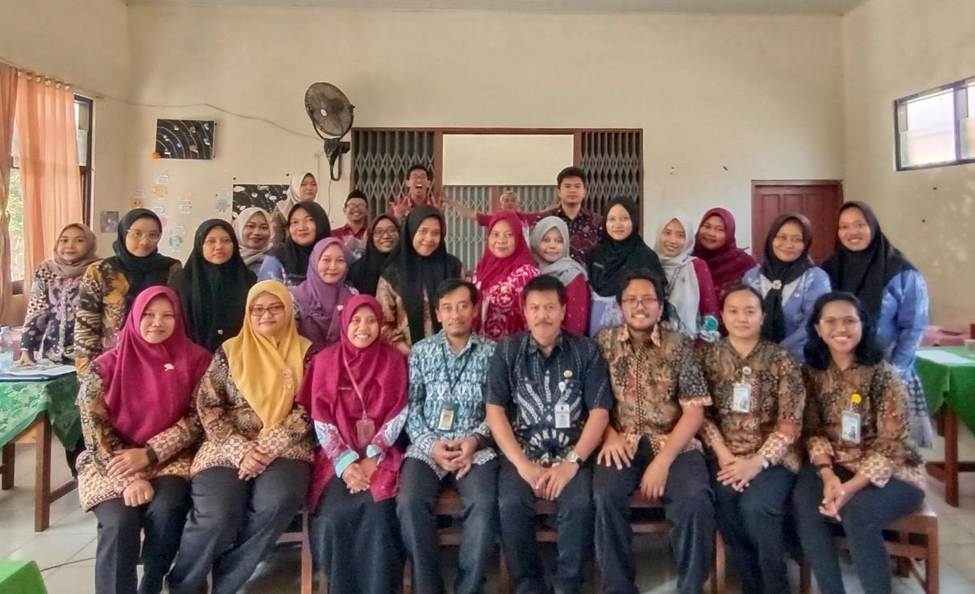
Village Head Muhammad Ni’am, S.T., Ketapang Village officials, and the organizing committee of Memerti Desa Ketapang were also involved in supporting the activity. The people of Ketapang Village actively participated in the bazaar booth used to pilot the marketing of products developed through the Cooking Therapy program. This collaboration played an important role in creating a practical learning environment for participants while strengthening the relationship between the UNNES Community Service Team and the people of Ketapang Village. The UNNES Community Service Team participated enthusiastically and included Achmad Miftachul ‘Ilmi, S.Pd., M.Pd.; Edwindha Prafitra Nugraheni, S.Pd., M.Pd., Kons.; Setyo Bhahak Fendi Baihaqi, S.ST., M.T.; Ahmad Fadlullah; Janu Tri Wibowo; and Alber Gustafo.
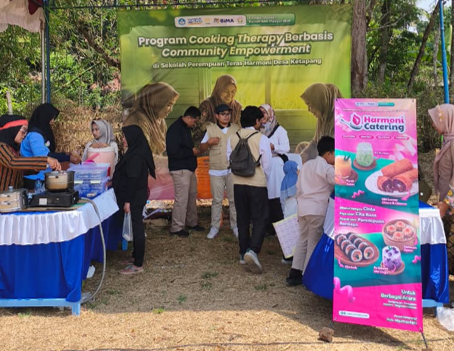
The activity, which involved a large number of community members, provided a strategic opportunity to introduce the products to a wider audience. The marketing pilot also allowed participants to receive direct feedback on their products, including consumer interest, packaging appeal, price suitability, and the way product information was communicated. Conducting the marketing pilot as part of Memerti Desa Ketapang demonstrated the continuity between the knowledge delivered through the community service program and its practical application in the field.
The enthusiasm of the community provided valuable learning experiences for the participants. The presence of local residents gave members of the Sekolah Perempuan Teras Harmoni an opportunity to introduce their products directly while receiving feedback on taste, packaging, pricing, and overall product appeal. One member of Sekolah Perempuan Teras Harmoni, Mrs. Roqi’ah, shared that the activity provided a new experience in marketing products. “Previously, we mostly learned how to make and develop products. Through direct marketing practice like this, we can learn what needs to be further developed and improved.” Meanwhile, Mr. Ni’am, the Village Head, also expressed his support: “We greatly appreciate the activities conducted by UNNES. The community is not only given theoretical knowledge but is also accompanied through the process of practicing product marketing. We hope activities like this can continue to benefit the community and help them develop the potential of Ketapang Village.”
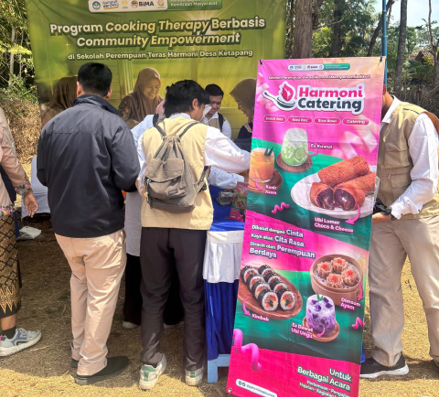
This stage is important because strengthening the capacity of local entrepreneurs cannot be achieved through theoretical instruction alone. Knowledge needs to be followed by opportunities to practice, evaluate, and improve strategies based on direct experience in the field. Through this activity, the UNNES Cooking Therapy Community Service Team encouraged community members not only to develop their ability to produce goods but also to acquire skills in packaging, pricing, promotion, and strategic marketing.
The UNNES Cooking Therapy community service program is also designed to contribute to the achievement of the Sustainable Development Goals (SDGs). Efforts to strengthen community capacity through business financial management, product development, and marketing strategies contribute to building a more independent and sustainable local economy. In particular, the program supports SDG 8: Decent Work and Economic Growth by enhancing community capacity to develop businesses and strengthen the competitiveness of local products.
At the same time, the use of technology and digital marketing strategies in product development contributes to SDG 9: Industry, Innovation and Infrastructure. The introduction of digital marketing platforms and social media promotion strategies is part of the effort to help communities adapt to technological developments in marketing local products. Thus, the products developed can be marketed not only through conventional channels but also have greater opportunities to reach a wider range of consumers.
The involvement of the UNNES Community Service Team, village and district governments, Sekolah Perempuan Teras Harmoni, the Memerti Desa Ketapang organizing committee, and the wider community also reflects the spirit of SDG 17: Partnerships for the Goals. Collaboration among these stakeholders is essential to supporting the sustainability of community empowerment programs. Through partnerships between higher education institutions, government, communities, and local residents, the development of local products can be carried out in a more collaborative and sustainable manner.
Thus, the fourth meeting served not only as a pilot marketing activity for featured products but also as part of the process of building the capacity and independence of the Ketapang Village community. The practical experience gained through direct marketing is expected to serve as an evaluation basis for improving products, pricing strategies, packaging, and promotional approaches in subsequent activities. The UNNES Cooking Therapy Community Service Team hopes that the ongoing mentoring will continue to encourage the community to transform local potential into value-added and competitive products. Synergy among higher education institutions, government, communities, and local residents is expected to create an empowerment ecosystem that not only produces quality products but also supports sustainable local economic growth.